Outdoor Gear Glossary: Plain-Language Terms for Trail and Camp
A plain-language glossary of common outdoor gear terms, from clothing layers and pack fit to shelter, sleep systems, navigation, and leave-no-trace basics.
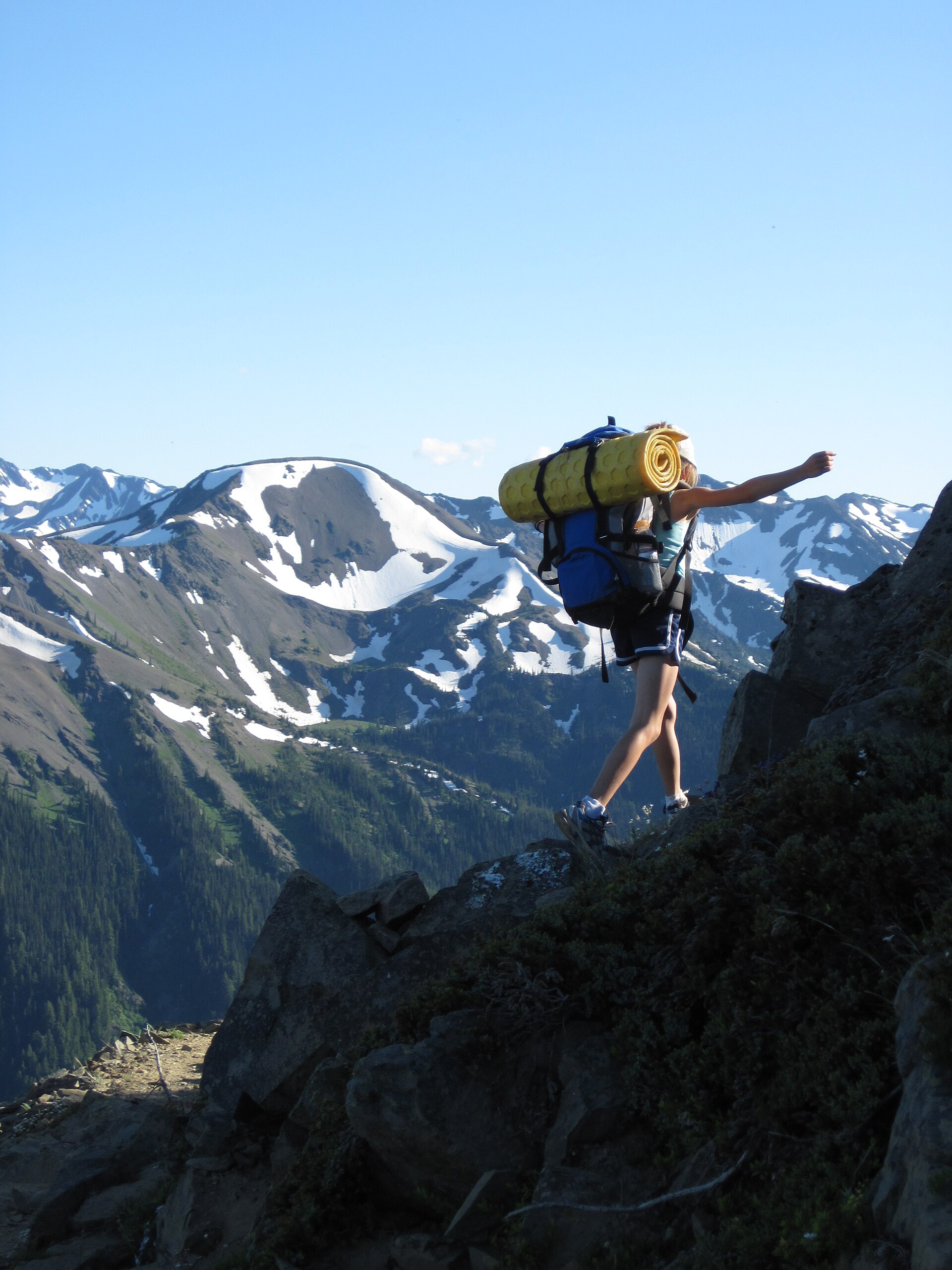
Cover: art_backpacking_kid_hiking_BBaccus_NPS_photo · Wikimedia Commons · Public domain
Question: What do common outdoor gear terms mean?
Clothing and layering terms
Base layer: the layer worn next to the skin, usually chosen to move moisture away from the body. Midlayer: an insulating layer worn over the base layer to trap warmth. Shell: the outer layer intended to block wind and precipitation. Insulation: material that traps warmth, such as synthetic or down fill. Breathability: a fabric's ability to let moisture vapor pass through. Water-resistant: a material or finish that resists light moisture but is not the same as waterproof. Waterproof: a construction intended to block water, often using coatings, membranes, and sealed seams. DWR: durable water repellent, a surface finish that helps water bead and roll off.
Pack and carrying terms
Pack volume: the advertised capacity of a pack, usually described in liters. Torso length: the measurement used to match a pack's harness to a person's back length. Hipbelt: the padded belt that transfers part of a pack's weight to the hips. Sternum strap: a small strap across the chest that helps stabilize shoulder straps. Load lifters: straps near the top of the shoulder harness that adjust how the pack sits against the back. Ultralight: a broad style of gear choice that prioritizes lower weight, often by using simpler or lighter materials.
Shelter terms
Footprint: a groundsheet cut to fit under a tent. Rainfly: the outer cover that sheds rain and wind. Guylines: cords used to tension a tent or tarp. Vestibule: a covered entry area outside the sleeping space. Freestanding: a tent design that can hold its shape without stakes, though stakes may still be used. Three-season and four-season: informal categories describing tents built for different weather ranges; the labels are not standardized.
Sleep system terms
Sleeping bag rating: a label describing the temperature range a bag is tested for; comfort and limit ratings are different. Sleeping pad: a mat that provides cushioning and insulation between the sleeper and the ground. R-value: a measure of thermal resistance used for sleeping pads; higher values indicate more insulation. Quilt: a sleeping cover without a full enclosed footbox or hood, often used to reduce weight. Fill power: a measure of down loft and compressibility, not a direct measure of warmth by itself.
Navigation and planning terms
Topographic map: a map that shows elevation and land shape using contour lines. Contour line: a line connecting points of equal elevation. Compass: a navigation tool that shows direction relative to magnetic north. GPS: a satellite-based positioning system; a GPS device or app shows location and can store waypoints. Waypoint: a saved location on a navigation device or map. Trip plan: a record of route, timing, and contacts left with someone. Leave No Trace: an outdoor ethics framework focused on reducing visible impacts and respecting shared spaces.