Outdoor Gear Terms: A Plain-Language Glossary
A concise glossary of common outdoor gear terms, covering layering, packs, shelter, traction, navigation, materials, and repair categories.
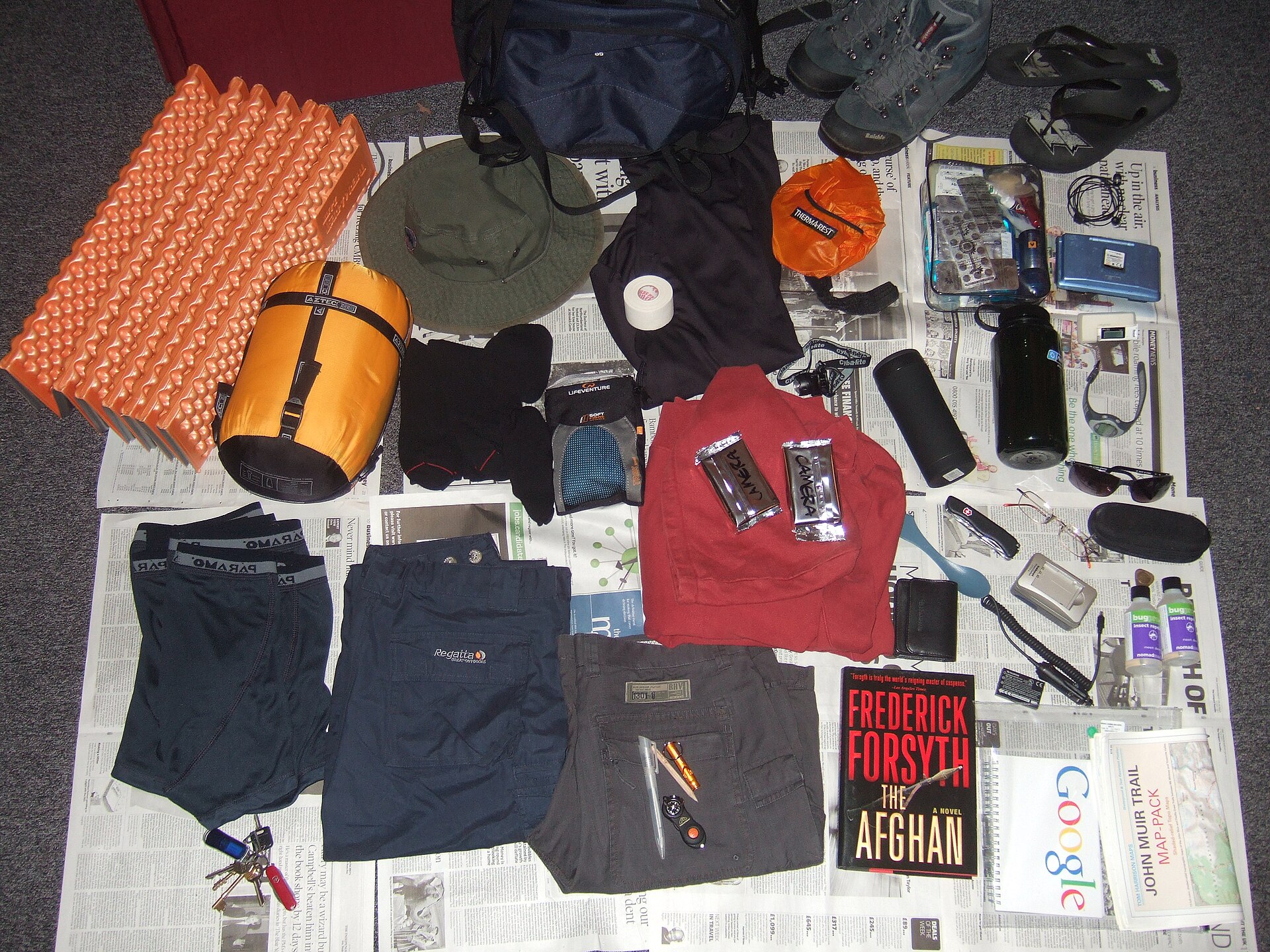
Cover: Camping Equipment Uploaded by Partyzan_XXI · Wikimedia Commons · CC BY-SA 2.0
Question: What do common outdoor gear terms mean?
Layering and clothing terms
A base layer is the clothing worn next to the skin. A midlayer is an insulating layer worn over the base layer. A shell is an outer layer intended to resist wind or precipitation. Insulation refers to materials that trap warmth, while breathability describes how readily moisture vapor can pass through a fabric. Moisture-wicking and quick-dry are descriptive fabric labels. DWR means durable water repellent, a surface finish used on some outer garments. These terms describe garment roles and features; actual designs vary by product.
Pack and carrying terms
Capacity is a pack’s volume rating, not a fit rating. Torso length refers to the portion of the back a pack is designed to fit. A hip belt transfers part of the load to the hips, and a sternum strap connects the shoulder straps across the chest. Load lifters are small straps near the top of the shoulder straps that adjust the pack’s angle. A hydration sleeve is a pocket for a water reservoir. Compression straps tighten the pack’s contents, and daisy chains are webbing loops used for attaching small items.
Shelter and sleep-system terms
A tent body is the main enclosed part of a tent. A rainfly is a removable outer cover. A footprint is a groundsheet placed under a tent. A vestibule is a covered entry area outside the sleeping space. Guylines are cords that tension the shelter, and stake loops are attachment points for stakes. In sleep systems, an R-value describes a sleeping pad’s resistance to heat flow. A temperature rating on a sleeping bag is a standardized label, but comfort varies by person and conditions. A draft collar is a fabric tube that reduces airflow around the neck.
Footwear and traction terms
A last is the foot-shaped form used to build a shoe. A shank is a stiffening layer in the sole. Lugs are the raised tread blocks on an outsole. A waterproof membrane is a layer intended to limit water passage while allowing some breathability. Gaiters are fabric covers worn over the lower leg and shoe. Microspikes and crampons are add-on traction devices with points or coils for snow and ice. An approach shoe is designed for walking to and around climbing terrain. These categories describe different designs rather than guarantees of performance.
Navigation and weather terms
A topographic map shows elevation and landforms using contour lines. A bearing is a direction measured from a reference point. Declination is the angle between magnetic north and true north. A waypoint is a saved location in a GPS device or app. A track is a recorded path. An altimeter estimates elevation, and a barometer measures atmospheric pressure. These tools provide information that users interpret alongside maps, observations, and local guidance.
Materials and construction terms
Ripstop is a fabric woven with a grid pattern intended to limit tear propagation. Denier is a unit used to describe fiber thickness; it is only one part of fabric construction. A PU coating is a polyurethane finish used on some fabrics. Seam tape and welded seams are construction methods used to cover or join fabric seams. Aluminum alloy and carbon fiber are common material categories for poles, stakes, and frames. These terms describe materials and construction, not a ranking of quality.
Emergency and repair terms
A first-aid kit is a collection of supplies for basic care. An emergency blanket is a compact sheet used for shelter or warmth. A whistle and headlamp are signaling and visibility tools. A repair kit may include patches, cord, and adhesive patches for gear. A multitool is a compact folding tool with several functions. A fire starter is a category of ignition aid. These are general gear categories, not endorsements or instructions for use.