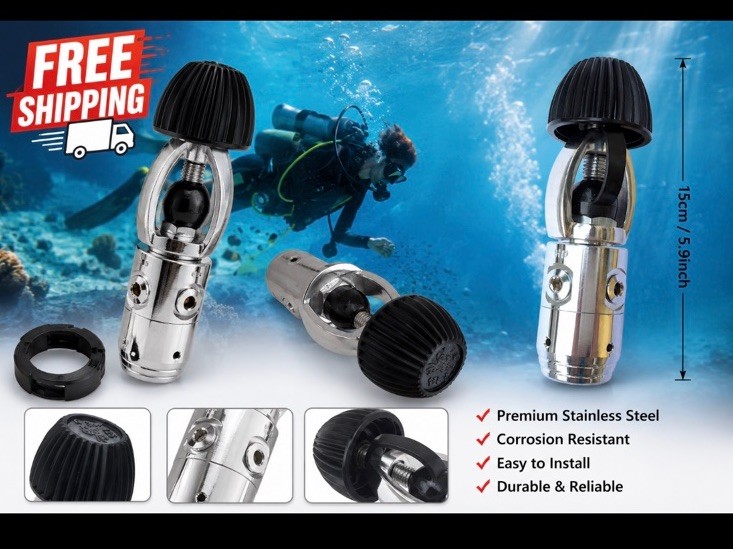

Photos from current listings. Actual item, color, and included accessories may vary.
Dive Regulator Buying Guide
A dive regulator is a two-stage life-support system that reduces high-pressure tank air to breathable ambient pressure, and the core trade-off is balanced-piston vs. balanced-diaphragm first-stage architecture plus the number of HP/LP ports. Buy a sealed balanced diaphragm for cold or silty water, a balanced piston for warm-water simplicity, and skip any unbalanced or single-port first stage that limits hose routing and service life.


At a glance
- Category
- BCD & Dive Regulators
- Data updated
- Nov 16, 2026
Current offers
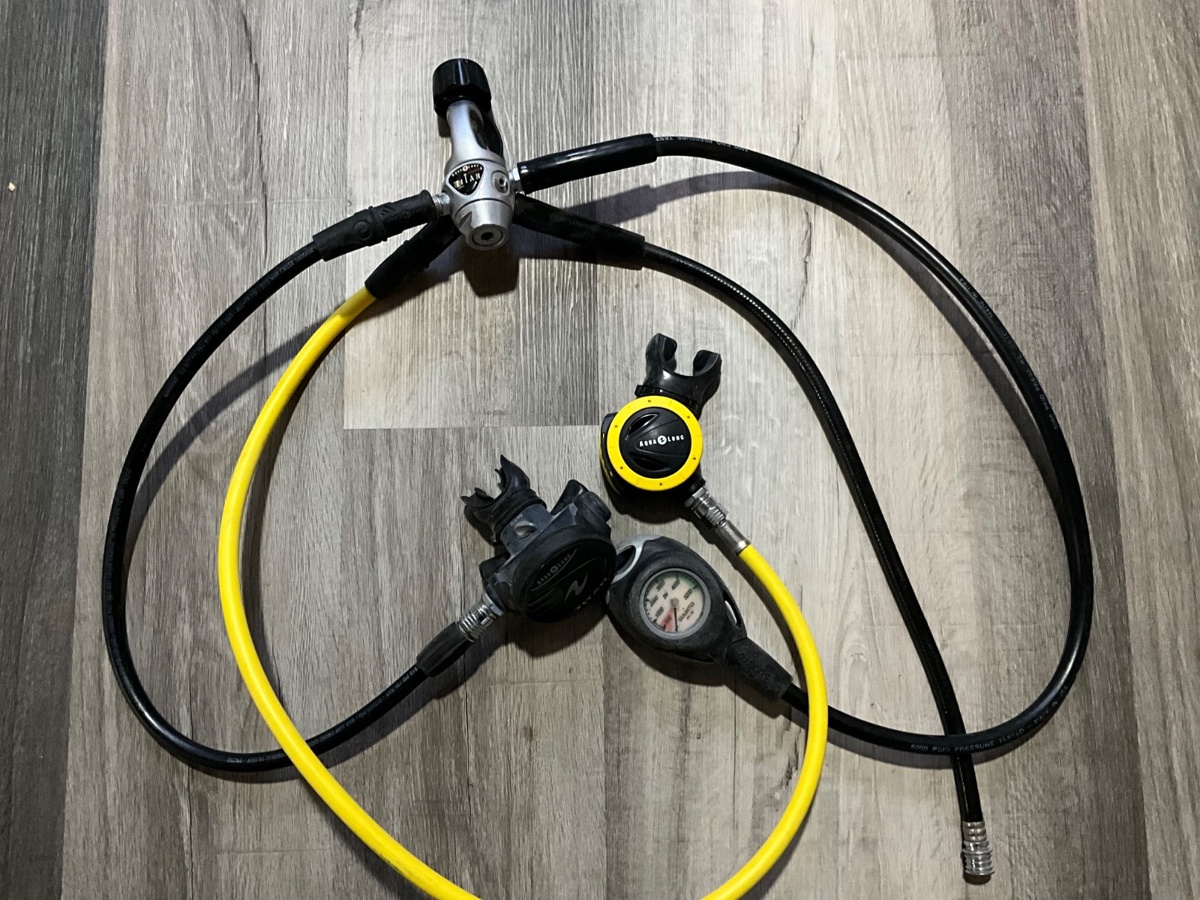
Highlights
- First stage type: balanced diaphragm is environmentally sealed and cold-water rated; balanced piston flows high but needs annual overhaul and is less silt-tolerant.
- Second stage valve: pneumatically balanced downstream poppet delivers consistent inhalation effort across tank pressure; unbalanced downstream effort rises as pressure drops.
- Port count: a modern first stage carries 2 HP and 4-5 LP ports; fewer LP ports forces octopus and BCD inflator onto shared swivels.
- Materials: chrome-plated brass bodies resist corrosion; titanium components cut weight and salt-water corrosion but cost more and require compatible service kits.
Best use cases
- Best fit: cold-water or silty divers (below 10°C / quarries, Great Lakes) — pick a sealed balanced diaphragm first stage with a cold-water-rated second stage; skip unsealed pistons.
- Best fit: warm tropical recreational divers — a balanced piston first stage plus pneumatically balanced second stage gives high flow at lower cost; skip diaphragm only if servicing locally is hard.
- Best fit: travel/backup — a compact balanced diaphragm with 2 HP/4 LP keeps hose routing clean in a carry-on; skip full-size technical first stages with 5+ LP ports.
- Wrong fit: technical/deco divers needing doubles or stage bottles — a single first stage with 4 LP ports cannot plumb two second stages plus drysuit and BCD; use a 5-LP or twin-set configuration.
Buying tips
- Match first-stage architecture to water: sealed balanced diaphragm for water under 10°C or visibility under 5 m; balanced piston for warm, clear, high-flow recreational use.
- Count ports before buying: you need 2 HP (SPG + transmitter) and at least 4 LP (primary, octopus, BCD inflator, drysuit or spare) — 5 LP if you dive dry.
- Confirm second-stage balance: a pneumatically balanced poppet holds inhalation effort near 1.0-1.2 J at 200 bar; unbalanced rises noticeably below 70 bar.
- Buy a regulator with a current manufacturer service kit and a local authorized service center — a 2-year service interval is standard and parts availability decides long-term cost.
Specs
| First Stage Type | Balanced piston vs. balanced diaphragm |
|---|---|
| Second Stage Valve | Pneumatically balanced vs. unbalanced |
| Port Count | 2 HP + 4-5 LP |
| Water Rating | Cold-water sealed vs. warm-water |
Related searches
What to check before buying
- Tank valve compatibility: DIN (G5/8, 300 bar) vs. yoke (INT, 232 bar) — match your tank valve or add a DIN-to-yoke adapter.
- Hose lengths and routing: primary 70-75 cm, octopus 90-100 cm, HP 80-90 cm; confirm your BCD inflator and drysuit hose connections.
- Cold-water rating: verify the second stage is rated for water below 10°C if diving locally in cold lakes or quarries.
- Service network: confirm an authorized service center within reasonable distance and that the model takes a current, stocked service kit.
FAQ
Data sources: eBay / Amazon listings and product attribute feeds Data updated Nov 16, 2026.
Some links on this page are affiliate links. If you buy after clicking one, we may earn a commission at no extra cost to you. This does not change which products appear here or their order. Affiliate disclosure.