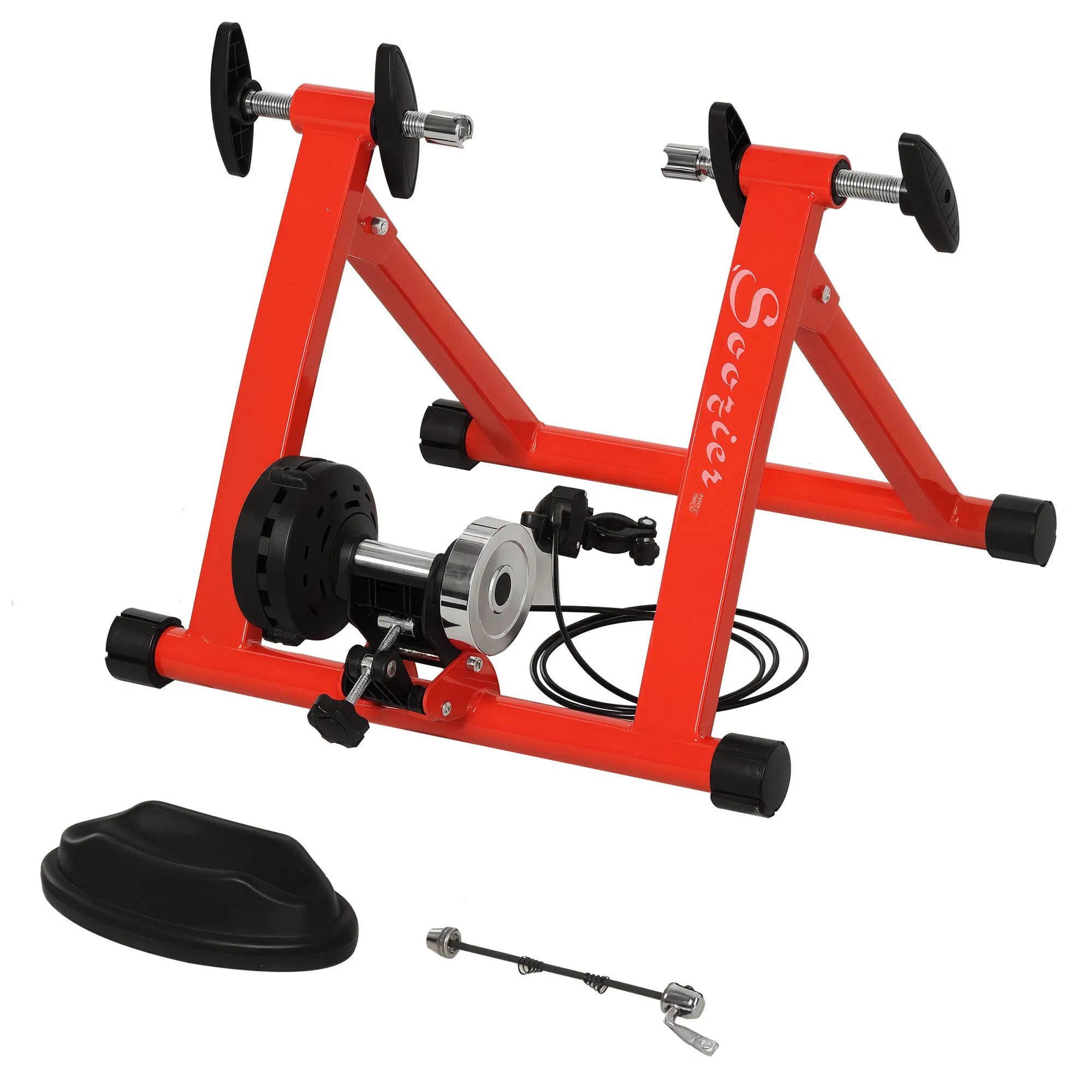

Photos from current listings. Actual item, color, and included accessories may vary.
Indoor Bike Trainer Buying Guide
An indoor bike trainer converts a standard bicycle into a stationary cardio machine by mounting the rear wheel against a resistance unit. The primary trade-off is between magnetic and fluid resistance systems: magnetic units offer adjustable, quiet, app-compatible resistance, while fluid units provide progressive, road-like feel but are heavier and not electronically controllable. Choose a direct-drive or wheel-on magnetic trainer with a quick-release skewer and progressive resistance for durability and training flexibility; skip budget fluid trainers with non-adjustable resistance if you need structured workouts.


At a glance
- Category
- Cardio Machines
- Data updated
- Nov 16, 2026
Current offers
Highlights
- Magnetic resistance uses adjustable magnets for 5–10 discrete or progressive levels; fluid resistance is self-generating and progressive but not electronically adjustable.
- Wheel-on trainers require a quick-release skewer (included on most models) and accept 26–29-inch and 700c wheels with standard 130/135mm rear spacing.
- Direct-drive trainers remove the rear wheel and use a cassette, offering higher power accuracy and no tire wear, but cost significantly more than wheel-on units.
- Smart trainers with ANT+ FE-C or Bluetooth FTMS enable app control (Zwift, TrainerRoad) and ERG mode; basic magnetic trainers lack electronic resistance control.
Best use cases
- Best for structured interval training: pick a smart direct-drive trainer with FTMS/ANT+ and a cassette matching your drivetrain; skip wheel-on magnetic if you need precise wattage.
- Best for budget winter base miles: choose a wheel-on magnetic trainer with 5+ resistance levels and a quick-release skewer; skip fluid units if you want on-the-fly resistance changes.
- Best for small apartments: select a foldable magnetic trainer with a low noise rating (under 70 dB) and a front-wheel block; skip direct-drive if storage space is tight.
- Wrong fit: using a thru-axle bike on a trainer that only includes a quick-release skewer—verify axle compatibility or buy an adapter kit separately.
Buying tips
- Match rear axle standard: most wheel-on trainers include a quick-release skewer for 130/135mm spacing; thru-axle bikes (12x142mm) require a specific adapter, often sold separately.
- Resistance type determines ride feel: magnetic units offer discrete or progressive levels and are quieter; fluid units are progressive but can overheat and lack electronic control.
- Check maximum rider weight and resistance power ceiling: budget magnetic trainers typically support up to 250–300 lbs and 500–800 watts; direct-drive units handle 1500W+.
- For app integration, require Bluetooth FTMS or ANT+ FE-C; basic magnetic trainers with a manual lever are not controllable by training apps.
Specs
| Resistance Type | Magnetic (adjustable) vs Fluid (progressive) |
|---|---|
| Axle Compatibility | Quick-release 130/135mm; thru-axle adapter |
| Smart Connectivity | Bluetooth FTMS / ANT+ FE-C vs none |
| Max Power | 500–800W magnetic; 1500W+ direct-drive |
Related searches
What to check before buying
- Measure your rear axle: quick-release (130/135mm) works with included skewer; thru-axle (12x142mm or 12x148mm) needs a compatible adapter.
- Confirm wheel size: most wheel-on trainers fit 26–29-inch and 700c; smaller wheels (24-inch) may require adjustment or a different model.
- Check floor and noise: place on a hard, level surface; magnetic trainers run 65–75 dB, fluid 70–80 dB—use a mat to protect flooring and reduce vibration.
- Verify bike compatibility: disc brakes may interfere with some wheel-on frames; direct-drive trainers require a cassette and chain whip for installation.
FAQ
Data sources: eBay / Amazon listings and product attribute feeds Data updated Nov 16, 2026.
Some links on this page are affiliate links. If you buy after clicking one, we may earn a commission at no extra cost to you. This does not change which products appear here or their order. Affiliate disclosure.