Photos from current listings. Actual item, color, and included accessories may vary.
Stair Climber Machine Buying Guide
Stair climber machines are cardio tools that simulate continuous stair ascent, split into two architectures: compact vertical climbers (arm-and-leg piston resistance) and full stair-climber towers (motorized step belts). The core trade-off is footprint and price versus stride realism and load rating: vertical climbers are light, foldable, and cheap but rely on friction or hydraulic cylinders with limited durability, while motorized stair climbers use heavy flywheels and stepped belts that cost more and need ceiling clearance. The decision rule: buy a steel-frame vertical climber with sealed hydraulic or magnetic resistance for home use, or a motorized stepped-belt unit with at least a 300 lb user rating and commercial-grade bearings if you want joint-friendly, hands-free climbing.


At a glance
- Category
- Cardio Machines
- Data updated
- Nov 17, 2026
Current offers
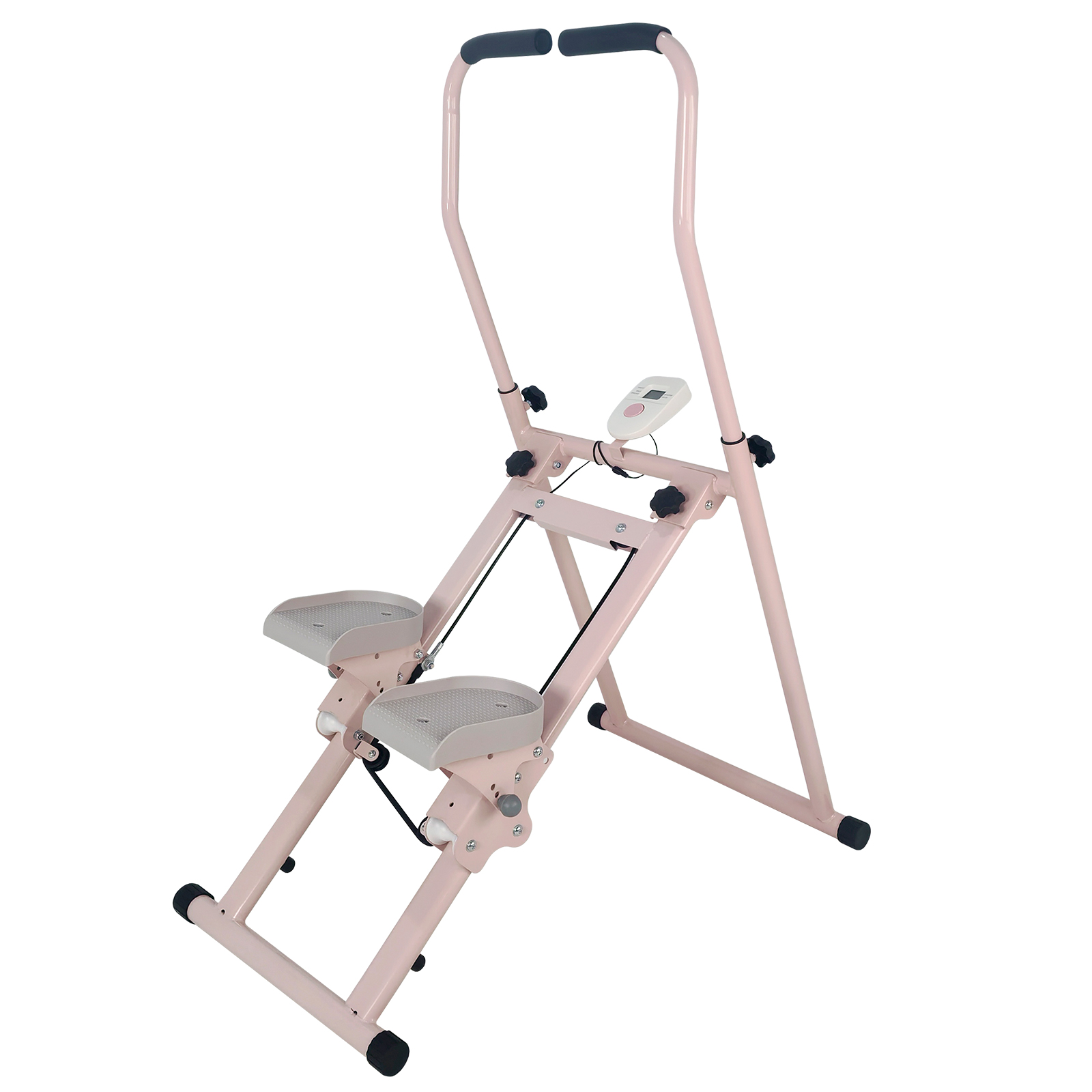 Stair Stepper Folding Vertical Cardio Exercise Climber Stair-Master for at Home Full Body Workout Machine with Handlebar Pink+White$97.99
 View on Mallflare
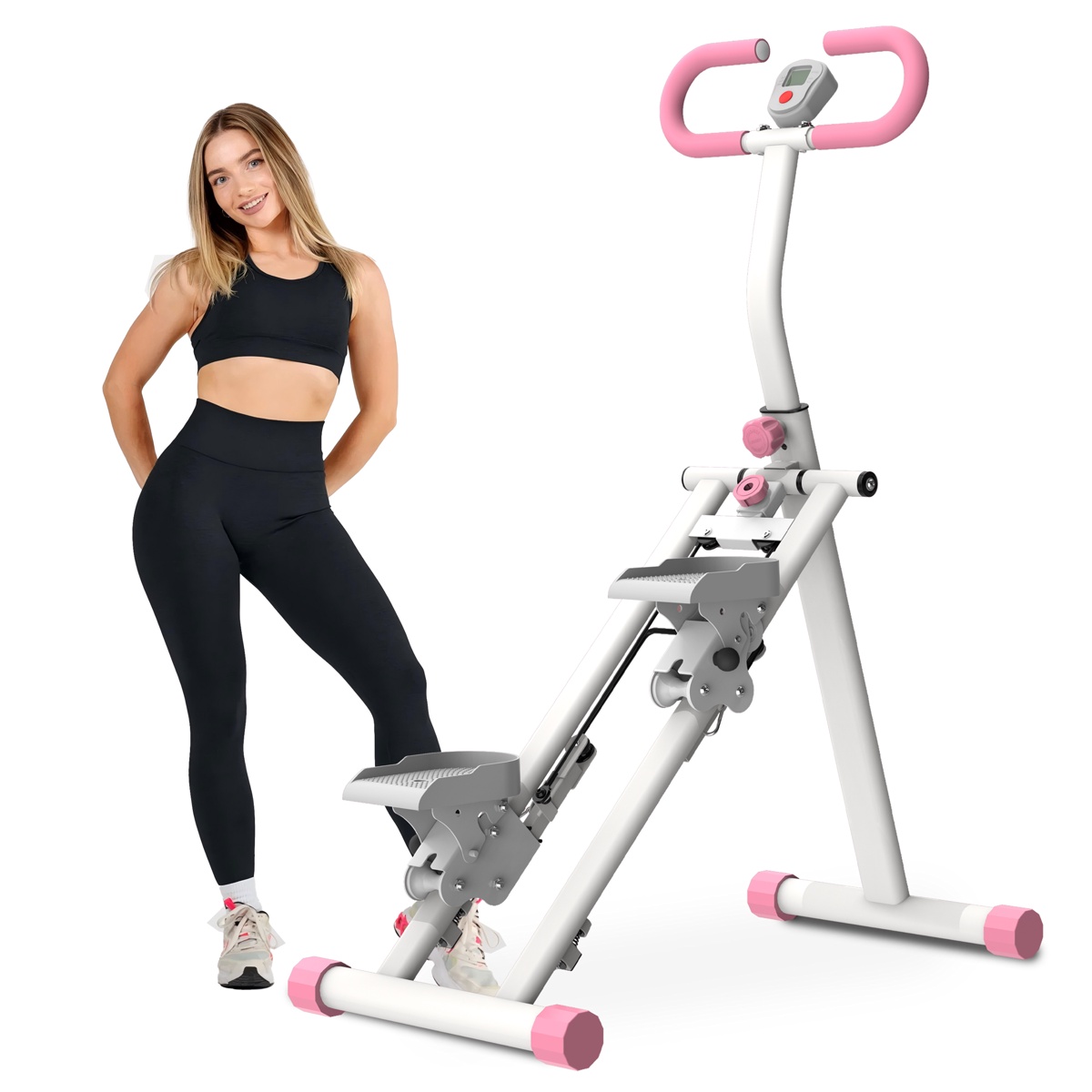 Stair Stepper For Home-Upgrade Vertical Climber Workout Machine For Full-Body Exercise Fitness Equipment With Stable Frame Adjustable Handlebar-Pink$103.99View on Mallflare
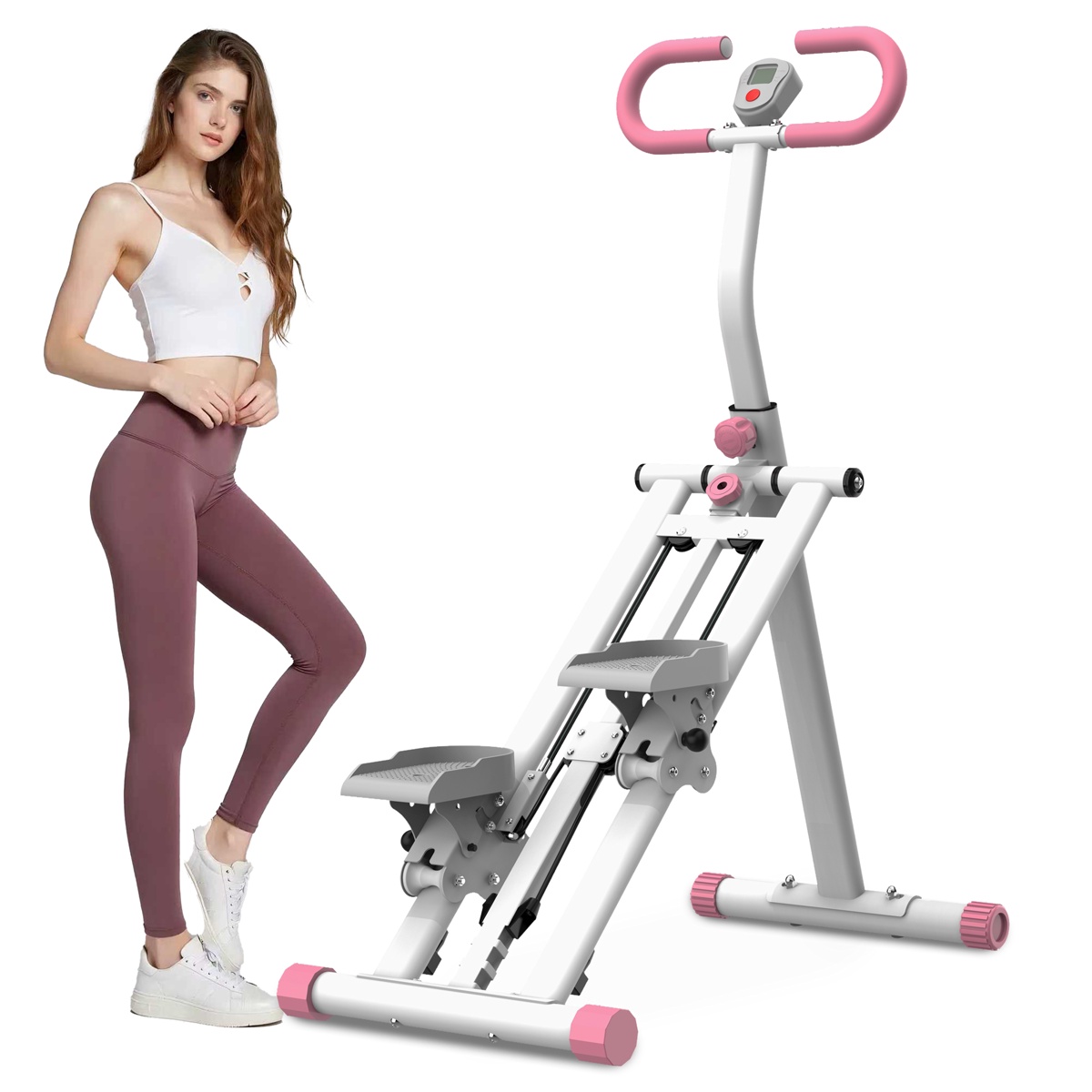 Stair Stepper With Resistance Home-Upgrade Vertical Climber Workout Machine For Full-Body Exercise Fitness Equipment Stable Frame Adjustable Handlebar-Pink$108.99View on Mallflare
Highlights
- Vertical climbers use either twin hydraulic cylinders (resistance fades with heat) or magnetic/friction brake pads (consistent but wearing); sealed hydraulic or magnetic units outlast open friction pads.
- Motorized stair climbers run a chain- or belt-driven stepped belt over a flywheel, with step height typically 6–8 in and step rate 24–40 steps/min; continuous-duty motors rated for 1.5–3 HP handle home use.
- Frame construction decides stability: 1.5–2 mm steel tube with welded gussets and a footprint of at least 24 × 30 in prevents sway, while aluminum or thin 1 mm tube flexes under load.
- User weight ratings cluster at 220–250 lb for budget vertical climbers and 300–350 lb for steel-frame and motorized models; the rating reflects bearing, weld, and piston quality, not just frame size.
Best use cases
- Best fit: a foldable steel vertical climber with sealed hydraulics for apartment or small-room cardio where floor space under 3 × 2 ft and storage against a wall matter — skip motorized towers that need 4+ ft of depth and ceiling clearance.
- Best fit: a motorized stepped-belt stair climber with a 300 lb rating and continuous-duty motor for daily 30–45 minute sessions and hands-free climbing — skip lightweight piston climbers if you want natural stride and joint-friendly low impact.
- Wrong fit: buying a 220 lb-rated friction-pad climber for a 240 lb user or high-frequency training — the pads glaze, resistance drifts, and frame sway appears; step up to a 300 lb steel or motorized tier instead.
- Wrong fit: placing any stair climber on carpet or an upper floor without a mat — piston and flywheel vibration transfers; use a dense rubber mat and confirm floor load, especially for 150+ lb motorized units.
Buying tips
- Match user weight to rating with a 20% margin: a 200 lb user needs a 250 lb-rated frame; a 250 lb user needs 300 lb — ratings below body weight cause sway and bearing wear.
- For vertical climbers, choose sealed hydraulic cylinders or magnetic resistance over exposed friction pads; friction pads require re-tensioning and shed material, shortening service life.
- For motorized stair climbers, confirm a continuous-duty (not peak) motor rating and a step belt with sealed bearings; step height of 6–8 in and 24–40 steps/min covers beginner to advanced intervals.
- Measure ceiling height and depth before buying a motorized tower: allow at least 8 ft ceiling and 4 ft depth plus 2 ft rear clearance; vertical climbers need only about 3 × 2 ft and fold to under 1 ft deep.
Specs
| Machine Type | Vertical climber vs motorized stair |
|---|---|
| Resistance System | Sealed hydraulic / magnetic / friction |
| User Weight Rating | 220–250 lb budget / 300–350 lb steel |
| Footprint & Ceiling | 3×2 ft, 7 ft vs 4×3 ft, 8 ft |
Related searches
What to check before buying
- Measure available floor footprint and ceiling height: vertical climbers need ~3 × 2 ft and 7 ft ceiling; motorized stair climbers need ~4 × 3 ft, 8 ft ceiling, and rear clearance.
- Confirm user weight is at least 20% below the machine's rating, and check frame material is steel tube of 1.5 mm or thicker with welded joints.
- Verify floor type and load: place on a hard, level surface with a rubber mat; upper floors should handle 150–250 lb machine plus user dynamic load.
- Check handlebar adjustability and resistance type (sealed hydraulic, magnetic, or friction) plus warranty coverage on cylinders or motor before choosing a tier.
FAQ
Data sources: eBay / Amazon listings and product attribute feeds Data updated Nov 17, 2026.
Some links on this page are affiliate links. If you buy after clicking one, we may earn a commission at no extra cost to you. This does not change which products appear here or their order. Affiliate disclosure.