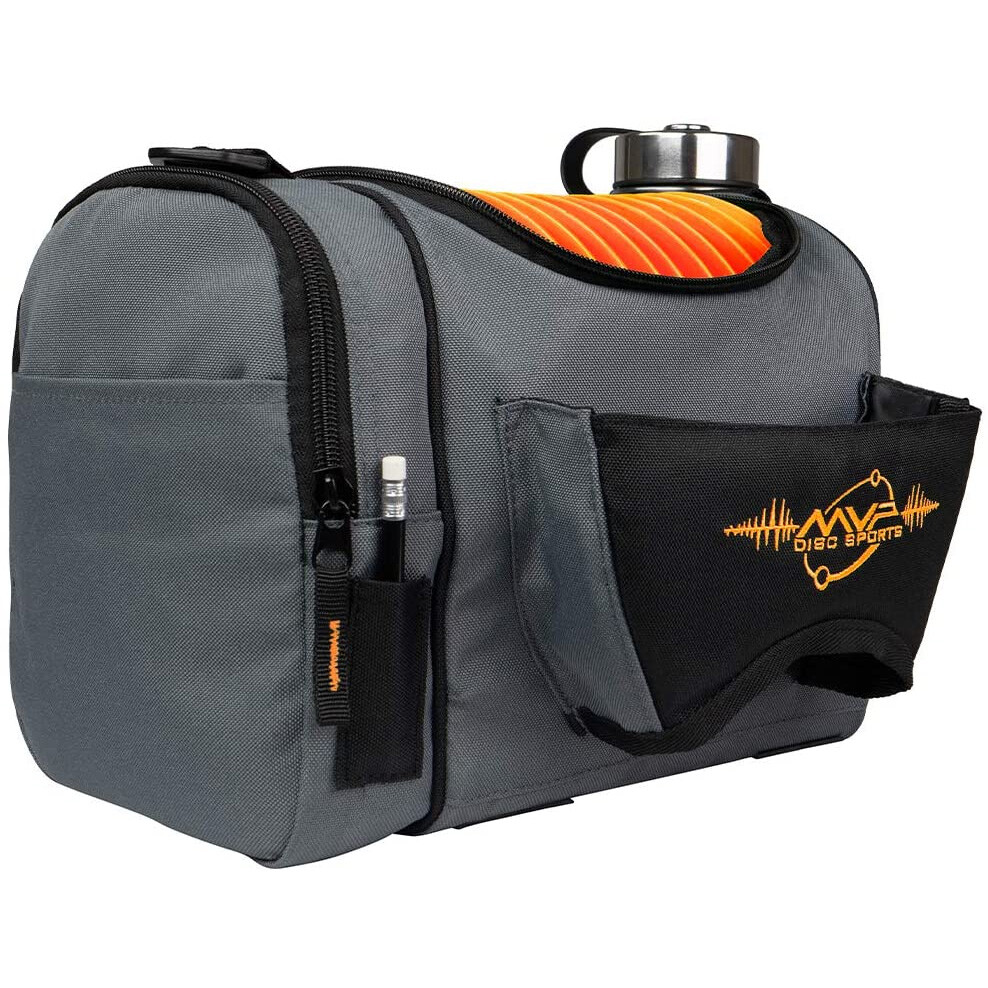

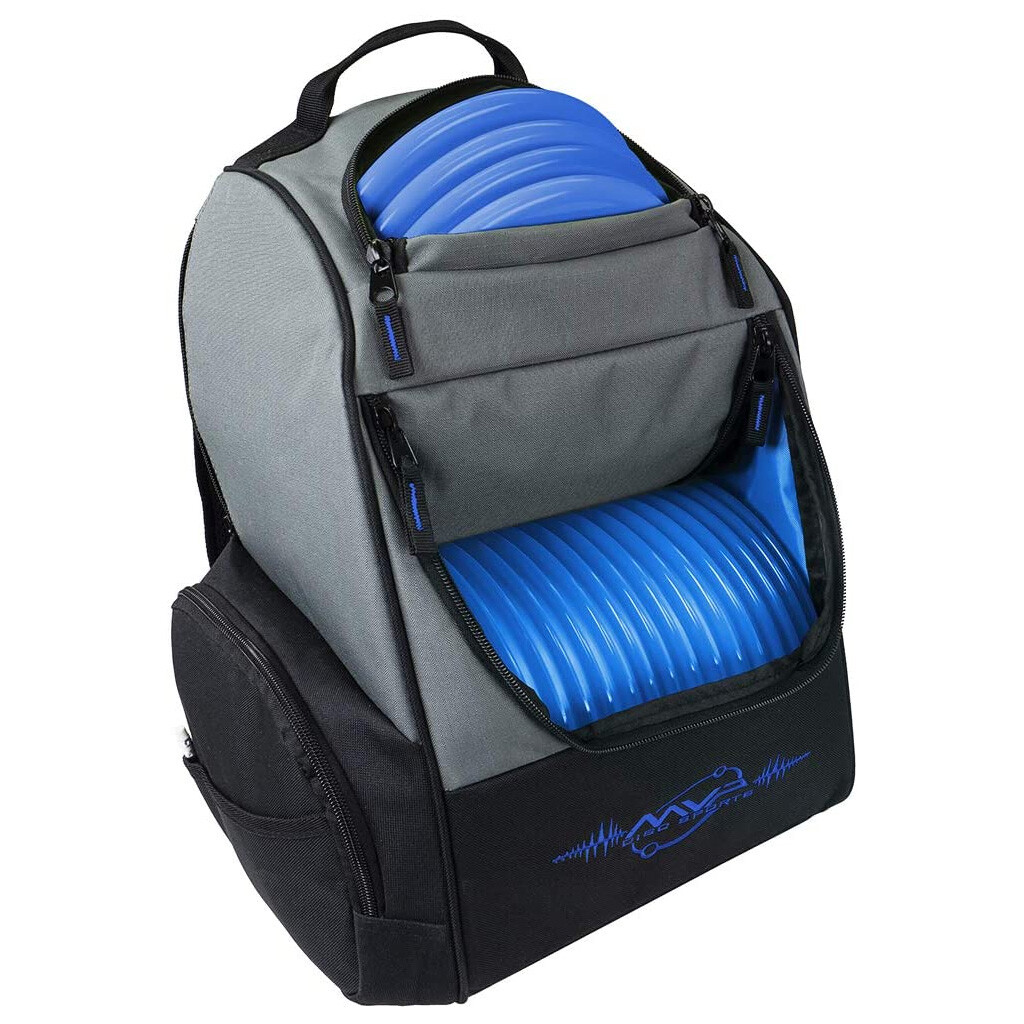
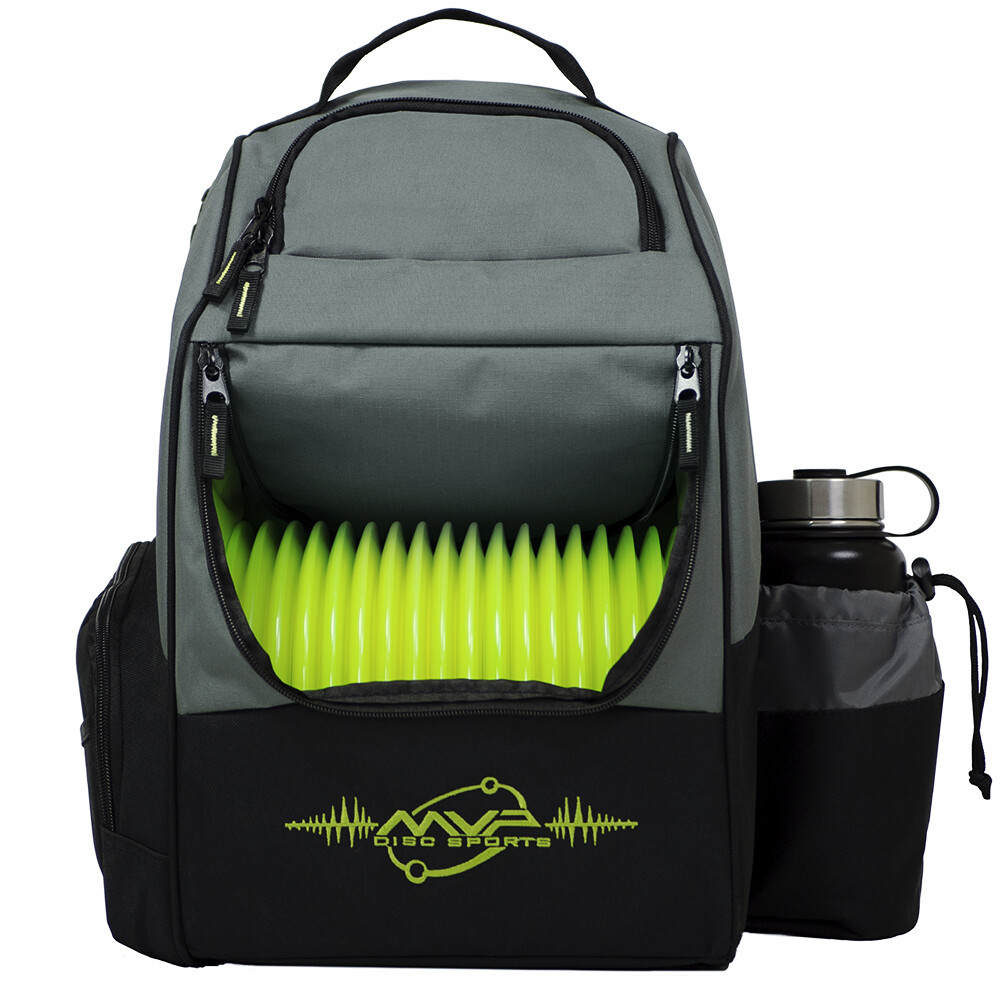
Photos from current listings. Actual item, color, and included accessories may vary.
Mvp Disc Golf Bag Buying Guide
MVP disc golf bags are branded carry and cart solutions designed around MVP's disc molds and team branding, but the core buying decision is capacity tier versus carry ergonomics: smaller shoulder bags favor light rounds, while backpacks add structured storage and hydration compatibility. Choose a bag whose disc count and frame support match your typical round length and walking distance; avoid oversized tournament backpacks if you carry fewer than 15 discs.


At a glance
- Category
- Disc Golf Bags & Carts
- Data updated
- Nov 16, 2026
Current offers
Highlights
- Capacity tiers separate MVP bag families: shoulder/competition bags hold roughly 12–18 discs, while Shuttle-style backpacks hold 20–24 with putter pockets.
- Backpack models use padded shoulder straps and a rigid or semi-rigid back panel; simple shoulder bags rely on a single strap and offer no spine support on long walks.
- Material grades matter: 600D polyester or heavier ripstop resists abrasion on concrete tee pads, while lighter 300D shells wear through at base corners first.
- Disc storage is typically divided into a main compartment plus a top putter pocket; dedicated putter pockets speed retrieval and reduce main-bag lid wear.
Best use cases
- Pick a Shuttle-style backpack if you carry 18–24 discs, a water bottle, and a light layer over 9+ holes; skip it for a 5-disc quick round where the empty structure feels bulky.
- Choose a compact shoulder or competition bag for 12–18 discs and short courses; skip it if you regularly carry hydration, snacks, and rain gear, which need backpack frame support.
- Use a backpack with a dedicated putter pocket for tournament play where fast, repeatable putting access matters; a plain tube bag slows retrieval and forces you to set the bag down.
Buying tips
- Count your actual discs including putters and approach discs; add 2–3 slots of headroom for course-dependent swaps rather than buying the maximum capacity you might never fill.
- Match bag capacity to hole count and walking distance: under 9 holes lean 12–15 discs, 18 holes or tournaments lean 20–24 with a structured back panel.
- Check fabric denier and base reinforcement: 600D polyester or ballistic nylon with a reinforced bottom outlasts thin 300D shells that fray at tee-pad contact points.
- Confirm strap geometry: wide, padded shoulder straps with a sternum strap distribute weight on backpacks, while single-strap shoulder bags should have a wide, non-slip pad.
Specs
| Bag Type | Shoulder bag vs backpack vs cart bag |
|---|---|
| Disc Capacity | 12–18 (shoulder) / 20–24 (backpack) |
| Shell Material | 600D polyester / ripstop nylon |
| Putter Pocket | Dedicated top pocket vs main-only |
Related searches
What to check before buying
- Measure your disc stack height and width; a 24-disc bag needs roughly 8–10 inches of main-compartment depth to avoid crushing putters.
- Confirm the bag fits your frame: backpack torso length should match your back length so the load sits on the hips, not the lower spine.
- Check hydration compatibility if you walk long courses; look for a sleeve sized for a standard 32 oz bottle or a bladder hose port.
- Verify putter pocket opening width against your putter rim diameter (typically 8.3–8.5 inches) so discs slide in without snagging.
FAQ
Data sources: eBay / Amazon listings and product attribute feeds Data updated Nov 16, 2026.
Some links on this page are affiliate links. If you buy after clicking one, we may earn a commission at no extra cost to you. This does not change which products appear here or their order. Affiliate disclosure.