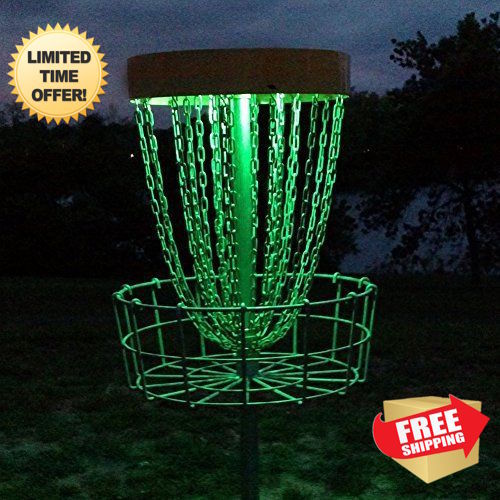

Photos from current listings. Actual item, color, and included accessories may vary.
Disc Golf Practice Basket Buying Guide
A disc golf practice basket is a portable or stationary target used for putting and approach drills, where the key trade-off is chain configuration and cage durability versus portability and assembly time. Durable options use heavy-gauge galvanized or powder-coated steel with double-chain arrays and a stiff lower cage, while compromises rely on thin single-chain rings and flimsy snap-together frames that wobble on putts.


At a glance
- Category
- Disc Golf Cleaning & Accessories
- Data updated
- Nov 16, 2026
Current offers
Highlights
- Chain count and layout matter most: 24+ chains in a two-tier (inner/outer) pattern catch more putts than 12-16 single-ring chains, especially on low-power or off-center throws.
- Steel gauge and coating separate durable from disposable: 18-20 gauge galvanized or powder-coated steel resists rust and denting, while thinner painted wire bends on impact and corrodes outdoors.
- Basket diameter and cage depth affect practice realism: regulation-style 24-26 inch top bands with deep cages mimic course targets better than shallow 20-inch mini baskets.
- Portability mechanics differ: quick-fold X-frame or collapsible designs assemble in under a minute and fit in a car trunk, while fixed-pole baskets need tools and permanent ground space.
Best use cases
- Backyard putting practice: choose a stationary or semi-portable basket with 24+ chains and a weighted base for stability on grass or patio; skip ultralight travel frames that tip in wind.
- Park or course warm-up: pick a collapsible basket under 20 lb with a carry bag and tool-free assembly; skip heavy fixed-pole models that require disassembly and two people.
- Indoor or garage drills: select a short-height or adjustable basket with soft chains and a rubber bumper to protect floors; skip full-height outdoor baskets that won't clear ceilings.
- Tournament or club use: invest in a regulation-diameter basket with double-chain arrays and a galvanized frame; skip budget single-chain rings that reject clean putts and skew practice confidence.
Buying tips
- Match chain count to skill level: beginners benefit from 24+ chains for confidence, while advanced players should practice on regulation double-chain baskets to simulate course rejection.
- Check assembled height and band diameter: full-size practice baskets stand 52-58 inches with a 24-26 inch band; mini or travel baskets are shorter and change your putting arc.
- Verify frame material and coating: galvanized steel or powder-coated 18-gauge wire survives seasons outdoors, while painted mild steel rusts at welds and bends on hard putts.
- Plan for wind and ground conditions: a 20+ lb basket or one with ground stakes stays put on open lawns; ultralight frames need a weighted base or sandbag anchor.
Specs
| Chain Configuration | 24+ chains, two-tier inner/outer |
|---|---|
| Frame Material | Galvanized or powder-coated steel |
| Assembled Height | 52-58 in full-size; 36-48 in compact |
| Portability | Collapsible under 20 lb w/ carry bag |
Related searches
What to check before buying
- Measure your practice space: you need at least 10 feet of clear depth behind the basket and 6 feet on each side to catch missed putts safely.
- Confirm ceiling height for indoor use: a full-size basket needs 6-7 feet of clearance; choose a low-profile or adjustable model for garages and basements.
- Check ground surface and anchoring: grass accepts stakes, while patio or gym floors need a weighted base or rubber feet to prevent sliding and noise.
- Verify assembly and storage footprint: collapsible frames fold to roughly a golf-bag size, while fixed baskets need permanent space and may require tools for setup.
FAQ
Data sources: eBay / Amazon listings and product attribute feeds Data updated Nov 16, 2026.
Some links on this page are affiliate links. If you buy after clicking one, we may earn a commission at no extra cost to you. This does not change which products appear here or their order. Affiliate disclosure.