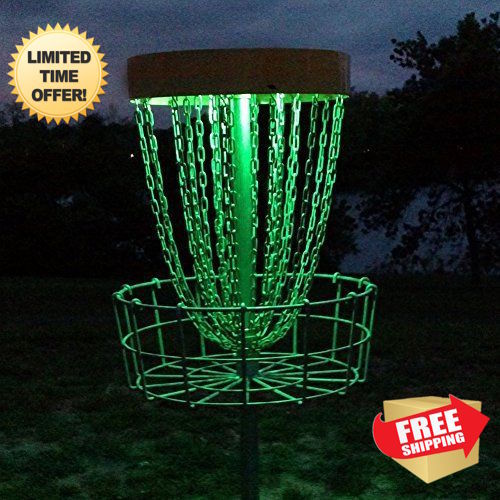

Photos from current listings. Actual item, color, and included accessories may vary.
Practice Basket Disc Golf Buying Guide
A practice basket is a portable or semi-permanent target that replicates the catching geometry of a permanent disc golf hole for putting and approach practice. The core trade-off is between chain count and gauge, basket rigidity, and portability—cheap single-chain or thin-gauge steel baskets spit out putts and wobble, while heavier multi-chain baskets with wide bands catch like real courses. The rule: buy a basket with at least 12 heavy-gauge inner/outer chains and a 24-chain or dual-layer configuration for realistic catching, and avoid any basket under roughly 25 lb that uses thin tubular steel or single-chain arrays.


At a glance
- Category
- Disc Golf Cleaning & Accessories
- Data updated
- Nov 16, 2026
Current offers
Highlights
- Chain count and gauge decide catch rate: 12-chain light baskets reject firm putts, while 24-chain or dual-layer heavy-gauge arrays mimic permanent course targets.
- Basket weight and base design separate portable from semi-permanent: sub-25 lb models flex and tip in wind, while 35-50 lb baskets with weighted or ground-stake bases stay stable.
- Band and cage geometry matter: a wide upper band and deep cage catch high-speed putts, whereas narrow bands and shallow trays let discs rim out.
- Portability tiers differ in assembly: quick-fold collapsible models fit car trunks, while bolt-together or welded baskets are heavier but far more rigid for daily practice.
Best use cases
- Backyard putting practice: pick a 24-chain, 35+ lb basket with a wide band and ground stakes; skip ultralight collapsible models that tip in wind and reject putts.
- Apartment or small-space practice: choose a compact collapsible basket under 25 lb with at least 12 chains, and skip full-size heavy baskets that need permanent setup.
- Club or course warm-up: select a quick-assemble portable basket with 24 chains and a weighted base that survives repeated setup, and skip single-chain budget targets.
- Junior or casual family use: a lighter 12-18 chain basket with a stable base is fine, but skip heavy-gauge tournament baskets that are hard to move and overbuilt for casual play.
Buying tips
- Count chains before buying: 24 chains (12 inner, 12 outer) is the realistic minimum for practice that transfers to course putting; 12-chain baskets are entry-level only.
- Match basket weight to use: 35-50 lb for semi-permanent backyard installs, under 25 lb only for travel or temporary practice where wind is not a factor.
- Check chain gauge: heavy-gauge zinc-plated or stainless chains catch and last; thin painted chains rust, tangle, and spit out putts over time.
- Verify base and anchoring: a wide weighted base or ground stakes prevent tip-over; narrow tripod bases on lightweight baskets wobble on firm putts.
Specs
| Chain Count | 24-chain (12 inner/12 outer) vs 12-chain |
|---|---|
| Basket Weight | 35-50 lb semi-permanent vs <25 lb portable |
| Chain Gauge | Heavy-gauge zinc/stainless vs thin painted |
| Assembly Type | Collapsible / bolt-together / welded |
Related searches
What to check before buying
- Measure your practice space: you need at least 30-35 ft of clear distance for realistic putt practice, plus room for the basket footprint and miss throws.
- Confirm ground surface: grass accepts ground stakes, while patio or gravel needs a weighted base—match the basket's anchoring method to your surface.
- Check assembly footprint and storage: collapsible baskets fold to roughly 3-4 ft sections, while bolt-together baskets need dedicated storage space.
- Verify chain configuration and band width against permanent course baskets you play, so practice transfers to real putting.
FAQ
Data sources: eBay / Amazon listings and product attribute feeds Data updated Nov 16, 2026.
Some links on this page are affiliate links. If you buy after clicking one, we may earn a commission at no extra cost to you. This does not change which products appear here or their order. Affiliate disclosure.