Photos from current listings. Actual item, color, and included accessories may vary.
Frog Lure Buying Guide
Frog lures are hollow-bodied or soft-plastic topwater baits designed to skip over slop, pads, and matted vegetation without snagging. The core trade-off is body-wall thickness and hook-gap clearance: thin walls collapse easily for solid hooksets but tear after a few fish, while thick walls last longer but require more force to compress. Buy a hollow-body frog with a wide hook gap and a collapsible body if you fish heavy cover; skip rigid or ultra-thin frogs if you need both durability and clean hookups.

At a glance
- Category
- Fishing Hooks, Lures & Baits
- Data updated
- Nov 16, 2026
Current offers
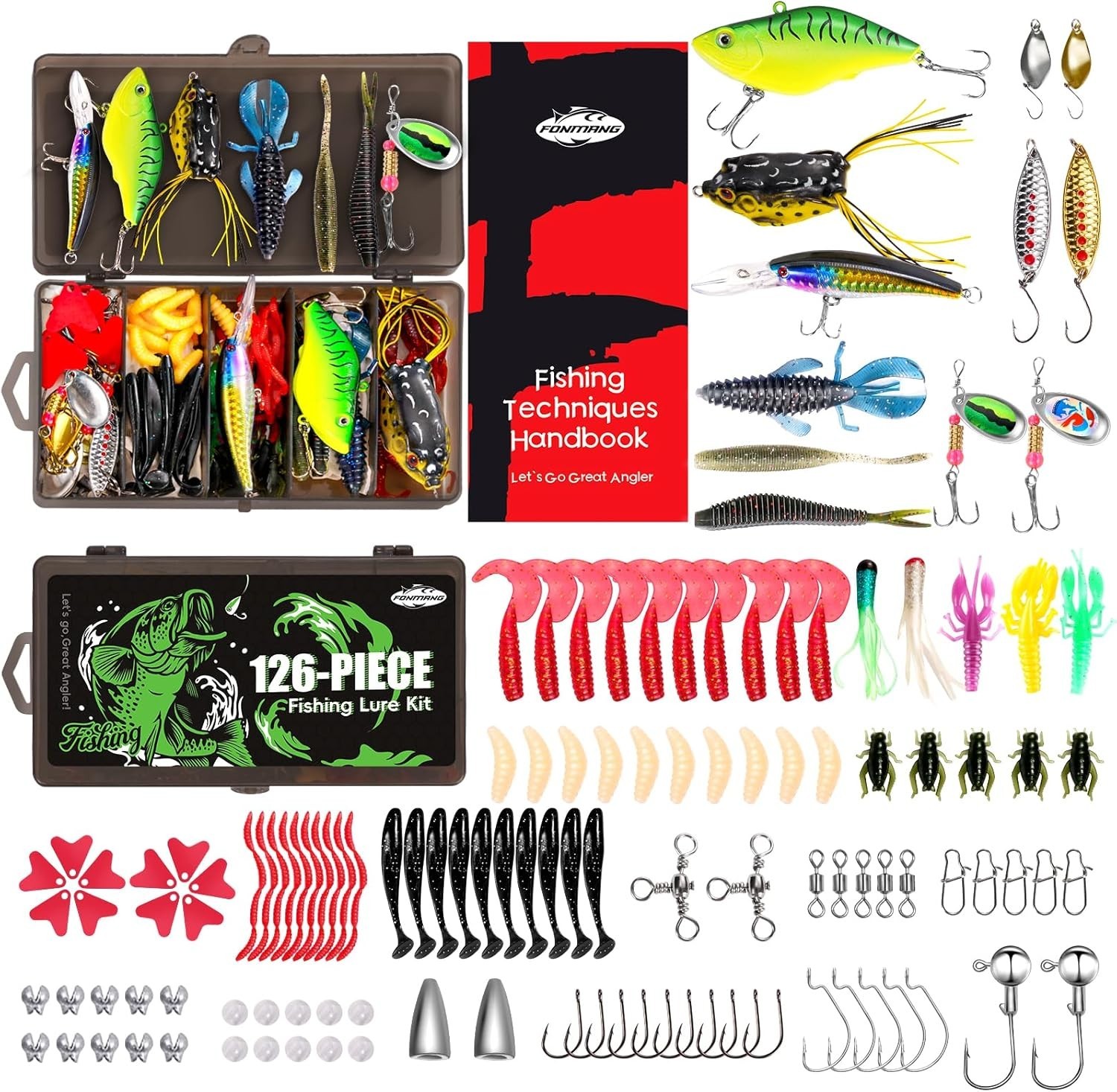 Fishing Lures - Tackle Box with Tackle Included, Fishing Kit with Vibs, Frogs, M$22.45
 View on eBay
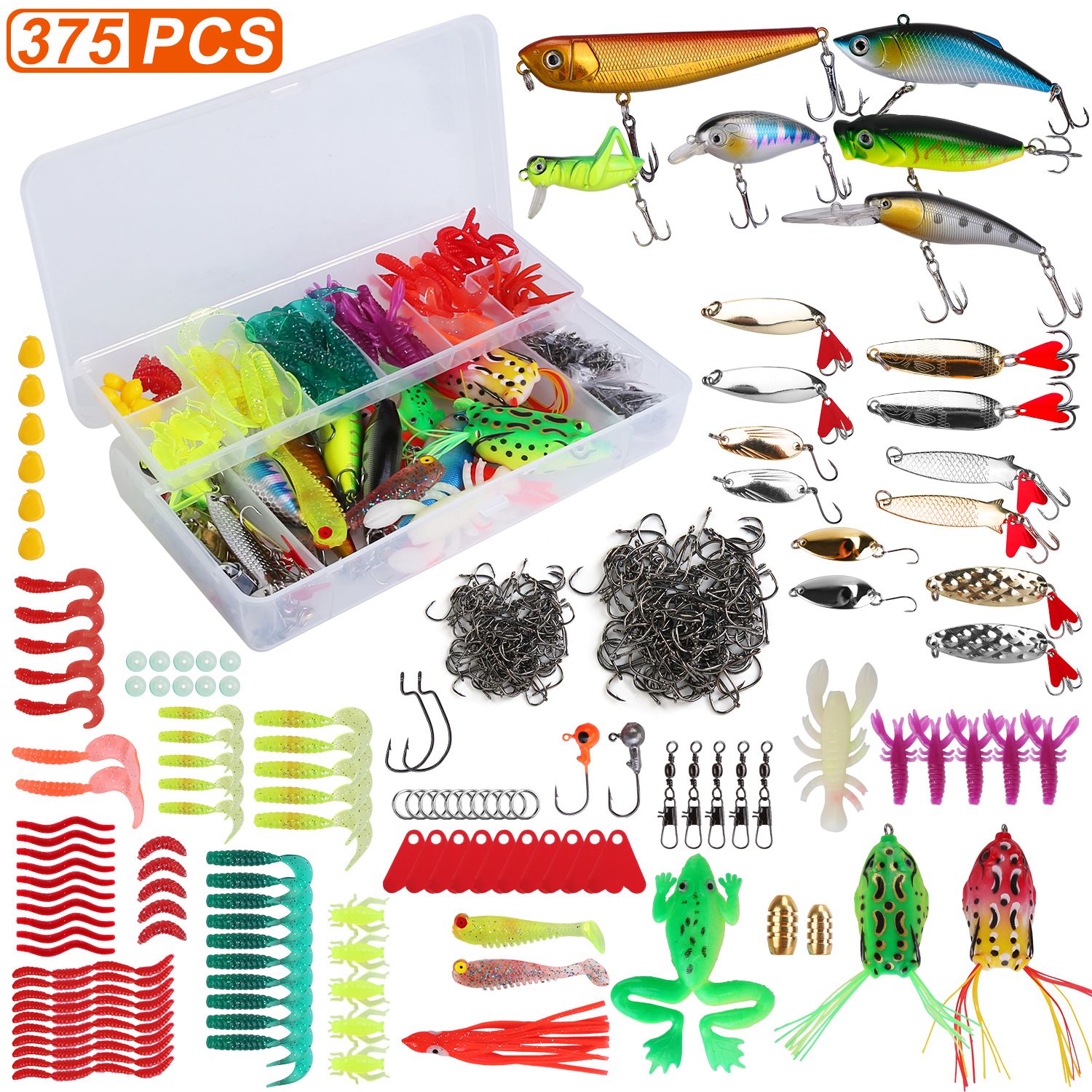 375Pcs Fishing Baits And Tackle Box Saltwater Freshwater Lures Kit Lifelike Popper Crankbaits Crickets Frogs Spoon Maggots$28.99
 View on Mallflare
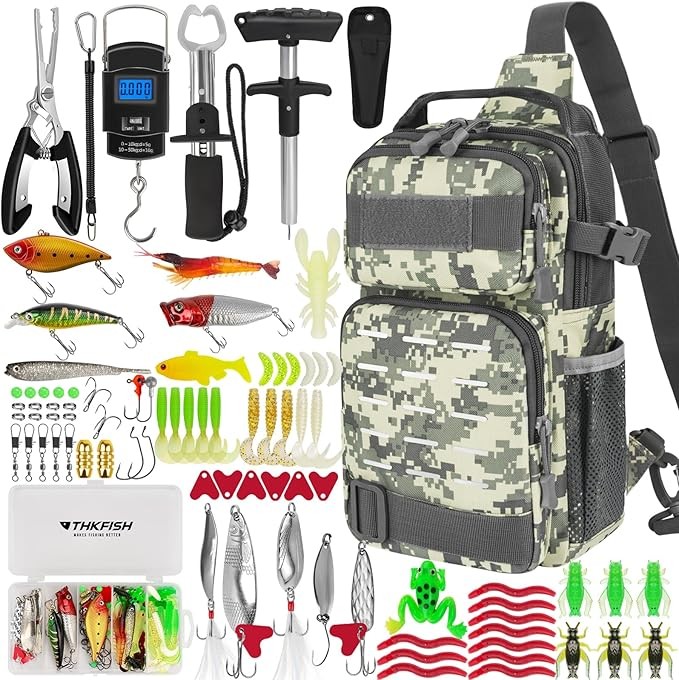 Fishing Tackle Box Kit Assorted Lures Topwater Baits Swimbaits Frog Baits Bass$39.99View on eBay
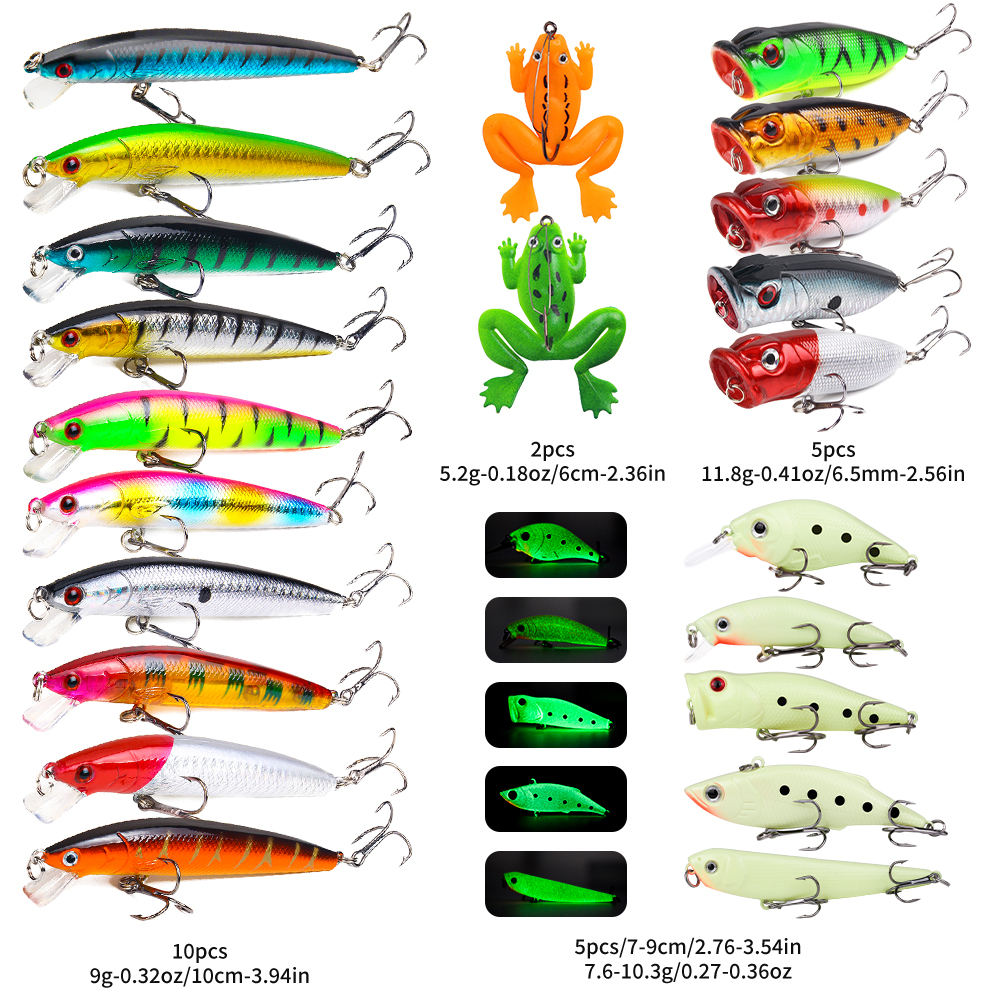 22-piece Set Hard Lure Soft Frog Popper Minnow Pencil VIB Luminous Bait Set Durable Hooks Realistic Action Ideal$41.99View on Mallflare
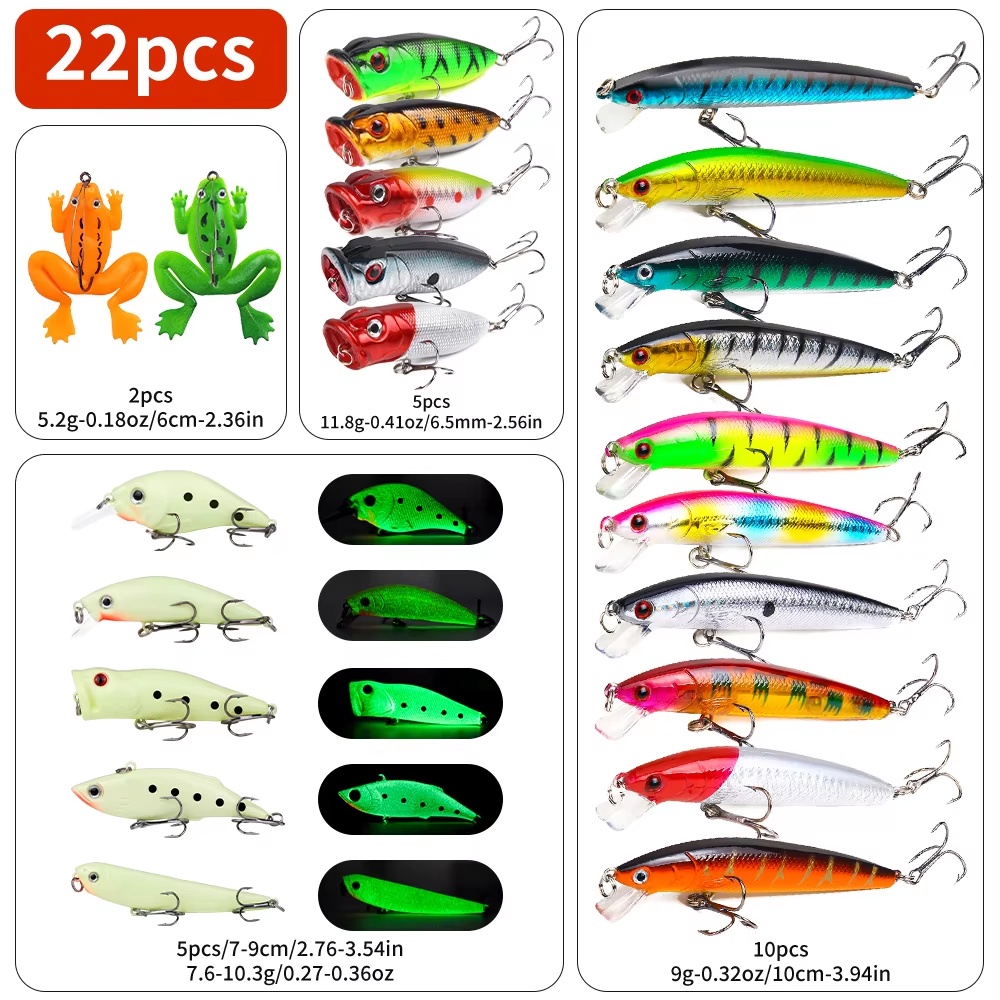 22pcs 1set Hard Lure Bait Soft Frog Popper Minnow Pencil VIB Luminous Kit Durable Hooks Realistic Action Ideal$41.99View on Mallflare
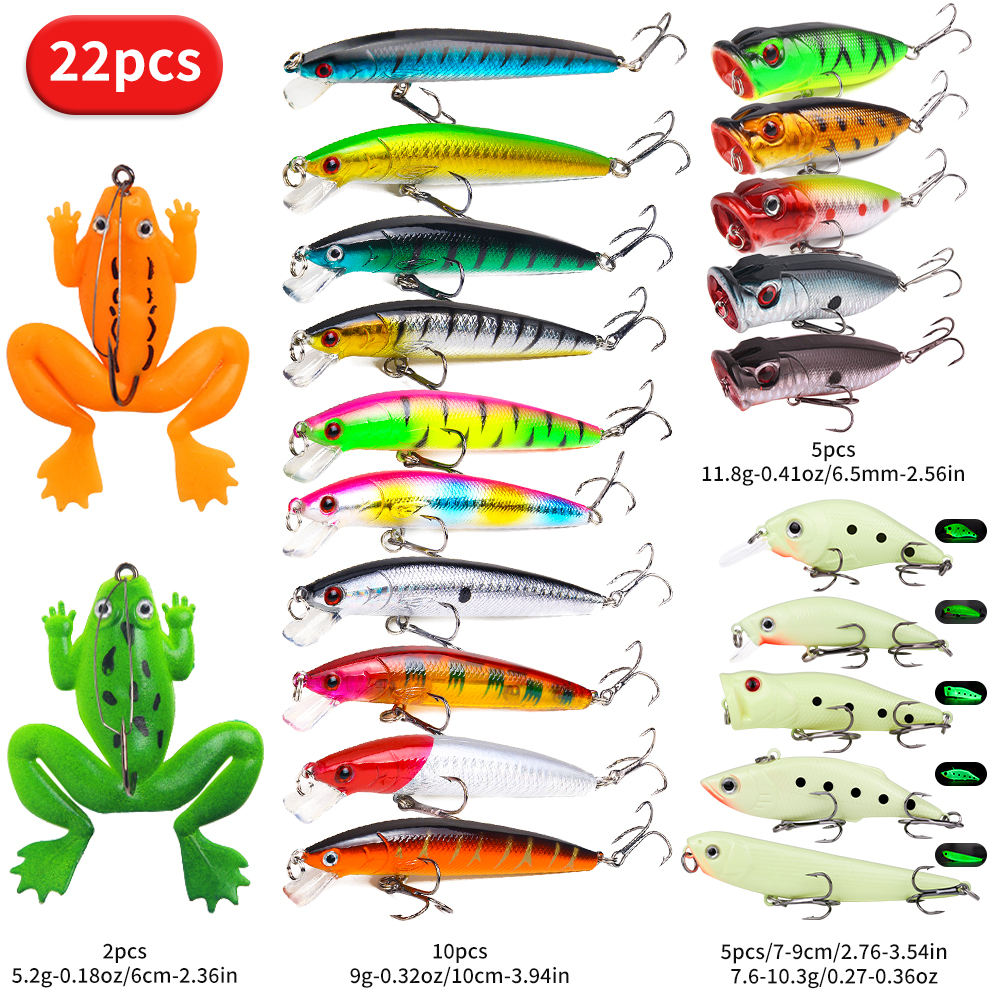 22pcs 58pcs 102pcs Fishing Lure Kits Multi-functional Set Topwater Floating Swimming Lures, Equipped With High Pitch Hook Soft Frogs, Used For Bass$70.99View on Mallflare
Highlights
- Hollow-body frogs use a lead or tungsten weight in the tail to cast far and land belly-down; soft-plastic frogs lack that self-righting weight and skip less cleanly.
- Body-wall thickness drives hookset physics: thin walls (about 1mm) collapse under light pressure, thick walls (about 2mm+) need a harder hookset to expose the hook points.
- Hook-gap clearance matters more than hook count: a single wide-gap double hook with 6-8mm of exposed gap clears the body wall better than narrow-gap doubles.
- Weed-guard design splits into molded-in plastic guards and wire guards; molded guards shed vegetation better but wear out, while wire guards are replaceable and last longer.
Best use cases
- Best fit: matted grass, lily pads, and duckweed — pick a hollow-body frog with a 2mm+ body wall, wide-gap double hook, and molded weed guard; skip soft-plastic frogs here.
- Best fit: open water and sparse cover — choose a soft-plastic frog or a walking-style hollow frog with a thinner wall for easier hooksets; skip heavy-duty thick-wall frogs.
- Best fit: skipping under docks and overhanging trees — use a compact 2.5-3 inch hollow frog with a tail weight for cast accuracy; skip long-legged or oversized frogs.
- Wrong fit: clear-water finesse fishing — frogs are topwater disturbance baits, not subtle; use a soft-plastic worm or finesse jig instead.
Buying tips
- Match frog length to hook size: 2.25-2.75 inch frogs take a 3/0-4/0 double hook; 3-3.5 inch frogs need a 4/0-5/0 double for adequate gap.
- Choose body-wall thickness by cover: 1-1.5mm for open water and easy hooksets, 2-2.5mm for matted vegetation where durability matters more than collapse.
- Check the hook-gap-to-body ratio: exposed hook gap should be at least 40% of frog body width, or hooksets will glance off the plastic.
- Prefer hollow frogs with a sealed air chamber and a drain hole; unsealed frogs waterlog after a few casts and lose their walking action.
Specs
| Body Type | Hollow-body vs soft-plastic solid |
|---|---|
| Body Wall | 1.0-2.5 mm (thin to thick) |
| Hook Gap | 6-8 mm exposed double hook |
| Weed Guard | Molded plastic vs replaceable wire |
Related searches
What to check before buying
- Rod power check: use a medium-heavy to heavy fast-action rod rated for 1/2-1.5 oz to drive thick-wall frogs through cover; medium rods flex too much for solid hooksets.
- Line check: 50-65 lb braid is the standard for frog fishing — monofilament and fluorocarbon stretch and reduce hookset power.
- Cover density check: measure vegetation thickness; choose thicker body walls and molded weed guards for matted slop, thinner walls for sparse pads.
- Storage check: store hollow frogs in a vented box with the drain hole open to prevent waterlogging and body deformation between trips.
FAQ
Data sources: eBay / Amazon listings and product attribute feeds Data updated Nov 16, 2026.
Some links on this page are affiliate links. If you buy after clicking one, we may earn a commission at no extra cost to you. This does not change which products appear here or their order. Affiliate disclosure.