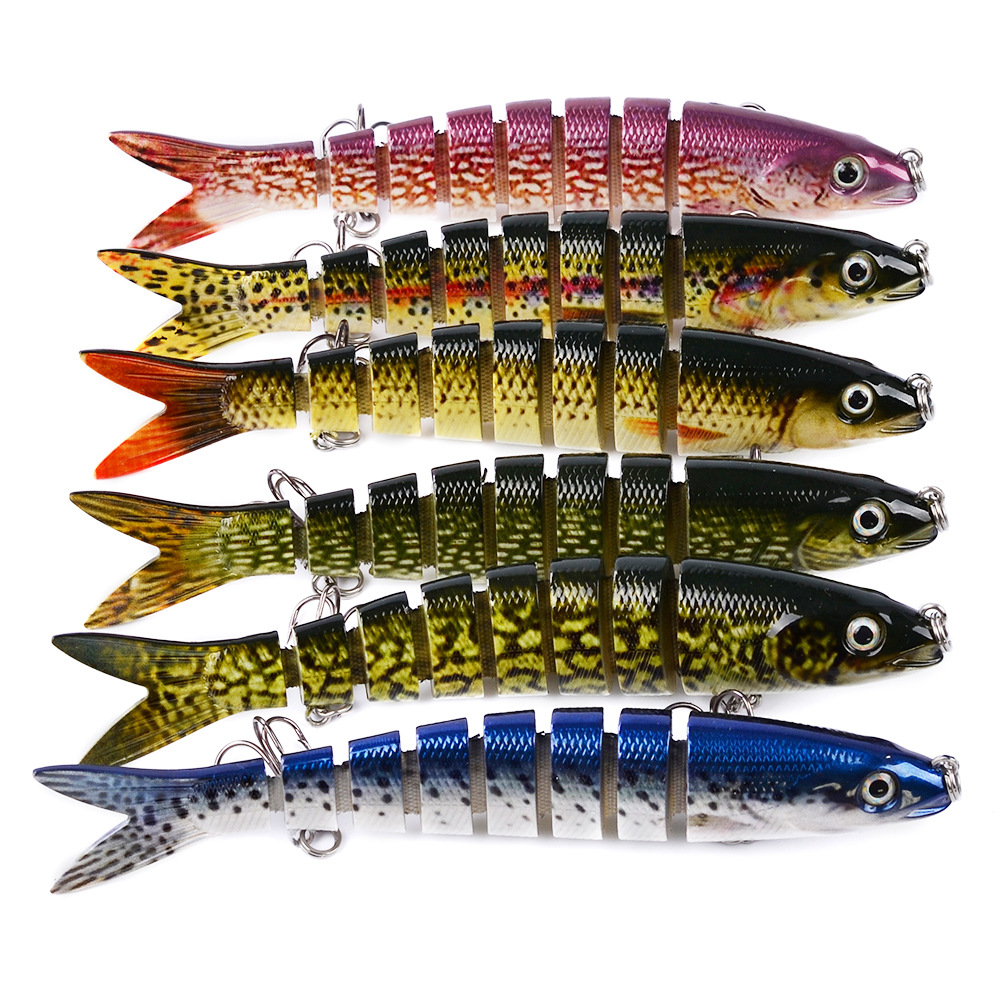

Photos from current listings. Actual item, color, and included accessories may vary.
Pike Fishing Lure Buying Guide
Pike fishing lures are hard and soft baits purpose-built to trigger Esox lucius strikes, with the core trade-off being hook durability and body material versus action realism and price. Cheap ABS plastic baits with nickel-plated trebles bend out on big fish, while quality through-wire construction and saltwater-grade hooks survive repeated pike jaws. The decision rule: buy lures with a full through-wire harness and at least 1.2mm stainless trebles for serious pike, and skip glue-in hangers or painted-carbon hooks for anything beyond casual casting.


At a glance
- Category
- Fishing Hooks, Lures & Baits
- Data updated
- Nov 16, 2026
Current offers
Highlights
- Hard pike lures split into jointed swimbaits (multi-section, wide S-curve action) and solid gliders/jerks (tight darting action); jointed bodies need internal through-wire, not glued hangers, to survive pike teeth.
- Treble hook wire gauge is the durability bottleneck: 1.2mm–1.4mm stainless or forged carbon hooks hold pike; thin 0.8mm painted hooks bend out on fish over roughly 5 kg.
- ABS plastic is the dominant hard-bait material; thicker-walled ABS (2mm+) resists crush damage and holds screw eyes, while thin-walled hollow bodies crack at the joint pin.
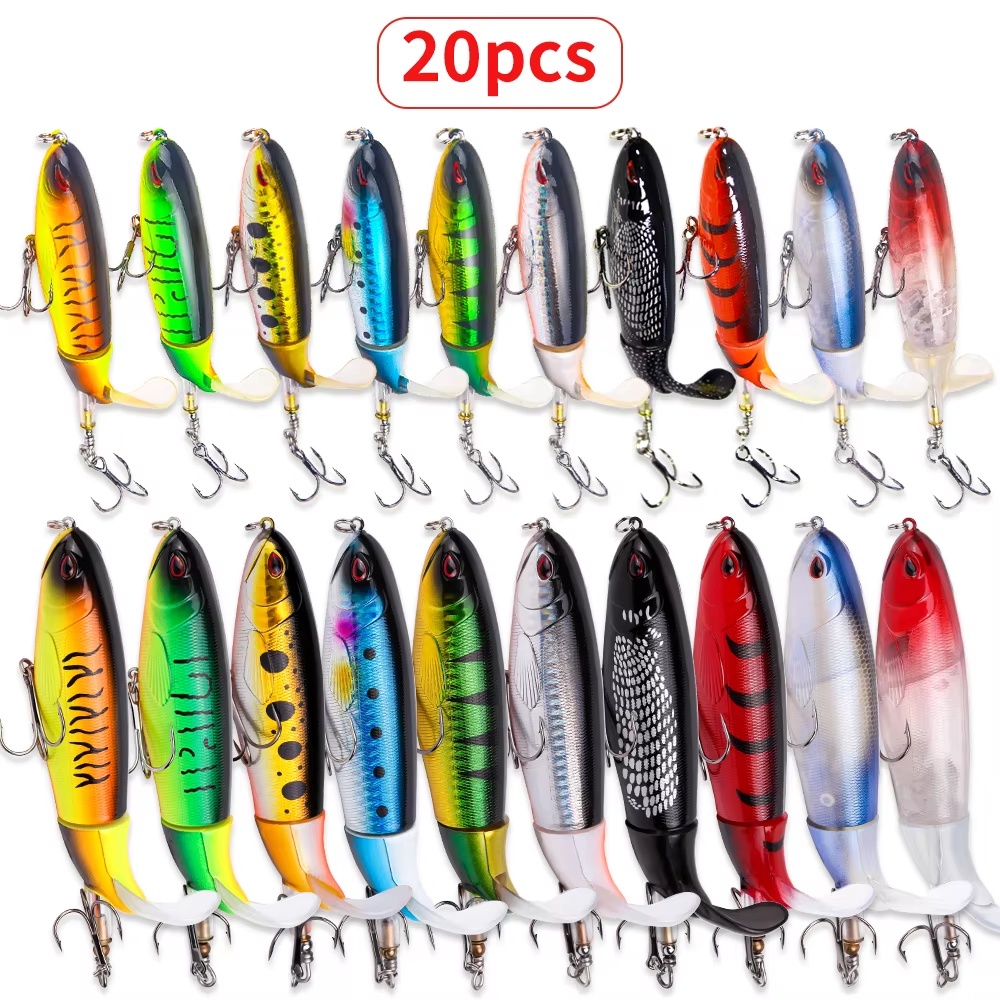
- Topwater poppers (cupped face, 13g–35g class) and trolling jointed baits are distinct pike tools: poppers for shallow vegetation and dawn/dusk, jointed divers for open-water trolling and casting.
Best use cases
- Best fit: weedy shallow bays and dawn topwater — pick a 13g–20g cupped-face popper with 1.2mm trebles; skip heavy jointed divers that snag weed.
- Best fit: open-water trolling and long casts over deep flats — pick a 35g multi-jointed swimbait with through-wire and saltwater trebles; skip lightweight finesse baits that won't reach depth.
- Best fit: cold-water jerkbait fishing — pick a solid glider with tight darting action and one-piece wire frame; skip multi-joint baits that tangle in low temperatures.
- Wrong fit: fishing around heavy timber or rocks with any glued-hanger hard bait — the joint pin and eye will fail; choose soft plastics rigged weedless with a heavy wire hook instead.
Buying tips
- Match lure weight to rod rating: a 13g–35g pike lure needs a rod rated roughly 10g–40g or 15g–50g; throwing a 35g bait on a 10g-rated rod risks tip breakage.
- Insist on through-wire construction: a single stainless wire runs nose-to-tail connecting line tie and all hook hangers; glued-in screw eyes pull out under pike jaw pressure.
- Upgrade trebles to 1.2mm–1.4mm forged or stainless round-bend hooks; stock 0.8mm painted hooks are the first failure point on fish over 5 kg.
- Choose jointed multi-section baits for wide S-curve action in warm water (above 15°C) and solid gliders/jerks for tight action in cold water below 10°C.
Specs
| Body Material | ABS plastic (2mm+ wall) vs soft PVC |
|---|---|
| Hook Wire Gauge | 1.2–1.4mm forged/stainless trebles |
| Construction | Through-wire frame vs glued hangers |
| Lure Class | Jointed swimbait / glider / popper / soft plastic |
Related searches
What to check before buying
- Rod and line: confirm rod lure rating covers your chosen bait weight (e.g., 15g–50g rod for 35g jointed baits) and use 30lb–50lb braid with a 20lb–30lb fluorocarbon or wire leader.
- Leader requirement: pike require a wire or heavy fluorocarbon leader (minimum 20lb, ideally 30lb+ or 49-strand wire) because their teeth shear monofilament.
- Body wall thickness: for hard baits, check the ABS wall is at least 2mm at the joint and hook hanger area; thin hollow bodies crack at the pin.
- Hook replacement stock: budget for a set of 1.2mm–1.4mm trebles in sizes #1 to #2/0 to swap onto new lures before first use.
FAQ
Data sources: eBay / Amazon listings and product attribute feeds Data updated Nov 16, 2026.
Some links on this page are affiliate links. If you buy after clicking one, we may earn a commission at no extra cost to you. This does not change which products appear here or their order. Affiliate disclosure.