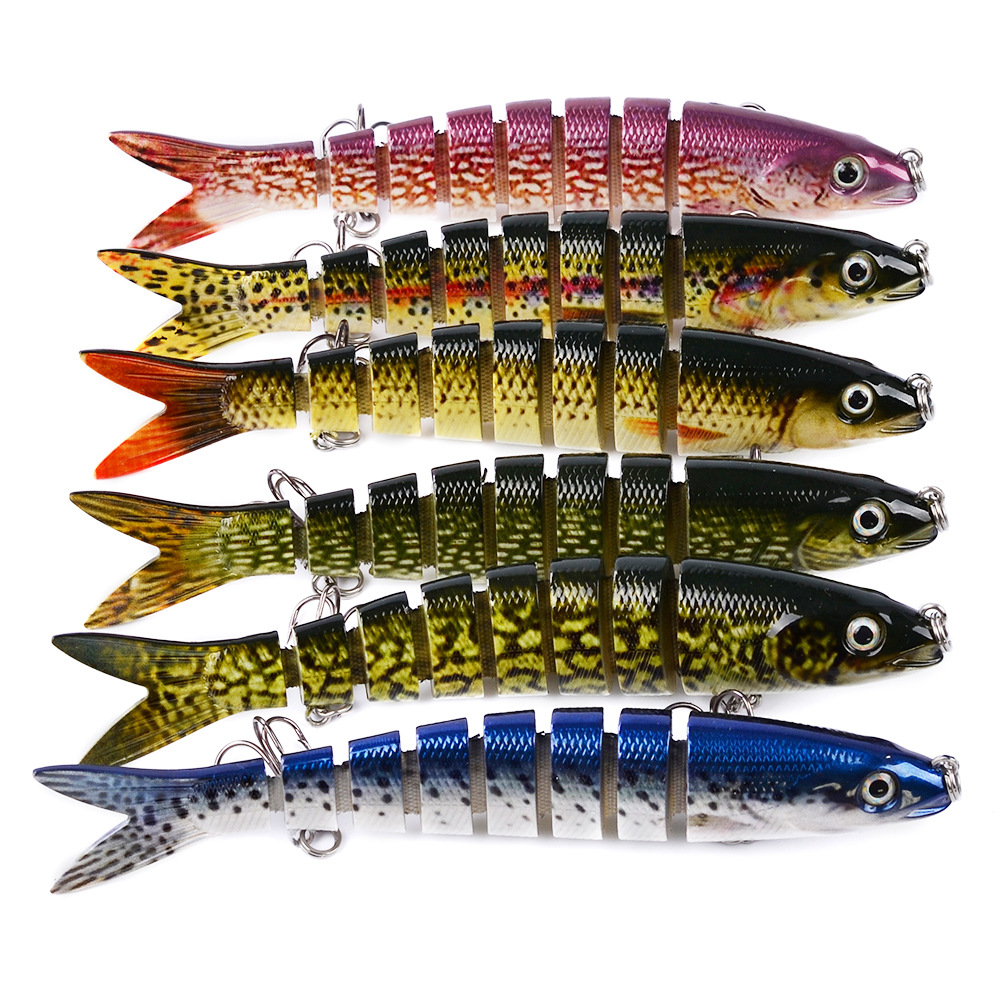

Photos from current listings. Actual item, color, and included accessories may vary.
Pike Lure Buying Guide
Pike lures are purpose-built artificial baits—hard baits, soft plastics, and spinnerbaits—engineered to trigger the aggressive strike of Esox lucius while surviving their teeth and violent headshakes. The core trade-off is between flash/action (hard ABS bodies, jointed sections) and durability/hook-up ratio (soft plastics with single hooks, wire leaders). Buy hard baits with through-wire construction and corrosion-resistant hooks for open water, and soft plastics with wide-gap hooks for weedy cover.


At a glance
- Category
- Fishing Hooks, Lures & Baits
- Data updated
- Nov 16, 2026
Current offers
Highlights
- Hard pike lures use ABS plastic bodies; jointed multi-section models create a wider S-curve action but add hinge failure points under tooth load.
- Through-wire construction (a continuous wire from line tie to tail hook hanger) is the single strongest durability indicator in hard pike baits.
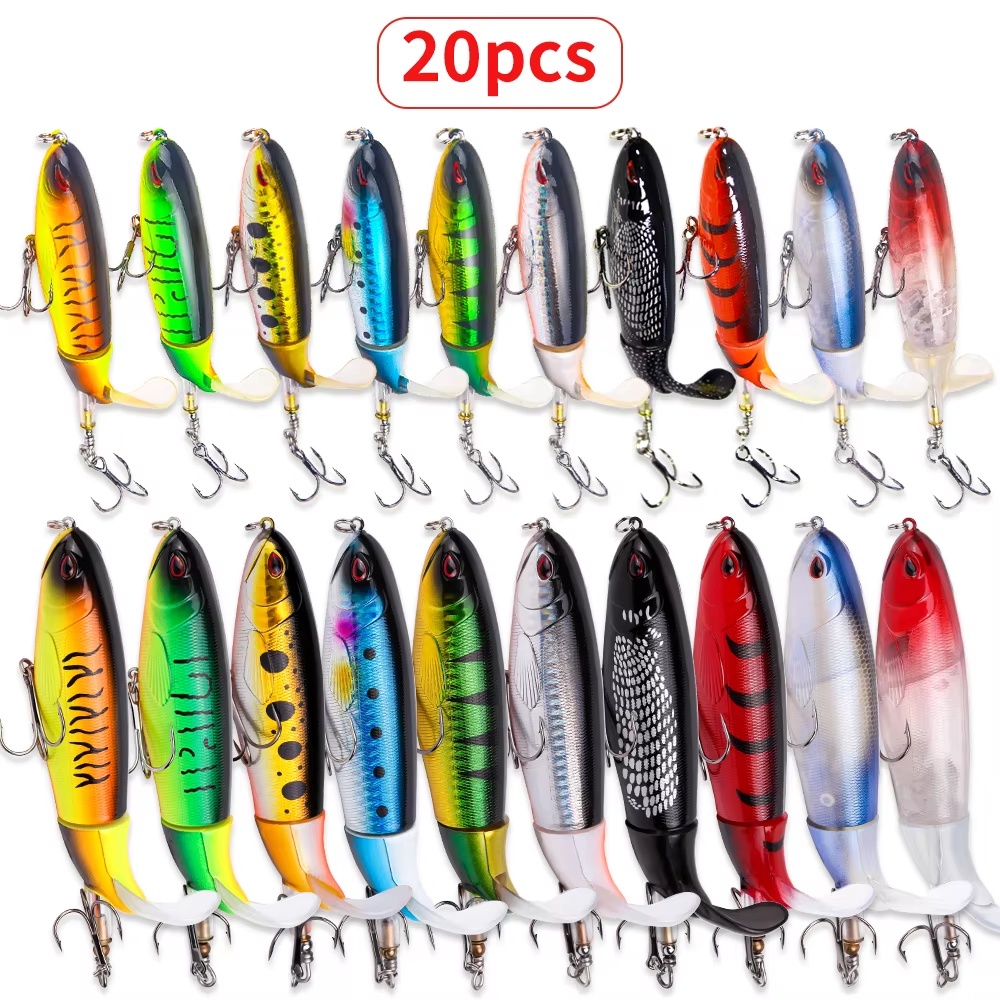
- Topwater poppers rely on cupped faces to spit water; 13g–35g sizes cover finesse to power-fishing applications for pike in shallow cover.
- Tungsten or lead-weighted soft-plastic hooks must be wide-gap (4/0–6/0) to clear a pike's jaw and maximize hook-up on single-hook rigs.
Best use cases
- Best for open-water casting over weed beds: pick jointed hard baits in 13–20cm with through-wire construction and treble hooks—skip light finesse baits that pike inhale and reject.
- Best for dense lily pads and timber: choose soft plastic swimbaits or jerkbaits rigged on 5/0–6/0 wide-gap weighted hooks—skip treble-hooked hard baits that snag constantly.
- Best for cold-water or pressured fish: select slow-sinking or suspending jerkbaits in natural perch/pike patterns—skip oversized topwater poppers that pike ignore below 10°C.
- Wrong fit: using bass-sized 7–10cm lures for pike; pike consistently take 15–25cm baits and short-strike smaller offerings, leading to missed hook-sets.
Buying tips
- Match lure length to pike size: 15–20cm for average fish, 20–25cm for trophy-class waters; smaller baits attract jack pike but reduce big-fish selectivity.
- Choose through-wire hard baits over screw-eye models; screw-eye hangers pull out under pike tooth abrasion and violent strikes.
- Pair every pike lure with a 30–40cm wire leader (single-strand or seven-strand) of at least 20lb test—pike shear monofilament and fluorocarbon.
- For jointed hard baits, inspect hinge pins: metal pin-through-ABS hinges outlast molded plastic tab hinges that crack after repeated tooth contact.
Specs
| Lure Length | 12–25 cm (pike range) |
|---|---|
| Body Material | ABS plastic / soft PVC |
| Construction | Through-wire vs screw-eye |
| Hook Type | Treble (#2–1/0) / wide-gap single |
Related searches
What to check before buying
- Rod rating: confirm your rod's lure weight range covers the bait (e.g., 13–35g baits need a rod rated at least 10–40g) to avoid overload and poor casting.
- Leader requirement: budget for a wire leader (20lb+) for every pike lure—no pike setup is complete without bite protection.
- Hook replacement: stock spare treble hooks in sizes #2–#1/0 and split rings rated 30lb+; pike flatten stock hooks quickly.
- Storage: use a lure wrap or hard box with individual compartments to prevent treble hooks tangling and hook-point dulling.
FAQ
Data sources: eBay / Amazon listings and product attribute feeds Data updated Nov 16, 2026.
Some links on this page are affiliate links. If you buy after clicking one, we may earn a commission at no extra cost to you. This does not change which products appear here or their order. Affiliate disclosure.