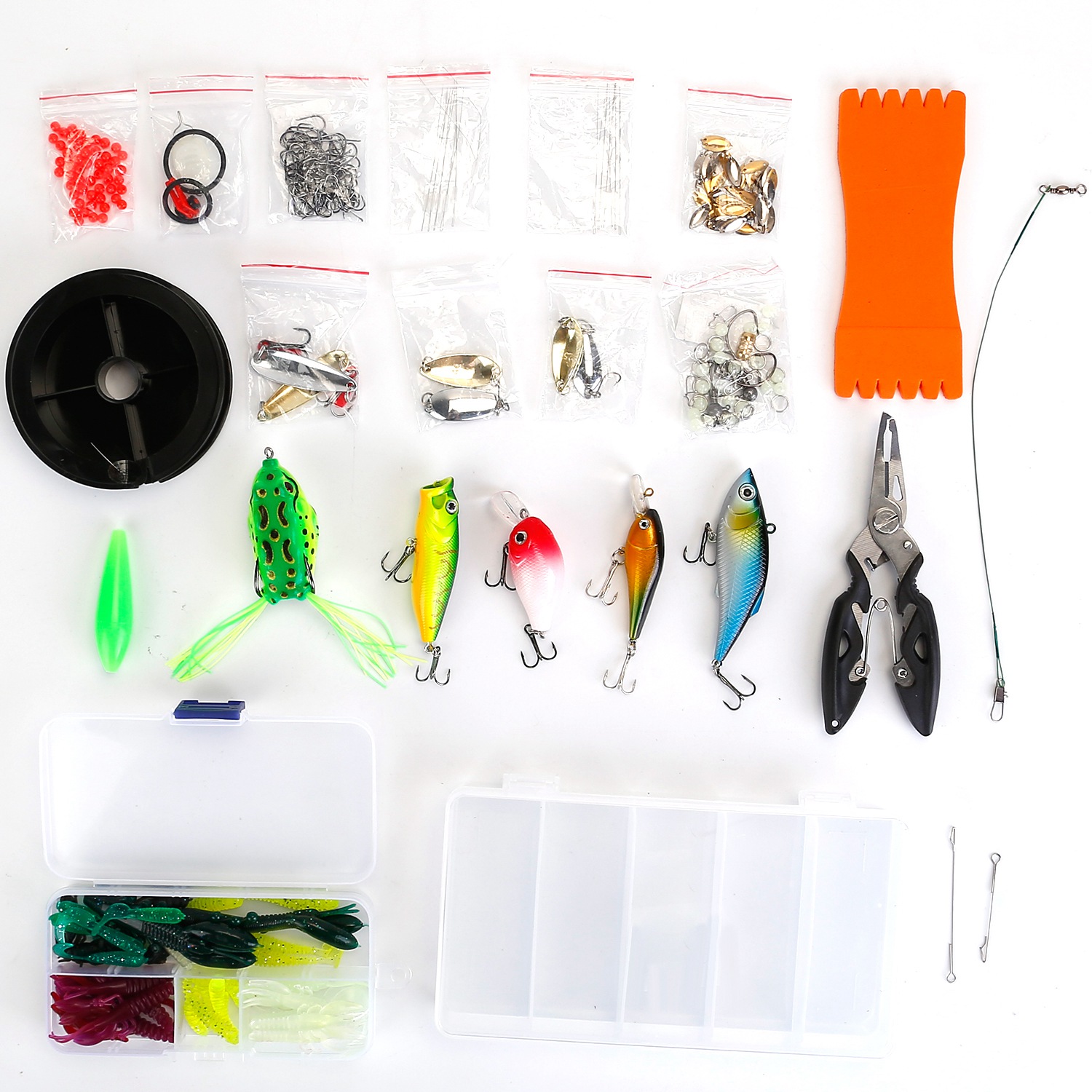

Photos from current listings. Actual item, color, and included accessories may vary.
Spinnerbait Buying Guide
A spinnerbait is a wire-arm lure with a skirted hook and one or more flashing blades that vibrate and thump through cover. The core trade-off is blade configuration and wire gauge versus skirt durability and hook quality: thin wire and stamped blades transmit more vibration but bend out of tune, while heavy wire and premium skirts track true but kill action at slow retrieve speeds. The decision rule is simple: buy for the exact depth and cover you fish (tandem willow for open water, single Colorado for stained shallow cover) and reject any bait with a painted or plated blade that flakes or a skirt made of rigid vinyl strands.


At a glance
- Category
- Fishing Hooks, Lures & Baits
- Data updated
- Nov 16, 2026
Current offers
Highlights
- Blade count and shape govern vibration versus flash: tandem willow-leaf blades run deepest with maximum flash, single Colorado blades thump hardest for stained water, and Indiana blades split the difference for mid-depth bass.
- Wire gauge sets durability and retrieve speed: 0.035–0.040 inch stainless wire holds tune under heavy hooksets and allows slow-rolling, while 0.025–0.030 inch wire vibrates at high speed but bends permanently after snags.
- Skirt material determines lifespan: silicone or living-rubber skirts keep pulsing action for seasons, whereas cheap vinyl skirts stiffen and mat after a few outings and must be replaced.
- Hook quality separates tiers: premium baits use black-nickel or bronze Gamakatsu-style round-bend hooks with welded eye rings, while budget baits ship with soft, easily straightened hooks that cost fish at the boat.
Best use cases
- Pick a tandem-willow spinnerbait in 3/8–1/2 oz for open-water bass over weed flats and points where you need speed, flash, and long casts; skip single-Colorado baits here because they lift and roll at high retrieve speeds.
- Choose a single-Colorado or Indiana-blade bait in 1/4–3/8 oz for stained or muddy shallow cover and night fishing; skip tandem-willow models because their flash disappears in low visibility.
- Use a 1/2–3/4 oz heavy-wire spinnerbait for slow-rolling deep ledges and around timber; skip lightweight 1/4 oz baits because they rise and cannot maintain contact with deep structure.
- For pike and musky, select a 1–2 oz model with a heavy wire frame and a trailing treble or stinger hook; skip standard bass-size 3/8 oz spinnerbaits because the wire will fail under a large fish's torque.
Buying tips
- Match weight to depth and wind: 1/4 oz for shallow 1–3 ft, 3/8 oz for 3–6 ft, 1/2 oz for 6–10 ft, and 3/4 oz or heavier for deep ledges or heavy wind.
- Choose blade material deliberately: nickel or gold-plated brass blades give true flash and corrosion resistance, while painted blades mute flash but work well in bright sun; reject blades with flaking paint.
- Inspect wire gauge before buying: 0.035 inch or thicker stainless wire suits heavy cover and big fish, while 0.025–0.030 inch wire is for open water and finesse-speed retrieves only.
- Demand silicone or living-rubber skirts and a welded-eye hook; these two components outlast painted blades and determine whether the bait survives a season of bass fishing.
Specs
| Blade Configuration | Tandem willow / single Colorado / Indiana |
|---|---|
| Bait Weight | 1/4–3/4 oz bass; 1–2 oz pike |
| Wire Gauge | 0.025–0.040 in stainless |
| Skirt Material | Silicone / living rubber vs vinyl |
Related searches
What to check before buying
- Confirm your rod and line setup handle the bait weight: a 3/8 oz spinnerbait casts best on medium-power baitcasting or spinning tackle rated 1/4–3/4 oz, while 3/4 oz models need medium-heavy rods.
- Check water clarity before selecting blade color: nickel and gold blades for clear water, painted or Colorado blades for stained water, and dark colors for low-light or muddy conditions.
- Verify hook and wire condition on arrival: bend the wire gently to confirm it springs back, and check that the hook point is sharp and the eye is welded or closed.
- Match skirt color to forage: shad-pattern whites and silvers for open water, chartreuse and black for stained water, and craw patterns for rocky cover.
FAQ
Data sources: eBay / Amazon listings and product attribute feeds Data updated Nov 16, 2026.
Some links on this page are affiliate links. If you buy after clicking one, we may earn a commission at no extra cost to you. This does not change which products appear here or their order. Affiliate disclosure.