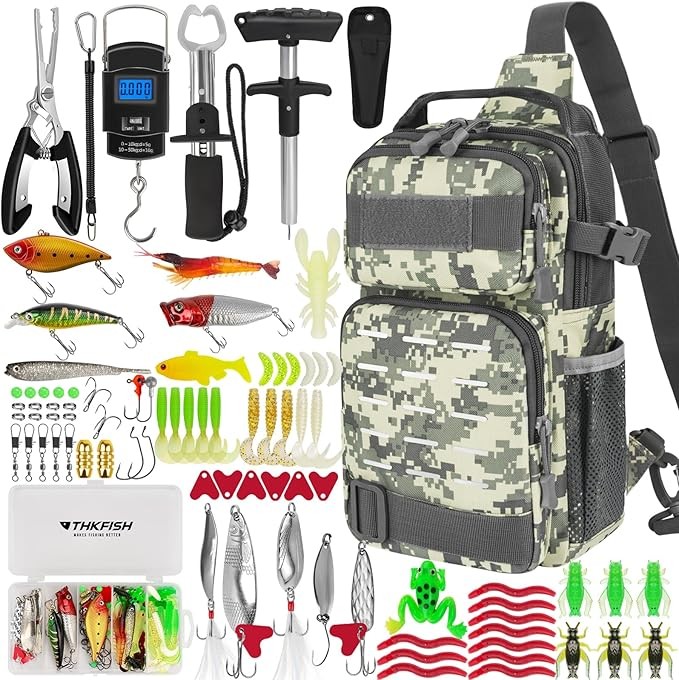

Photos from current listings. Actual item, color, and included accessories may vary.
Swim Bait Buying Guide
Swim baits are jointed or paddle-tail soft plastics and hard-bodied lures designed to produce a side-to-side or tail-thumping action that triggers predatory strikes. The primary trade-off is between soft-plastic realism and tail action versus hard-bodied durability and hook exposure, with cheap single-joint molds often rolling or tearing at the hinge. Buy soft paddle-tails for open-water bass and hard multi-joint glides for cover or big-fish targeting; skip hollow-body frogs and topwater prop baits when the fish are keyed on subsurface swimming presentations.


At a glance
- Category
- Fishing Hooks, Lures & Baits
- Data updated
- Nov 16, 2026
Current offers
Highlights
- Soft swimbaits use a paddle tail or boot tail; tail surface area and plastic softness dictate thump frequency, with thinner tails excelling in cold water and wider tails in warm murk.
- Hard swimbaits are jointed at 1-3 hinge points; more joints slow the swim and widen the S-curve, but each hinge is a failure point that can seize with grit.
- Weighted swimbait hooks (belly-weighted or screw-lock) control running depth: 1/8-1/4 oz for 3-4 inch baits, 1/2-1 oz for 5-7 inch baits to reach the strike zone.
- Line diameter and rod power must match bait weight; a 6-inch soft swimbait on 10 lb mono and a medium rod will not load the rod or set the hook reliably.
Best use cases
- Best fit: Open-water bass chasing shad — rig a 4-5 inch paddle-tail on a 3/0-5/0 belly-weighted hook and cast parallel to drop-offs; skip hard jointed baits that foul on grass.
- Best fit: Pitching around docks and laydowns — use a hard 2-joint glide bait that deflects off cover and exposes trebles on the pause; skip soft baits that tear on wood.
- Best fit: Cold-front sluggish fish — downsize to a 3-inch boot-tail on a 1/8 oz head and slow-roll; skip 6-inch+ baits that require fast retrieves to swim true.
- Wrong fit: Frogging mats and slop — hollow-body frogs and topwater prop baits are the tools; a subsurface swimbait will snag and miss the surface strike window.
Buying tips
- Match bait length to hook gap: a 5/0 hook fits a 5-inch bait; going up one hook size per inch of bait prevents short strikes and poor hooksets.
- Soft plastic grade matters: plastisol with salt content sinks faster and tears sooner; salt-free elaztech-style blends float and last longer but need screw-lock keepers.
- Hard swimbait hinge quality separates tiers: stainless pinned hinges with tight tolerances swim straight; loose or glued hinges roll out on the cast.
- For bass under 3 lb, a 3-4 inch paddle-tail on a 1/8-1/4 oz head outproduces big glide baits; reserve 6-inch+ hard baits for trophy-class fish and heavy rods.
Specs
| Body Type | Soft paddle-tail / Hard jointed |
|---|---|
| Bait Length | 3-8 in (bass: 3-5 in) |
| Hook Style | Belly-weighted swimbait / Treble |
| Bait Weight | 1/8-2 oz (match rod rating) |
Related searches
What to check before buying
- Rod rating check: confirm the rod's lure-weight range covers your chosen swimbait plus hook weight; a 1 oz bait on a 3/8 oz-rated rod will not cast or hook properly.
- Line and leader: use 15-20 lb fluorocarbon for hard jointed baits and 10-12 lb for open-water soft baits; braid requires a leader with soft plastics to avoid tear-off.
- Storage: hard swimbaits need a hook-safe box with dividers; soft paddle-tails deform if stored bent against tackle, so keep them flat in a binder.
- Water clarity and cover: choose natural shad patterns in clear water and chartreuse or white in stained water; match hinge count to snag density before tying on.
FAQ
Data sources: eBay / Amazon listings and product attribute feeds Data updated Nov 16, 2026.
Some links on this page are affiliate links. If you buy after clicking one, we may earn a commission at no extra cost to you. This does not change which products appear here or their order. Affiliate disclosure.