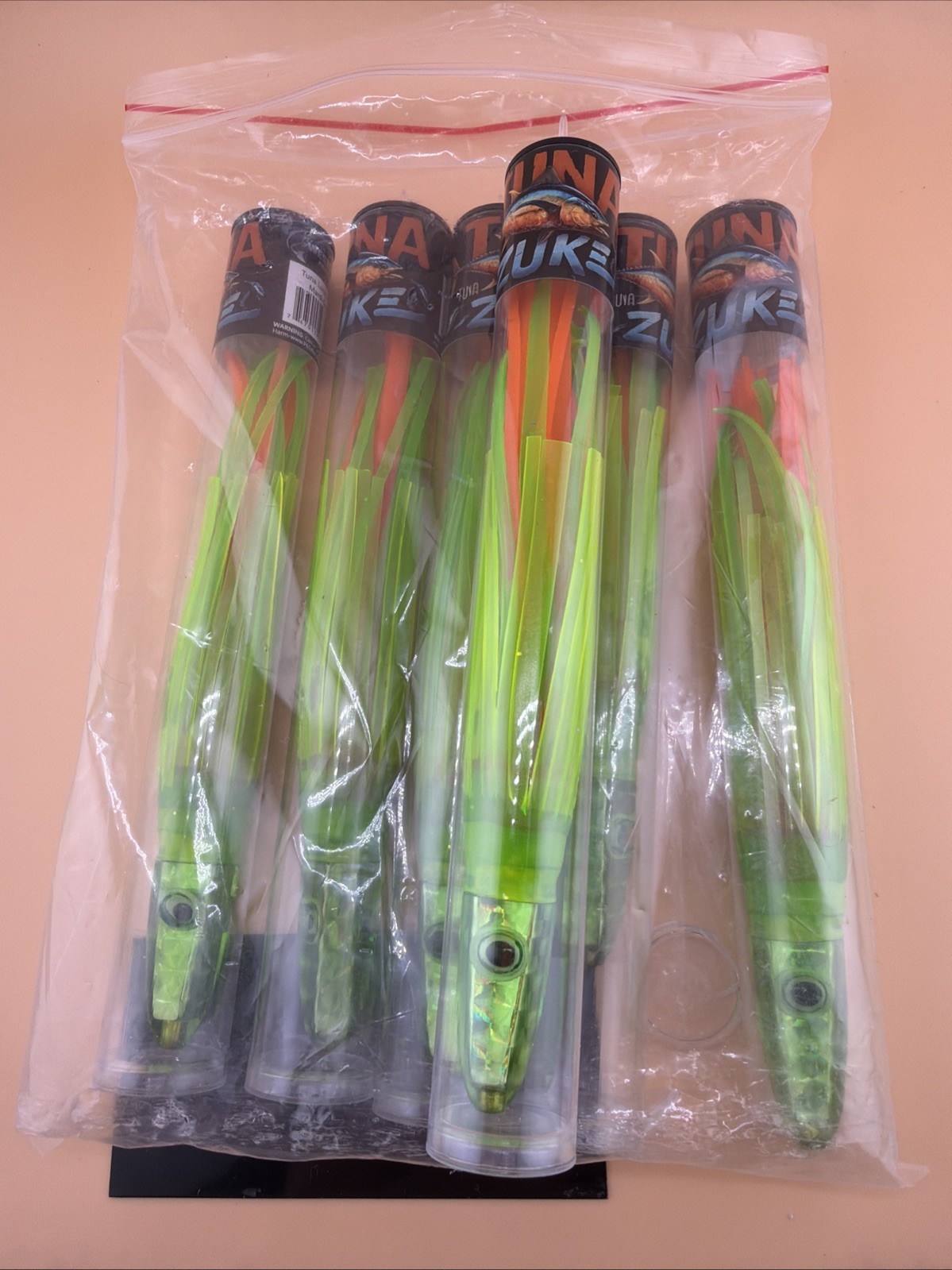

Photos from current listings. Actual item, color, and included accessories may vary.
Tuna Trolling Lure Buying Guide
Tuna trolling lures are offshore skirted or hard-head trolling baits engineered to run at specific speeds and depths behind a boat, where the core trade-off is skirt material durability and head weight versus running attitude at 6–9 knots. Choose based on target species size and trolling speed: soft-skirt chuggers and jets for surface yellowfin and skipjack, heavy hard heads and diving plugs for deep-running bluefin and bigeye.


At a glance
- Category
- Fishing Hooks, Lures & Baits
- Data updated
- Nov 18, 2026
Current offers
Highlights
- Skirt material determines lifespan: vinyl and silicone skirts survive 20–40 knot tunas, while cheap PVC skirts shred after a few fish and foul the hook gap.
- Head weight and shape set running depth and action: cupped chugger heads pop on the surface, jets track straight at 6–8 knots, and cone heads dive 15–30 ft on wire line.
- Hook rigging separates fish-holding lures from lost-fish lures: stainless double hooks in 7/0–9/0 with 200–300 lb mono or 49-strand wire leaders resist bite-offs from bluefin and wahoo.
- Leader and line class must match lure size: 50–80 lb braid with 80–130 lb mono topshots for school tuna; 130–200 lb leaders for cow bluefin over 100 lb.
Best use cases
- Best for school yellowfin and skipjack under 40 lb: 6–8 inch soft-skirt jets and chuggers in multicolor or natural baitfish patterns run at 6–7 knots on 50–80 lb class tackle.
- Best for bluefin and bigeye over 80 lb: 9–12 inch hard-head cone or diving lures with 300 lb leader and 9/0 stainless hooks trolled at 7–9 knots on 130 lb class gear.
- Wrong fit for inshore or kayak trolling: large 10-inch+ heads and 200 lb leaders overpower light tackle and won't run true below 5 knots; use 4–6 inch feather or cedar plug alternatives instead.
- Skip cheap 6-packs with unbranded PVC skirts and bare hooks for serious offshore use; choose pre-rigged lures with welded ring hangers and quality stainless hooks for repeated tuna battles.
Buying tips
- Match lure head diameter to target class: 1.5–2 inch heads for 20–40 lb tuna, 2.5–3.5 inch heads for 60–150 lb tuna, and 4 inch+ heads only for cow bluefin over 150 lb.
- Verify skirt material before buying: silicone or vinyl skirts last multiple fish, while PVC or rubber skirts tear on the first strike and inhibit hook penetration.
- Check hook rigging hardware: welded stainless rings, 7/0–9/0 double hooks, and 200–300 lb mono or wire leader are minimum for tuna; replace bare J-hooks on bargain packs.
- Run speed dictates head shape: cupped chuggers for surface commotion at 6–7 knots, straight jets for stable tracking at 7–9 knots, and heavy cones for depth on wire or lead-core line.
Specs
| Lure Head Size | 1.5–4 in (species-dependent) |
|---|---|
| Skirt Material | Silicone / vinyl vs PVC |
| Trolling Speed | 5–9 knots typical |
| Hook Rigging | 7/0–9/0 stainless double |
Related searches
What to check before buying
- Rod and reel class: confirm your stand-up or bent-butt rod is rated for 50–130 lb line and reel drag is set to 25–40 lb for the lure's target tuna size.
- Trolling speed capability: boat must be able to hold 6–9 knots consistently; slower boats need lighter 6-inch jets that track at 5–6 knots.
- Leader and terminal tackle: have 80–200 lb mono or 49-strand wire leader material and crimping tools on board to re-rig lures after fish or chafe.
- Storage and corrosion: rinse lures in fresh water after each saltwater trip; stainless hooks still corrode, so keep spare hooks and split rings in a dry box.
FAQ
Data sources: eBay / Amazon listings and product attribute feeds Data updated Nov 18, 2026.
Some links on this page are affiliate links. If you buy after clicking one, we may earn a commission at no extra cost to you. This does not change which products appear here or their order. Affiliate disclosure.