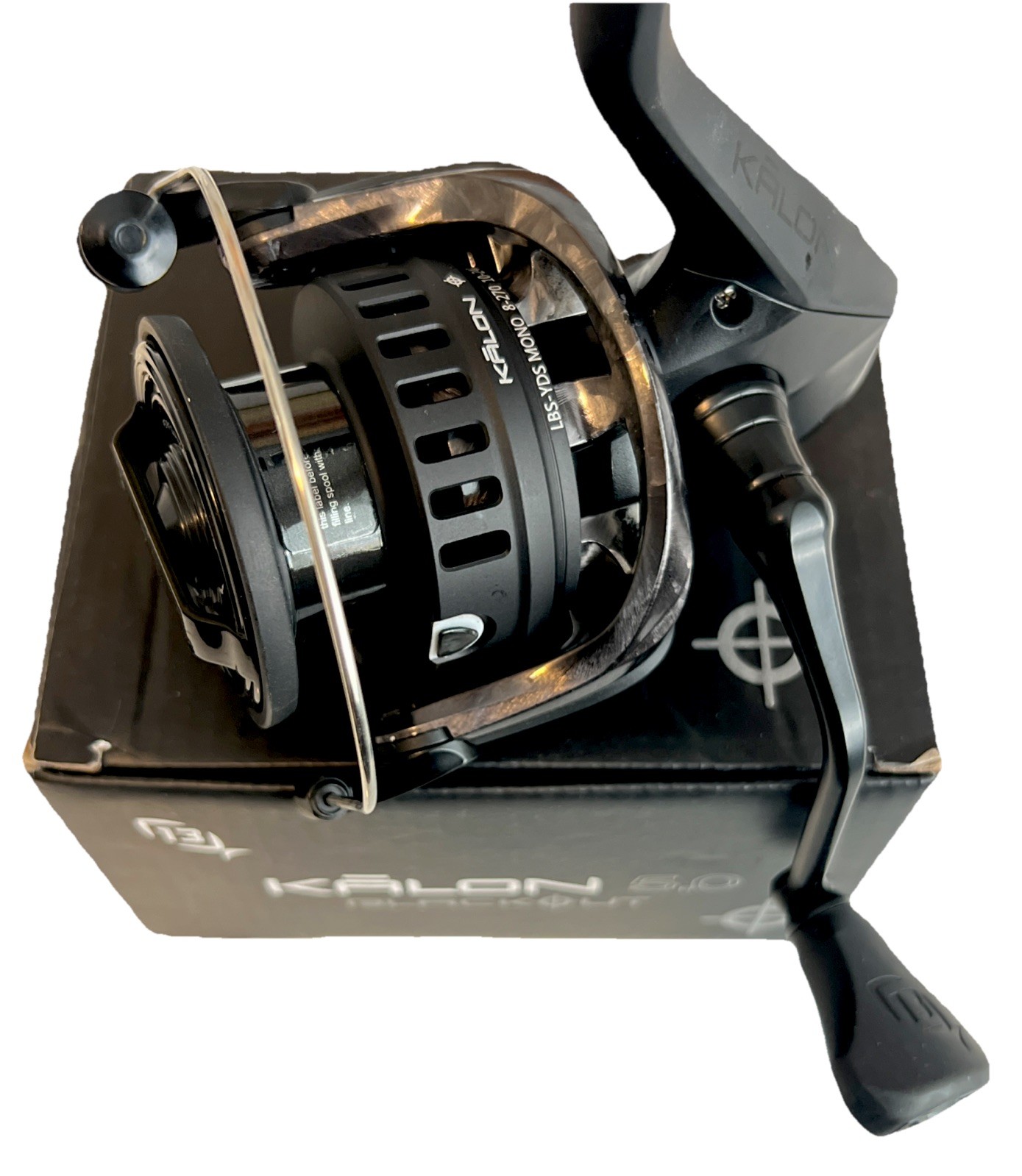

Photos from current listings. Actual item, color, and included accessories may vary.
13 Fishing Reel Buying Guide
13 Fishing reels are a family of spinning and casting reels built around lightweight frames, carbon drag systems, and aggressive styling, spanning entry-level to tournament-grade tiers. The core trade-off is frame and drag material: polymer/composite bodies keep weight and cost down but flex under load, while aluminum frames and carbon drag washers deliver the rigidity and heat resistance needed for big fish. Buy aluminum-framed tiers for saltwater and heavy cover, and accept composite bodies only for freshwater finesse and occasional use.


At a glance
- Category
- Fishing Reels
- Data updated
- Nov 16, 2026
Current offers
Highlights
- Kalon Blackout uses a carbon fiber drag system and aluminum spool; the 5.0:1 gear ratio suits crankbaits and deep-diving lures rather than fast jigging.
- Origin and Concept tiers use composite/graphite bodies and stainless bearings; the Kalon and Creed lines step up to aluminum frames for saltwater-grade rigidity.
- 13 Fishing spinning reels run 5-7 stainless steel ball bearings plus a roller bearing; bearing count above 6 adds smoothness but not structural durability.
- Casting models like the Concept A/C use magnetic cast control; spinning models rely on a front drag stack rated by max drag pressure, not line capacity alone.
Best use cases
- Best fit: freshwater bass and walleye anglers choosing the Kalon Blackout 5.0 spinning reel for crankbaits, spinnerbaits, and finesse plastics on 6-10 lb fluorocarbon.
- Best fit: inshore saltwater anglers stepping up to an aluminum-frame 13 Fishing reel in the 2500-3000 size to resist flex and corrosion on redfish and speckled trout.
- Wrong fit: anglers targeting trophy musky or saltwater jacks should skip composite-body Origin models and choose an aluminum-frame casting reel with a sealed drag.
- Wrong fit: ultralight panfish and trout specialists should skip the heavier Kalon Blackout and pick a 1000-size composite reel to save weight on long hikes.
Buying tips
- Match reel size to line: a 1000-2000 size holds roughly 100-150 yd of 6-8 lb mono; a 2500-3000 size holds 150-200 yd of 8-10 lb mono for longer casts.
- Choose an aluminum frame over graphite if you fish saltwater or heavy cover; graphite flexes under drag pressure above roughly 10 lb and wears at screw points.
- Drag washers matter more than bearing count: carbon fiber washers handle heat and stay smooth; felt or composite washers glaze and stick under repeated runs.
- Gear ratio sets technique: 5.0:1-5.3:1 for crankbaits and deep divers, 6.2:1-7.0:1 for general-purpose, and 7.5:1+ for fast jigging and frogging.
Specs
| Frame Material | Aluminum vs Graphite/Composite |
|---|---|
| Drag System | Carbon fiber vs felt/composite |
| Reel Size Range | 1000-4000 spinning; low-profile casting |
| Gear Ratio | 5.0:1 to 7.5:1 by technique |
Related searches
What to check before buying
- Confirm rod seat compatibility: 13 Fishing spinning reels use standard graphite or aluminum seats; test that the reel foot fits your rod's seat width before spooling.
- Match drag to target species: check the reel's max drag rating against your line's breaking strength so the drag slips before the line or leader fails.
- Verify saltwater sealing if fishing coastal waters: aluminum frames and sealed drags resist corrosion; composite bodies need fresh-water rinsing after every trip.
- Check spool line capacity against your preferred line type: braid takes less space than mono, so a 2500-size spool holds more braid yardage than the mono rating suggests.
FAQ
Data sources: eBay / Amazon listings and product attribute feeds Data updated Nov 16, 2026.
Some links on this page are affiliate links. If you buy after clicking one, we may earn a commission at no extra cost to you. This does not change which products appear here or their order. Affiliate disclosure.