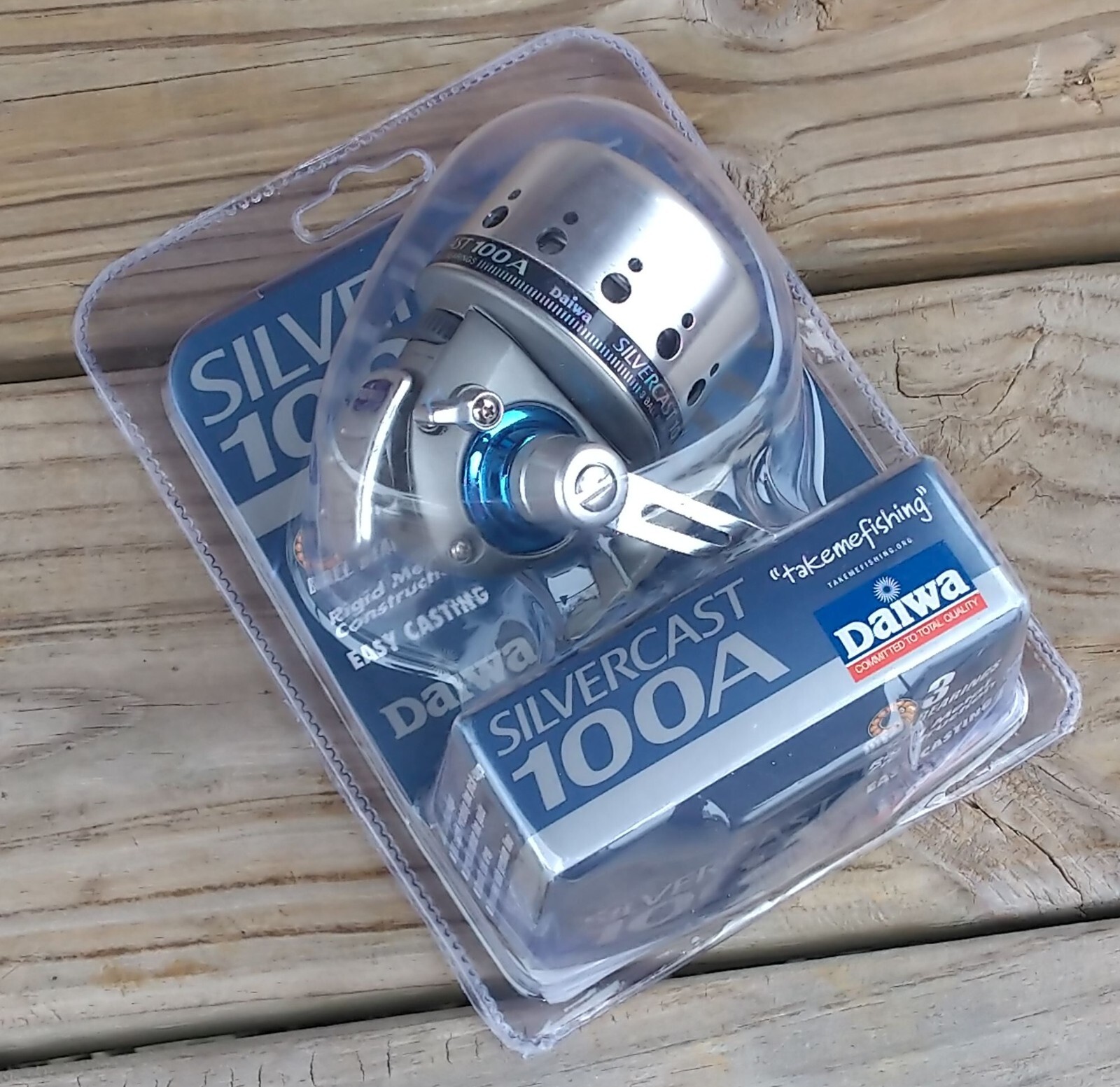

Photos from current listings. Actual item, color, and included accessories may vary.
Daiwa Fishing Reel Buying Guide
Daiwa fishing reels span four distinct architectures: spincast, spinning, baitcasting, and sealed surf reels, each defined by its drag stack, bearing count, and gear material. The core trade-off is machined aluminum/brass gearing and sealed carbon drags versus molded composite bodies and felt washers that fade under load. Buy a Daiwa whose frame and gear material match your target species and casting style, not the badge tier.


At a glance
- Category
- Fishing Reels
- Data updated
- Nov 16, 2026
Current offers
Highlights
- Spincast reels like the Silvercast 100A use a 4.3:1 gear ratio with push-button release, best for 6-10 lb mono and casual panfish or youth setups.
- Baitcasters in the Tatula and Steez lines use Daiwa's T-Wing System (TWS) level wind, which widens line exit and reduces casting friction versus conventional level winds.
- Sealed carbon drag washers (ATD or UTD) tolerate heat and saltwater far better than felt or oiled-fiber washers in entry reels.
- Bearing count and material matter more than total count alone: stainless or CRBB (corrosion-resistant ball bearings) in salt models resist rust that standard steel bearings develop.
Best use cases
- Choose a spincast (Silvercast/Underspin) for kids, dock fishing, or 6-10 lb mono panfish and trout; skip it for bass pitching or surf where drag pressure exceeds roughly 8 lb.
- Choose a spinning reel (Revros, Legalis, BG) in 2500-3000 size for finesse bass, walleye, and inshore; skip a 1000 size if you cast 3/8 oz or heavier lures or need 15 lb+ line.
- Choose a baitcaster (Tatula, Fuego CT) for bass pitching, flipping, and crankbait work where thumb control and 8-20 lb line are the norm; skip it for beginners learning to cast without backlash.
- Choose a sealed surf reel (Saltist, BG MQ) for saltwater and sand exposure; skip open-body freshwater reels for beach fishing where sand ingress destroys unsealed gears.
Buying tips
- Match reel size to line: 1000-2500 spinning for 4-8 lb, 3000-4000 for 8-12 lb, 5000+ for 15-20 lb braid; oversized reels add weight and reduce sensitivity.
- For drag, a carbon-fiber stack rated at least 10 lb is the durable floor for bass; felt-washer reels slip and glaze above roughly 6-8 lb of sustained pressure.
- Prefer machined aluminum or brass main gears over die-cast zinc or composite gears if you fish more than 50 days a year; zinc gears wear faster under high drag.
- For saltwater, demand CRBB or sealed stainless bearings and a sealed drag; standard bearings rust within a season of regular salt exposure even with rinsing.
Specs
| Reel Architecture | Spincast / Spinning / Baitcast / Surf |
|---|---|
| Gear Ratio Range | 4.3:1 low torque to 8.1:1+ high speed |
| Drag Stack | Carbon fiber (ATD/UTD) vs felt washers |
| Bearing Grade | CRBB sealed stainless vs standard steel |
Related searches
What to check before buying
- Match reel foot size to your rod's reel seat: spinning reels 1000-4000 fit standard seats, but 5000+ and surf reels need a larger seat and heavier rod.
- Confirm line capacity and drag rating against your target species: a 2500 spinning reel typically holds 8 lb mono at 100+ yards and delivers 8-12 lb max drag.
- For saltwater, check bearing type (CRBB vs standard steel) and drag seal; unsealed felt drags absorb salt and lose smoothness.
- Verify gear ratio against technique: 6.2:1-7.3:1 for general bass, 8.1:1+ for fast flipping and buzzbaits, 5.3:1 for deep crankbaits.
FAQ
Data sources: eBay / Amazon listings and product attribute feeds Data updated Nov 16, 2026.
Some links on this page are affiliate links. If you buy after clicking one, we may earn a commission at no extra cost to you. This does not change which products appear here or their order. Affiliate disclosure.