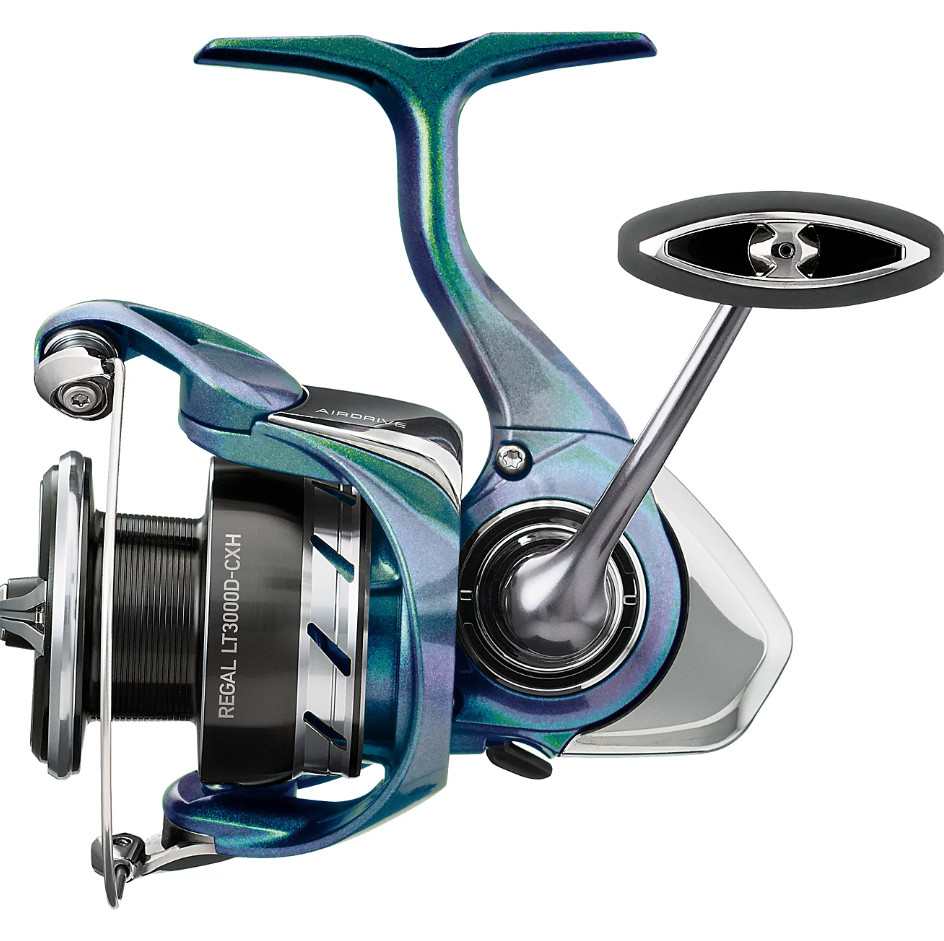

Photos from current listings. Actual item, color, and included accessories may vary.
Daiwa Spinning Reel Buying Guide
Daiwa spinning reels span entry-level graphite-bodied models to flagship monocoque reels, with the primary trade-off being body rigidity and drag sealing versus weight and cost. The decisive rule: buy a metal-body or monocoque reel with a sealed carbon drag for saltwater and heavy freshwater, and a graphite LT/Air Drive reel only for light freshwater where weight matters most.


At a glance
- Category
- Fishing Reels
- Data updated
- Nov 16, 2026
Current offers
Highlights
- Daiwa LT (Light & Tough) architecture uses a smaller body with a larger-diameter spool and drive gear, so a 2500 LT physically matches a traditional 3000 but weighs less.
- Regal LT, Legalis LT, and Exceler LT run composite (DS4/ZAION) bodies; BG and Saltist use aluminum bodies, and Exist/ Certate use full monocoque (MQ) metal frames for maximum rigidity.
- MagSealed bearings (ferrofluid oil seal) appear from Fuego LT upward and block saltwater intrusion; non-sealed reels require freshwater rinsing after every salt session.
- Air Bail, Air Rotor, and Tough Digigear are tier-defining features: Tough Digigear (hardened aluminum) starts at Legalis, while standard Digigear appears on base models.
Best use cases
- Pick a BG 2500-4000 or Saltist MQ for surf, jetty, and inshore saltwater: aluminum/monocoque body handles salt exposure and big drag loads; skip graphite LT reels here.
- Pick a Regal LT or Legalis LT 1000-2500 for ultralight trout, panfish, and finesse bass; the light composite body reduces fatigue, but do not use it for saltwater or heavy cover.
- Pick a 3000-4000 LT with a 6.2:1 ratio for general bass and walleye casting; step up to a 5000-6000 size only for catfish, striper, or heavy surf—not for standard freshwater.
Buying tips
- Match reel size to line and target: 1000-2500 for 4-8 lb mono/10 lb braid, 3000-4000 for 8-12 lb mono/20-30 lb braid, 5000+ for 15 lb+ mono and surf.
- Prefer a gear ratio around 6.2:1 for general-purpose retrieve; choose 5.2:1-5.6:1 for cranking torque and 7.1:1+ only for fast jigging or burning lures.
- Confirm drag material: carbon fiber (ATD) drags run cooler and smoother than felt; sealed drag is mandatory for saltwater, optional for freshwater.
- For saltwater, require MagSealed or at minimum a sealed drag and aluminum body; graphite LT bodies flex under heavy drag and corrode less but wear faster.
Specs
| Body Material | Graphite composite to aluminum/monocoque |
|---|---|
| Drag Type | Felt to sealed carbon fiber (ATD) |
| Bearing Seal | Standard to MagSealed (saltwater) |
| Size Range | 1000-6000 (LT sizing) |
Related searches
What to check before buying
- Match reel foot to rod seat: standard spinning reel feet fit most seats, but verify the reel size against rod line rating (e.g., 2500 on a 6-7 ft medium rod).
- For saltwater use, confirm MagSealed bearings or plan a freshwater rinse after every trip; non-sealed reels need this maintenance.
- Check spool capacity against your planned line: braid capacity is printed on the spool; undersized spools cause line slap and reduce casting distance.
- Verify handle side and retrieve: Daiwa spinning reels are typically left/right convertible, but confirm the handle knob style (I-shape vs round) suits your grip.
FAQ
Data sources: eBay / Amazon listings and product attribute feeds Data updated Nov 16, 2026.
Some links on this page are affiliate links. If you buy after clicking one, we may earn a commission at no extra cost to you. This does not change which products appear here or their order. Affiliate disclosure.