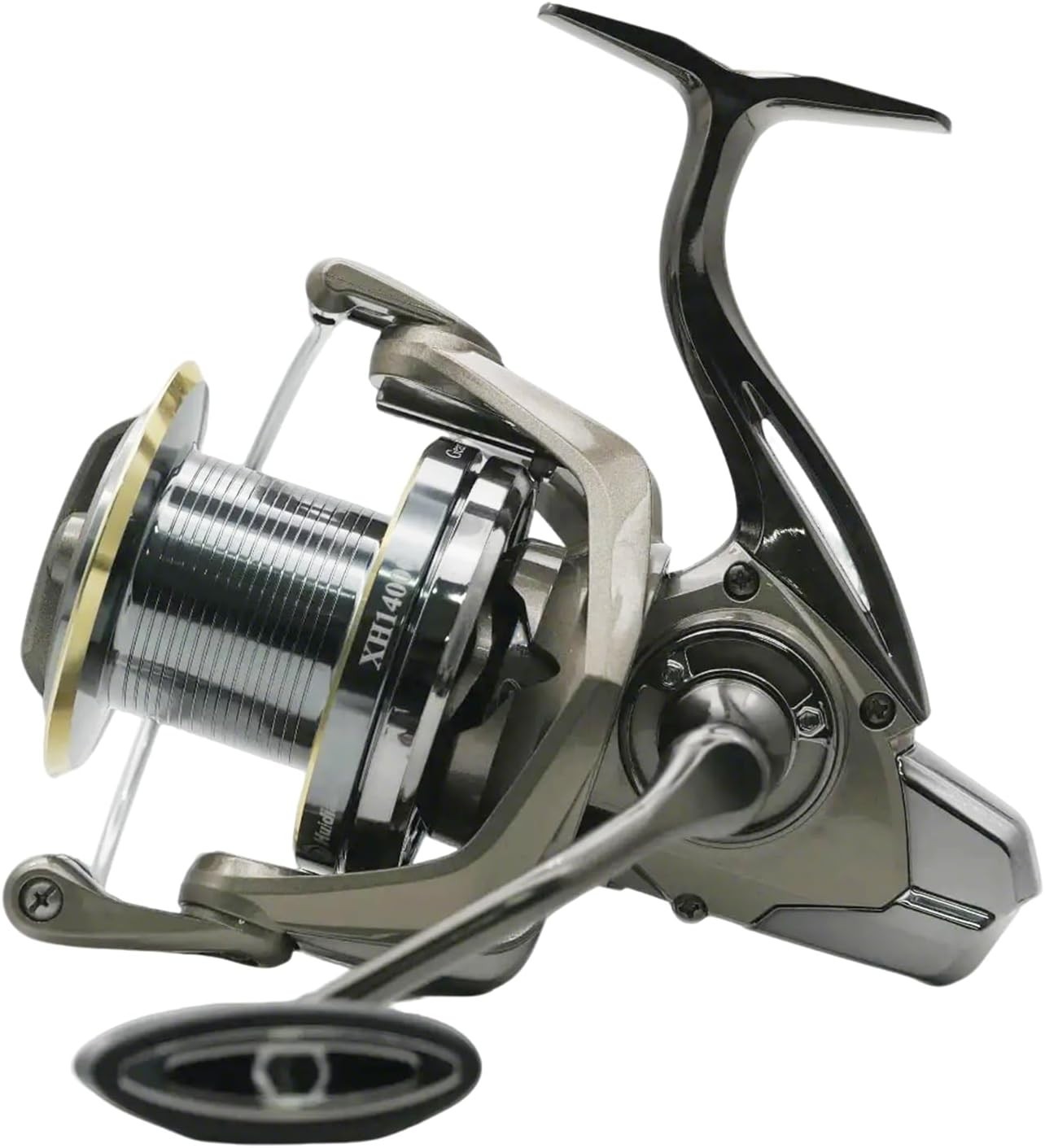

Photos from current listings. Actual item, color, and included accessories may vary.
Heavy Duty Fishing Reel Buying Guide
Heavy-duty fishing reels are built for saltwater surf, offshore, and big-game applications where standard reels fail under drag pressure, corrosion, and frame flex. The core trade-off is sealed metal construction and high max drag versus weight and cost—graphite frames and bushing-supported drives are the compromises to avoid. Buy a fully sealed, all-metal reel rated for at least 30 lb of drag if you target fish over 30 lb or fish braid above 50 lb test.


At a glance
- Category
- Fishing Reels
- Data updated
- Nov 16, 2026
Current offers
Highlights
- Frame and side-plate material determines rigidity: machined aluminum frames resist torque and stay aligned under 30+ lb drag, while graphite frames flex and cause gear misalignment.
- Ball bearing count and sealing separate tiers: 6+1 stainless bearings with sealed ARB (anti-rust) clutch survive saltwater splash, while 3+1 open bearings corrode and seize within a season.
- Drag system type: carbon-fiber washer stacks deliver smooth, heat-resistant pressure, while felt or single-washer drags glaze and spike under sustained runs.
- Line capacity and gear ratio are matched to technique: 4.8:1–5.3:1 low-gear reels provide cranking torque for surf and bottom fishing, while 6.2:1+ ratios suit fast jigging and casting.
Best use cases
- Saltwater surf and pier fishing: pick a sealed spinning reel with 6+1 bearings, 4.8:1 gear ratio, and 300+ yard braid capacity—skip unsealed reels that corrode in salt spray.
- Offshore bottom fishing and wreck fishing: choose a conventional or lever-drag reel with 30+ lb max drag and metal body; skip lightweight graphite reels that flex under heavy sinkers.
- Big-game trolling and live bait: select a two-speed lever-drag reel with harness lugs and 50+ lb drag; skip single-speed star-drag reels that cannot handle sustained runs.
- Freshwater heavy cover (pike, muskie, catfish): a 20–25 lb drag baitcaster with aluminum frame works—skip ultralight reels and budget graphite frames.
Buying tips
- Match drag to target: choose max drag at least 1/3 of your line's breaking strength—30 lb drag for 80 lb braid, 15 lb drag for 40 lb braid.
- Verify line capacity in yards of braid (not mono): surf reels need 300+ yards of 50 lb braid; boat reels need 200+ yards of 65 lb braid for deep drops.
- Prefer machined aluminum frame and side plates over die-cast or graphite: machined metal maintains gear alignment under load and resists corrosion pitting.
- Check gear ratio against technique: 4.8:1–5.3:1 for cranking power and surf casting; 6.2:1–7.1:1 for fast retrieve and jigging; two-speed reels for big game.
Specs
| Frame Material | Machined aluminum vs graphite |
|---|---|
| Max Drag | 15–50+ lb (match to line test) |
| Gear Ratio | 4.8:1–7.1:1 / two-speed |
| Bearing Count | 6+1 sealed stainless |
Related searches
What to check before buying
- Confirm rod compatibility: match reel foot size and weight to your rod's reel seat and line rating—heavy reels need rods rated for 30–80 lb line.
- Saltwater exposure: ensure the reel is rated for saltwater with sealed drag and stainless bearings; freshwater-only reels fail in salt within weeks.
- Line capacity check: spool must hold your target line test and length with 1/8 inch remaining—undersized spools reduce drag and casting distance.
- Harness and gimbal compatibility: offshore reels need harness lugs and a gimbal butt; surf reels need a long-cast spool lip and line roller.
FAQ
Data sources: eBay / Amazon listings and product attribute feeds Data updated Nov 16, 2026.
Some links on this page are affiliate links. If you buy after clicking one, we may earn a commission at no extra cost to you. This does not change which products appear here or their order. Affiliate disclosure.