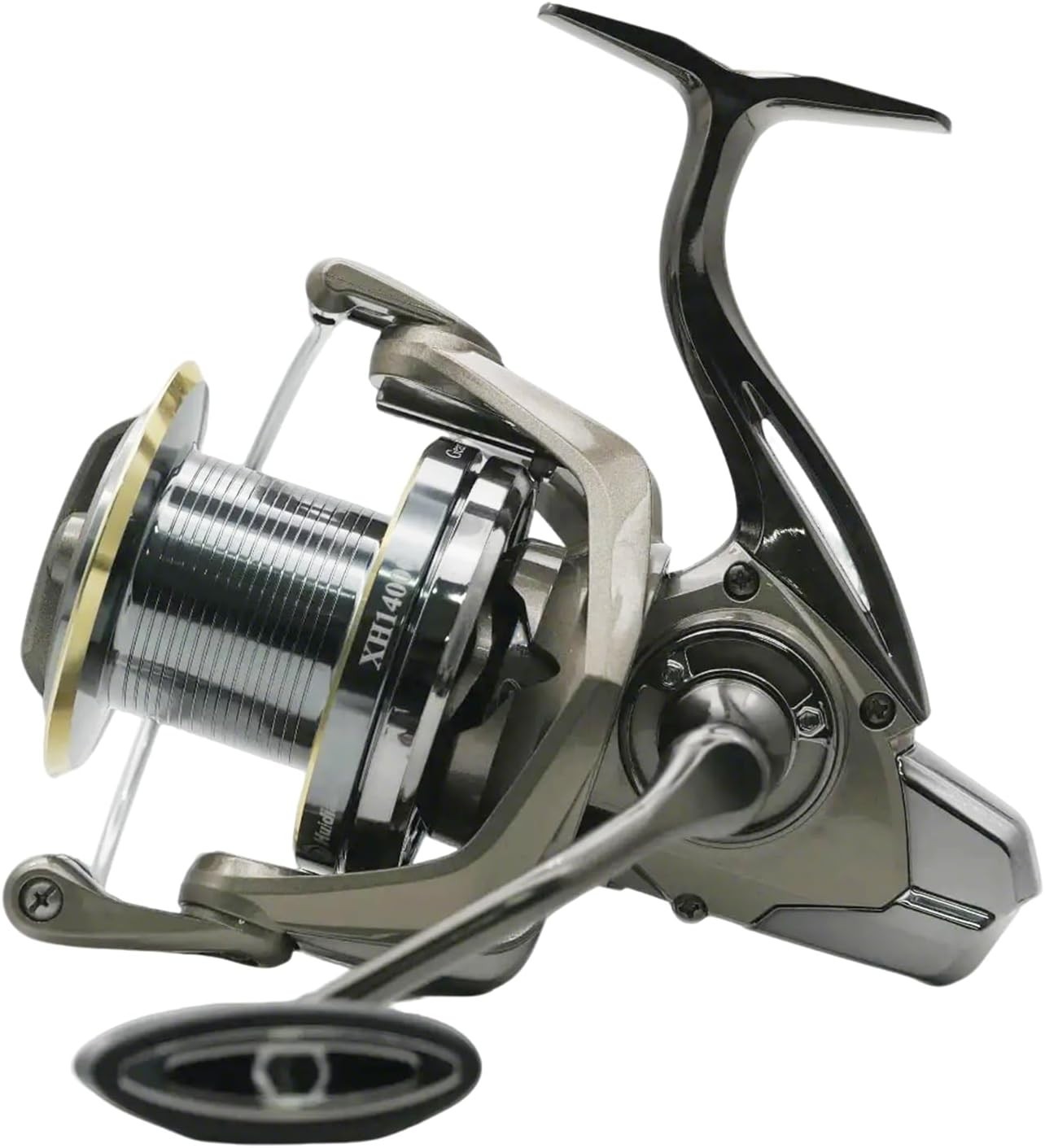

Photos from current listings. Actual item, color, and included accessories may vary.
Heavy Duty Saltwater Fishing Reel Buying Guide
Heavy-duty saltwater reels are built to survive salt, sand, and big fish, with sealed drags and corrosion-resistant metals separating them from freshwater reels. The core trade-off is weight and cost versus sealing, drag pressure, and gear durability. Choose a fully sealed stainless/aluminum drag system with at least 30 lb max drag for serious surf and offshore use; skip graphite-body reels with exposed bearings for saltwater.


At a glance
- Category
- Fishing Reels
- Data updated
- Nov 17, 2026
Current offers
Highlights
- Sealed drag washers (carbon fiber or stainless) prevent salt intrusion; unsealed felt drags fail quickly in saltwater.
- Full metal body (aluminum or magnesium) resists flex under heavy drag; graphite frames twist and lose gear alignment.
- Stainless steel bearings and main gear outlast zinc or brass alloys; look for at least 4 stainless bearings plus anti-reverse.
- High max drag (30+ lb for surf, 40+ lb for offshore) requires matched frame rigidity and a strong drag cam.
Best use cases
- Surf and pier fishing: pick a long-cast spinning reel with 30-40 lb max drag, sealed body, and 4.8:1-5.2:1 gear ratio for distance and power.
- Boat and offshore bottom fishing: choose a conventional or lever-drag reel with 40+ lb drag, stainless gears, and harness lugs for stand-up fighting.
- Inshore and light saltwater: a 3000-5000 size spinning reel with 20-25 lb drag and sealed bearings is sufficient; skip heavy 10000+ sizes for schoolie stripers or flounder.
- Wrong fit: freshwater bass reels with exposed bearings and 10-15 lb drag will corrode and fail within a season in salt; do not substitute.
Buying tips
- Match reel size to target: 4000-6000 for surf casting, 8000-14000 for large surf species, 20-50 conventional for offshore; drag should exceed expected fish weight by 3x.
- Gear ratio: lower (4.2:1-4.8:1) for cranking power on big fish; higher (5.5:1+) for fast retrieves, but lower ratios win for heavy-duty saltwater.
- Line capacity: choose a reel that holds at least 200 yards of 30 lb braid for surf; offshore conventional should hold 300+ yards of 50 lb braid.
- Sealing: look for IPX-rated or explicitly sealed body and drag; at minimum, rubber gaskets and sealed ball bearings are required for saltwater durability.
Specs
| Drag System | Sealed carbon fiber / stainless |
|---|---|
| Body Material | Aluminum / magnesium alloy |
| Max Drag | 30-60 lb (heavy-duty) |
| Gear Ratio | 4.2:1-5.2:1 low-speed torque |
Related searches
What to check before buying
- Check rod compatibility: reel foot must match rod seat size (spinning reel seats 20-30 mm; conventional reels need larger seats) and balance the rod's power rating.
- Confirm drag material: carbon fiber or stainless washers are saltwater-safe; felt or cork washers absorb salt and seize.
- Verify line capacity against your target species and braid diameter; undersized spools cause line starvation and drag inconsistency.
- Inspect bearing count and type: stainless steel bearings throughout; at least 4+1 (4 bearings + 1 anti-reverse) for heavy saltwater use.
FAQ
Data sources: eBay / Amazon listings and product attribute feeds Data updated Nov 17, 2026.
Some links on this page are affiliate links. If you buy after clicking one, we may earn a commission at no extra cost to you. This does not change which products appear here or their order. Affiliate disclosure.