Photos from current listings. Actual item, color, and included accessories may vary.
Line Counter Fishing Reel Buying Guide
A line counter reel is a fishing reel with a mechanical or digital counter that tracks how much line has left the spool, so trolling and bait presentations can be repeated at an exact distance. The core trade-off is counter accuracy and build sealing versus weight and cost: mechanical counters are rugged and battery-free but read via a geared spool mechanism, while digital LCD counters are easier to read at a glance but depend on battery and sensor seals. Buy a counter rated for your line class and drag ceiling with a sealed counter housing; skip ultralight compact units if you need long-line trolling capacity or heavy drag.


At a glance
- Category
- Fishing Reels
- Data updated
- Nov 16, 2026
Current offers
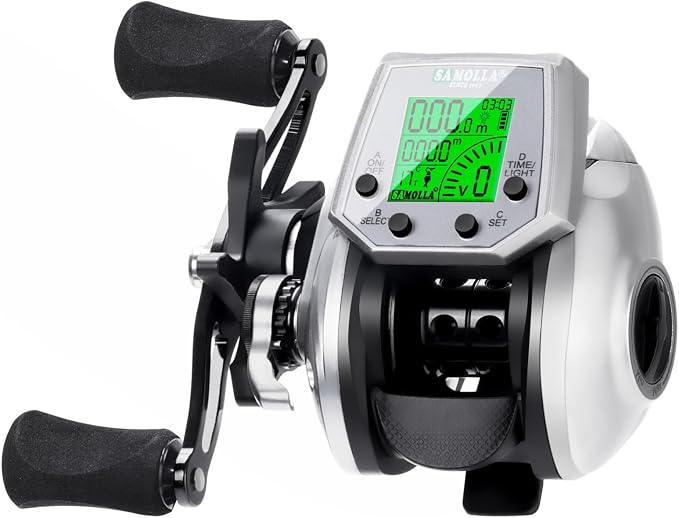 Digital Line Counter Baitcasting Fishing Reel With LCD Display, Ball Bearings, Maximum Drag, Gear Ratio, Ultralight Compact Design For Freshwater And Saltwater$192.99
 View on Mallflare
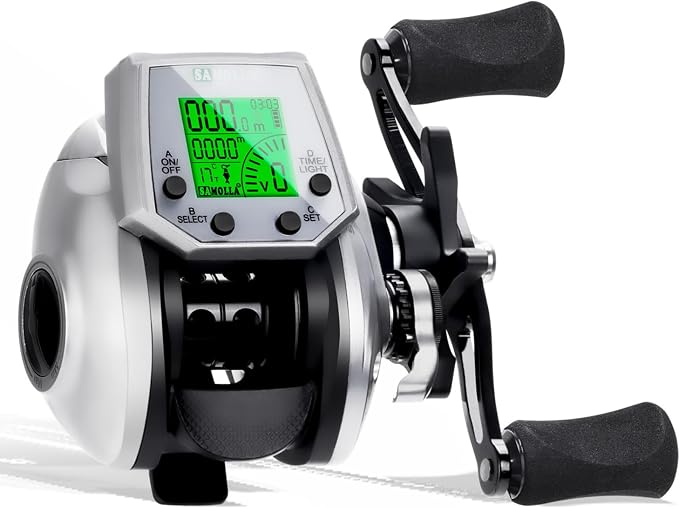 Digital Line Counter Baitcasting Fishing Reel With LCD Display,Ball Bearings, 22 Lb Maximum Drag, Gear Ratio, Ultralight Compact Design For Freshwater And Saltwater$207.99View on Mallflare
Highlights
- Mechanical counters drive off the spool shaft through a gear set, so accuracy depends on a correctly filled spool and the line's diameter; underfilled spools over-read distance.
- Digital LCD counters use a spool rotation sensor plus battery; they read in feet or meters and typically add a zero-set and low-battery warning, but the counter housing must be sealed against splash.
- Baitcasting line counter reels are the compact freshwater-to-inshore option (roughly 22 lb max drag class); levelwind line counter models in conventional sizes carry more line and heavier drag for deep trolling.
- Line capacity is rated in yards of a reference mono (commonly 12–20 lb class); braid fills more yards at the same test, so counter calibration must be reset when switching line type or diameter.
Best use cases
- Best fit: trolling crankbaits or harnesses at repeatable 50–150 ft setbacks — choose a levelwind conventional line counter with a mechanical counter and enough yard capacity for your braid backing.
- Best fit: bass and walleye casting where you want to repeat a drop or cast distance — a compact digital LCD baitcaster with ~22 lb drag and sealed counter is the right tier.
- Wrong fit: surf or deep bottom fishing beyond 300 ft — skip compact baitcast counters and step to a conventional size with higher line capacity and drag.
- Wrong fit: ultralight panfish or trout where every gram counts — a line counter adds spool drag and weight; use a standard ultralight spinning reel instead.
Buying tips
- Match drag ceiling to target: 22 lb max drag covers bass, walleye, and inshore school fish; large kingfish or deep trolling needs a conventional counter rated well above that.
- Choose mechanical counters for battery-free reliability in cold or saltwater spray; choose digital LCD only if the counter housing is gasketed and you carry spare batteries.
- Size line capacity by the reference mono rating, then confirm braid yardage; a reel rated 20 lb/150 yd mono holds far more 30 lb braid, which changes counter calibration.
- Check gear ratio: low-ratio (around 4.5–5.5:1) conventional counters winch trolling loads, while higher-ratio (6.3:1 and up) baitcast counters suit cast-and-retrieve distance control.
Specs
| Counter Type | Mechanical gear-driven vs digital LCD |
|---|---|
| Reel Format | Low-profile baitcast vs conventional levelwind |
| Max Drag Class | ~22 lb compact to heavy conventional |
| Line Capacity Basis | Yards of 12–20 lb mono reference |
Related searches
What to check before buying
- Measure your rod's reel seat and guide spacing: line counter baitcasters sit low-profile, while conventional counters need a heavier trolling rod with a larger seat.
- Confirm line class and target depth: calculate required yardage at your braid diameter before picking a compact 22 lb-drag model.
- For digital counters, verify battery type and whether the battery compartment is O-ring sealed for saltwater splash.
- Check counter units (feet vs meters) and reset method, and confirm the reel foot fits your rod's reel clamp without shims.
FAQ
Data sources: eBay / Amazon listings and product attribute feeds Data updated Nov 16, 2026.
Some links on this page are affiliate links. If you buy after clicking one, we may earn a commission at no extra cost to you. This does not change which products appear here or their order. Affiliate disclosure.