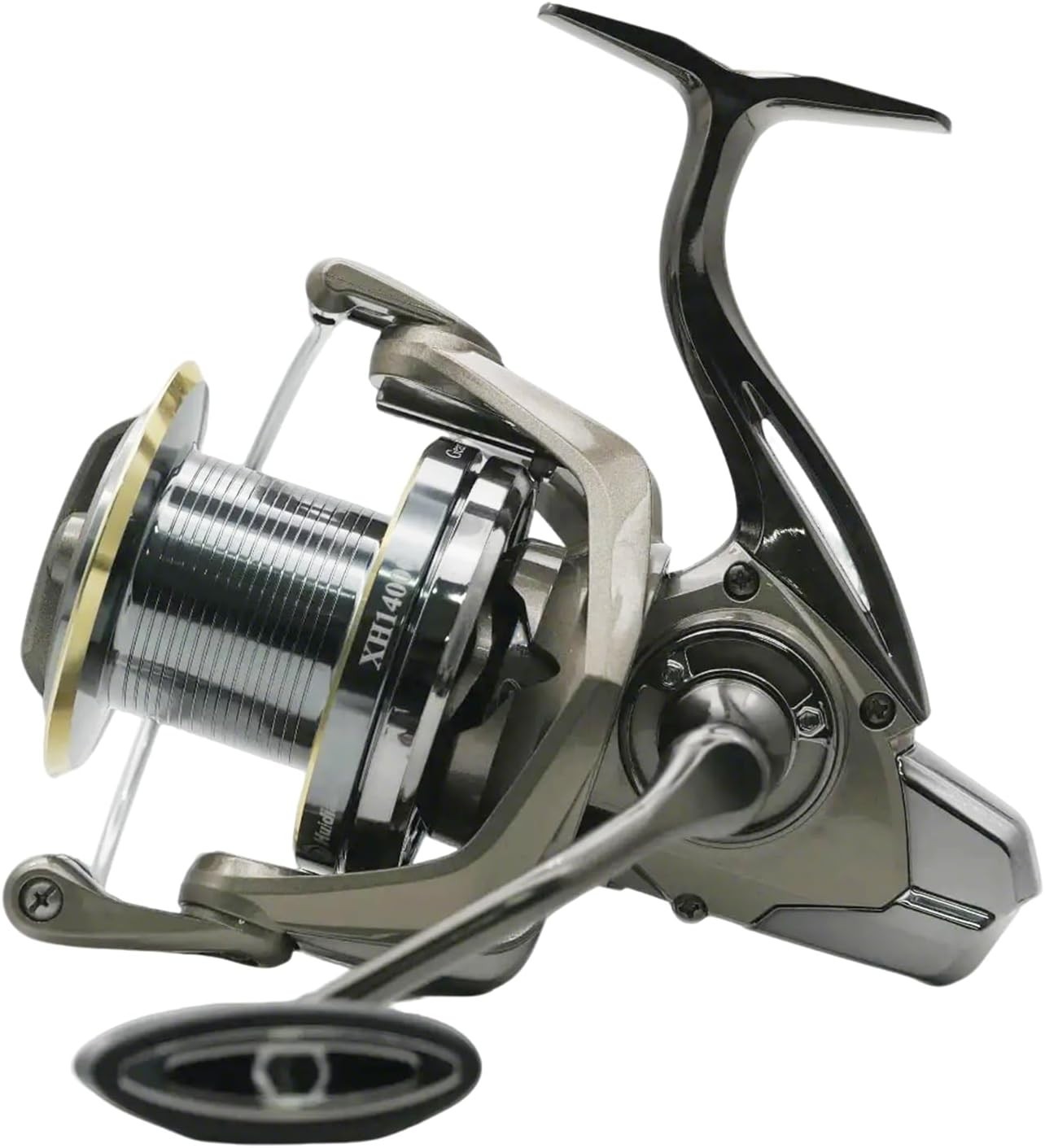

Photos from current listings. Actual item, color, and included accessories may vary.
Open Face Fishing Reel Buying Guide
Open face fishing reels—spinning reels with an exposed spool—pair a fixed spool with a rotating bail to cast light lures without backlash. The primary trade-off is drag sealing and body rigidity versus weight: graphite bodies save ounces but flex under heavy drag, while aluminum frames and sealed carbon-fiber drag washers hold pressure in saltwater. The decision rule is simple: match the reel's drag rating and spool capacity to your target species and line class, and never buy a 'heavy-duty surf' reel without a sealed drag and corrosion-rated bearings.


At a glance
- Category
- Fishing Reels
- Data updated
- Nov 16, 2026
Current offers
Highlights
- Bearing count (e.g., 6+1 BB) reduces handle friction but tells you nothing about drag quality—sealed carbon-fiber drag washers and a stainless main gear matter far more for durability.
- Gear ratio (e.g., 4.8:1) sets inches per turn: low ratios like 4.8:1 suit heavy surf and live bait; 6.2:1 and up suit fast lure retrieves and jigging.
- Drag pressure must exceed 25% of your line's breaking strength—a reel rated 15 lb max drag is a freshwater bass tool, not a saltwater surf reel.
- Aluminum or magnesium frames resist spool flex under 10+ lb drag; graphite bodies are lighter but twist and lose drag consistency when a big fish runs.
Best use cases
- Best fit: surf and pier anglers throwing 2–4 oz sinkers—pick a long-cast spool (shallow lip), 4.8:1 gear ratio, 15–25 lb max drag, and sealed stainless bearings.
- Best fit: freshwater bass and trout—choose a 1000–2500 size reel with 6.2:1 ratio, 8–12 lb drag, and a graphite body for all-day casting comfort.
- Wrong fit: offshore tuna or shark—skip open face spinning reels under 8000 size and 40 lb drag; step to a sealed lever-drag conventional or heavy spinning reel.
- Wrong fit: finesse dropshot in saltwater—avoid budget reels with unsealed bearings; salt crystallization seizes them within a season.
Buying tips
- Sizing formula: reel size 1000–2500 for 4–8 lb mono, 3000–4000 for 8–12 lb, 5000–6000 for 12–20 lb, 8000+ for 20–40 lb braid—match the mono/braid rating printed on the spool.
- Line capacity math: a reel holding 200 yd of 20 lb braid can take roughly 150 yd of 12 lb mono backing—always leave 1/8 inch of spool lip exposed for clean casts.
- Material grade: carbon-fiber drag washers (not felt or cork) resist heat fade; stainless steel ball bearings (not zinc-plated) are the minimum for saltwater.
- Gear ratio by technique: 4.8:1–5.2:1 for crankbaits and surf sinkers; 6.2:1–7.0:1 for plastics and jigs; 7.5:1+ only for fast burning soft swimbaits.
Specs
| Reel Size | 1000–14000 (freshwater to surf) |
|---|---|
| Gear Ratio | 4.8:1–7.5:1 (inches per turn) |
| Max Drag | 8–40 lb (match to line class) |
| Body Material | Graphite vs aluminum frame |
Related searches
What to check before buying
- Measure your rod's reel seat: a reel foot that is too long or short will wobble—match the reel stem length to the seat's internal depth.
- Confirm line class on the spool: the printed mono/braid capacities must cover your target fish's first run plus 20% backing reserve.
- For saltwater, verify the drag knob and body seals are rated IPX5 or better—freshwater-only reels corrode and seize in spray.
- Check handle orientation: left/right convertible reels need a screw-in handle on the correct side; non-convertible models lock you to one retrieve.
FAQ
Data sources: eBay / Amazon listings and product attribute feeds Data updated Nov 16, 2026.
Some links on this page are affiliate links. If you buy after clicking one, we may earn a commission at no extra cost to you. This does not change which products appear here or their order. Affiliate disclosure.