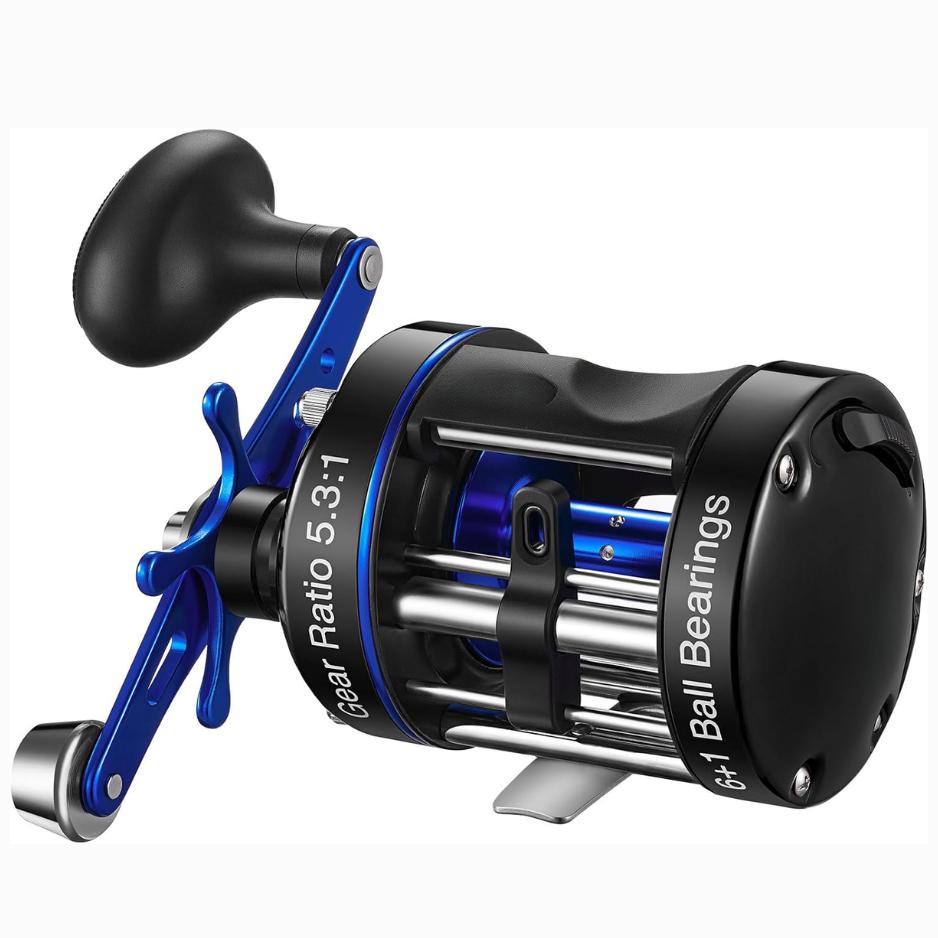

Photos from current listings. Actual item, color, and included accessories may vary.
Round Baitcasting Reel Buying Guide
Round baitcasting reels are conventional-style reels with a circular frame and a revolving spool, built for winching power and line capacity rather than finesse casting. The core trade-off is frame rigidity and drag surface area versus weight and castability: machined aluminum bodies with carbon fiber drag stacks handle saltwater and big fish, while graphite or plastic frames flex under load and belong only in freshwater light-duty roles. The decision rule is simple: buy a metal-frame round reel with a sealed multi-disc drag for any fish that can pull drag for more than a few seconds, and skip round reels entirely if you need distance casting with light lures.


At a glance
- Category
- Fishing Reels
- Data updated
- Nov 16, 2026
Current offers
Highlights
- Frame material is the durability dividing line: one-piece machined aluminum resists spool torque and salt corrosion, while graphite or stamped frames flex and misalign gears under heavy drag.
- Drag systems scale by disc count and material: carbon fiber washer stacks (often 3-6 discs) run cooler and smoother than single felt or fiber washers, which glaze and shudder on long runs.
- Centrifugal and magnetic brake systems differ in behavior: centrifugal brakes are set before the cast and excel at taming heavy lures, while magnetic brakes are adjustable mid-cast and better for changing wind and lure weights.
- Gear ratios split round reels into winch and retrieve roles: low ratios (around 4.0:1-5.3:1) deliver torque for deep cranking and live bait, while higher ratios (6.0:1+) trade power for line pickup speed.
Best use cases
- Best fit: catfish, carp, and live-bait fishing where the reel sits in a rod holder and the drag does the work—pick a low-ratio aluminum round reel with a large carbon drag stack and a line-out clicker.
- Best fit: saltwater bottom fishing and slow-pitch jigging—choose a sealed aluminum frame with stainless steel bearings and a corrosion-rated drag, and pair it with a conventional rod rated for the same line class.
- Wrong fit: repeated distance casting with lightweight lures—round reels carry more spool mass and are harder to thumb; a low-profile baitcaster or spinning reel is the correct tool.
- Wrong fit: ultra-light freshwater panfishing—the weight and line capacity of a round reel are wasted; skip it unless you specifically need a line-out alarm or trolling capability.
Buying tips
- Match reel size to line class, not fish species: a 300-size round reel typically holds roughly 200-250 yards of 20 lb mono, while a 400-size bumps capacity for 30-40 lb line and longer runs.
- Check the drag stack specification: prefer carbon fiber or greased multi-disc drags rated at least 15-20 lb max drag for saltwater and big catfish, and avoid reels listing only a single drag washer.
- Verify bearing count and material: stainless steel or corrosion-resistant bearings (often 4-6 total) are mandatory for saltwater; plain bushings or unsealed bearings seize after repeated exposure.
- Confirm the brake type suits your casting style: centrifugal brakes for heavy baits and beginner-friendly control, magnetic or dual-brake systems if you cast varied lure weights and want on-the-fly adjustment.
Specs
| Frame Material | Machined aluminum vs graphite |
|---|---|
| Drag System | Carbon fiber multi-disc / felt washer |
| Gear Ratio Range | 4.0:1-6.4:1 (low torque to fast retrieve) |
| Reel Size Class | 300 / 400 / 500 conventional sizes |
Related searches
What to check before buying
- Measure your rod's reel seat and butt diameter: round reels have wider footprints than low-profile reels and need a conventional or casting rod with a matching reel seat.
- Confirm line capacity against your target depth and fish runs: for bottom fishing beyond 100 feet, choose a 400-size or larger reel to keep adequate line reserve.
- Check drag and gear materials for your water type: freshwater anglers can accept graphite frames, but saltwater use demands aluminum frames and stainless bearings.
- Verify handle configuration and retrieve direction: round reels come in right-hand and left-hand retrieve, and some models offer power handles for winching—match to your dominant hand and fishing style.
FAQ
Data sources: eBay / Amazon listings and product attribute feeds Data updated Nov 16, 2026.
Some links on this page are affiliate links. If you buy after clicking one, we may earn a commission at no extra cost to you. This does not change which products appear here or their order. Affiliate disclosure.