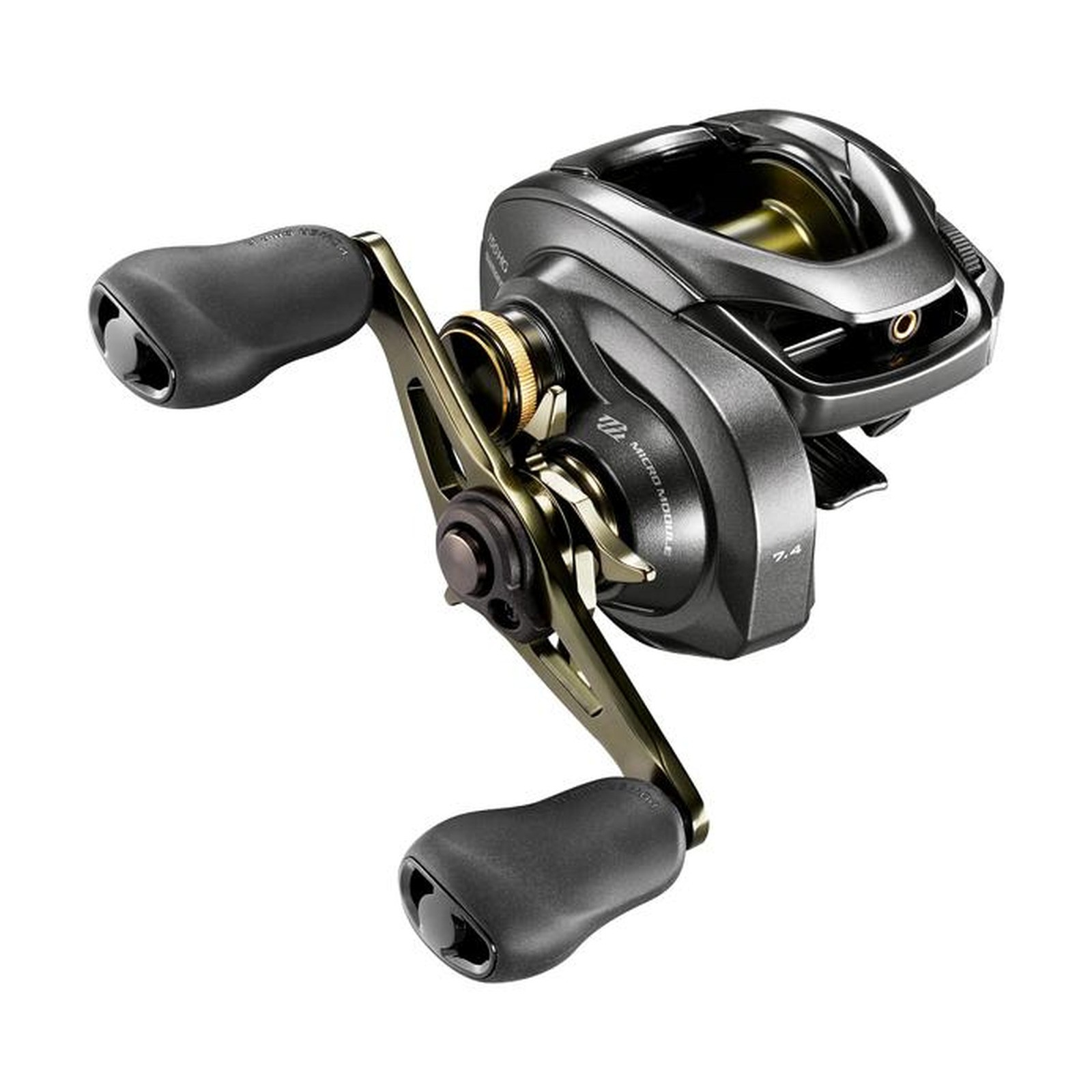

Photos from current listings. Actual item, color, and included accessories may vary.
Shimano Casting Reel Buying Guide
Shimano casting reels are defined by their brake architecture and frame material tier, which determine backlash control, casting distance, and saltwater longevity. The core trade-off is between DC (digital control) braking for effortless distance versus SVS/VBS centrifugal or magnetic systems for tunability and lower weight. Buy DC if you want maximum cast control with minimal thumbing; buy SVS/centrifugal for precise lure-weight tuning and lighter overall builds.


At a glance
- Category
- Fishing Reels
- Data updated
- Nov 16, 2026
Current offers
Highlights
- DC models use a microcomputer-controlled braking module powered by spool rotation to auto-adjust brake force, virtually eliminating backlash during distance casts.
- SVS Infinity centrifugal braking uses adjustable brake shoes inside the sideplate; external dial lets you tune for lure weight without opening the reel.
- HAGANE body (aluminum) and HAGANE gears (cold-forged) versus graphite/composite frames separate saltwater-durable tiers from freshwater-only builds.
- CoreSolid body design in premium tiers (Metanium, Antares) eliminates sideplate flex for better gear alignment and smoother cranking under load.
Best use cases
- Pick a DC model (Curado DC, SLX DC) for windy bank fishing or long-distance casting with heavy lures where backlash costs fish — skip if you routinely pitch lightweight finesse lures under 1/4 oz.
- Pick SVS Infinity (Curado 200K, SLX MGL) for tournament bass fishing requiring precise lure-weight tuning and low-profile palming — skip for saltwater surf where sealed DC or HAGANE reels resist corrosion better.
- Pick a HAGANE-body low-profile (Metanium, Bantam) for saltwater inshore and heavy freshwater applications where frame rigidity and gear durability under load matter — skip ultralight finesse setups where weight savings outweigh durability.
- Pick a round-frame Shimano casting reel (Calcutta Conquest) for live-bait soaking or deep cranking where line capacity and cranking power dominate — skip for repetitive casting where low-profile ergonomics reduce fatigue.
Buying tips
- Match brake system to lure weight: DC excels from 3/8 oz up; SVS Infinity with removed brake shoes handles 1/4 oz and below more predictably.
- Choose gear ratio by application: 6.2:1–7.1:1 for cranking and moving baits; 7.5:1–8.5:1 for worms and jigs; 9.1:1 only for flipping/pitching where line pick-up speed is critical.
- Line capacity follows spool depth: 150–200 yards of 12–15 lb fluorocarbon covers most bass applications; deep spools for 20 lb+ mono or braid backing reduce casting distance with light lures.
- Frame material dictates maintenance: aluminum HAGANE bodies tolerate salt exposure with rinsing; graphite frames flex more and are freshwater-focused despite lower weight.
Specs
| Brake System | DC digital / SVS centrifugal / magnetic |
|---|---|
| Frame Material | HAGANE aluminum / graphite composite |
| Gear Ratio Range | 6.2:1 to 9.1:1 (model dependent) |
| Line Capacity | 150-200 yd / 12-15 lb fluorocarbon typical |
Related searches
What to check before buying
- Confirm rod power and lure rating overlap the reel's braking sweet spot — DC modules favor heavier side of the rod rating.
- Check retrieve side (left vs right hand) and gear ratio before ordering; Shimano offers both in most models but stock varies by ratio.
- Verify line capacity for your target line diameter: spool depth for 12 lb fluorocarbon differs from 50 lb braid by model tier.
- For saltwater use, confirm the model lists HAGANE body/gears and sealed drag; freshwater-only reels lack corrosion-resistant bearings.
FAQ
Data sources: eBay / Amazon listings and product attribute feeds Data updated Nov 16, 2026.
Some links on this page are affiliate links. If you buy after clicking one, we may earn a commission at no extra cost to you. This does not change which products appear here or their order. Affiliate disclosure.