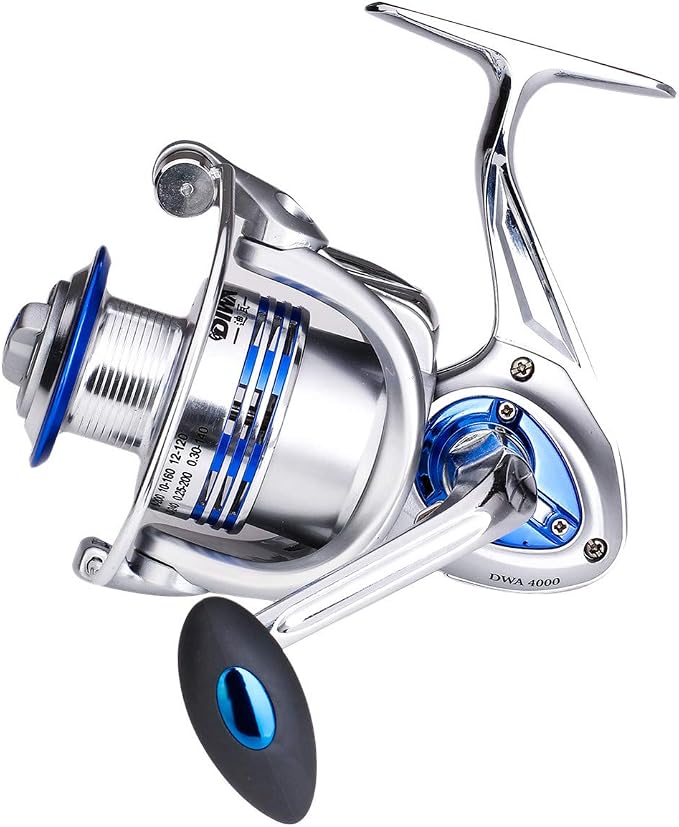

Photos from current listings. Actual item, color, and included accessories may vary.
Ultralight Spinning Reel Buying Guide
An ultralight spinning reel is a sub-200-gram, small-frame reel (1000–2500 size) built to balance 2–6 lb line and light lures without flexing under load. The core trade-off is weight versus rigidity: magnesium and carbon bodies shed grams but cost more, while graphite and aluminum frames add durability at a weight penalty. The decision rule is simple—match reel weight to rod power and target line class, and reject any 1000-size reel that claims saltwater-grade seals without a specified drag rating.


At a glance
- Category
- Fishing Reels
- Data updated
- Nov 16, 2026
Current offers
Highlights
- Frame size drives line capacity: 1000 size holds roughly 100–140 yd of 4 lb mono, 2000–2500 holds 140–200 yd, and oversized 3000 bodies defeat the ultralight purpose.
- Body material separates tiers: magnesium and carbon-reinforced polymer frames hit 150–180 g, aluminum frames run 190–220 g, and graphite frames flex under 4 lb+ drag loads.
- Bearing count is not smoothness: 5–7 stainless or shielded bearings with a supported pinion and one-piece bail wire outperform 10+ loose bearings in longevity.
- Drag stack quality matters more than max drag: carbon-fiber washers deliver 6–11 lb smooth drag, while felt or single-washer stacks spike and seize on fast runs.
Best use cases
- Best fit: pair a 1000-size, 150–170 g reel with a 5'6"–6'6" ultralight rod for trout, panfish, and ice fishing where lure weights stay under 1/8 oz.
- Best fit: choose a 2000–2500 size with 8–11 lb carbon drag for bass, small carp, and light saltwater inshore work where line capacity and salt-rated seals matter.
- Wrong fit: skip 3000+ frames and reels over 220 g for ultralight rods—they shift balance forward, reduce sensitivity, and negate the light-line advantage.
- Wrong fit: avoid unsealed magnesium reels for saltwater or ice use; magnesium corrodes and unsealed bearings fail after repeated splash exposure.
Buying tips
- Match reel weight to rod: keep total reel weight under 180 g for rods rated 1/16–1/8 oz, and up to 210 g only for 1/8–1/4 oz ultralight rods.
- Verify line capacity at your target class: a 1000 reel should hold at least 100 yd of 4 lb mono; a 2500 should hold 150 yd of 6 lb mono or 130 yd of 8 lb braid.
- Require a specified drag rating of 6 lb or higher with carbon-fiber washers for any reel used on bass or inshore saltwater; sub-4 lb drag is panfish-only.
- Check bail and roller: a one-piece stainless bail wire and a shielded line roller prevent line twist and grooving that ruins light mono and braid.
Specs
| Frame Size | 1000 / 2000 / 2500 ultralight |
|---|---|
| Reel Weight | 150–180 g magnesium / 190–220 g aluminum |
| Line Capacity | 100–140 yd of 4 lb mono (1000) |
| Drag System | 6–11 lb carbon-fiber washers |
Related searches
What to check before buying
- Weigh your rod and confirm the reel's listed weight keeps the combo balanced at the forward grip, not tip-heavy.
- Measure your target line class and confirm capacity exceeds your longest cast plus 30–50 yd of backing or reserve.
- Confirm saltwater or ice use against the reel's seal rating and body material—magnesium is freshwater-only, and ice use demands cold-rated grease.
- Verify the reel foot fits your rod's reel seat and that the drag knob and anti-reverse switch are reachable without shifting your grip.
FAQ
Data sources: eBay / Amazon listings and product attribute feeds Data updated Nov 16, 2026.
Some links on this page are affiliate links. If you buy after clicking one, we may earn a commission at no extra cost to you. This does not change which products appear here or their order. Affiliate disclosure.