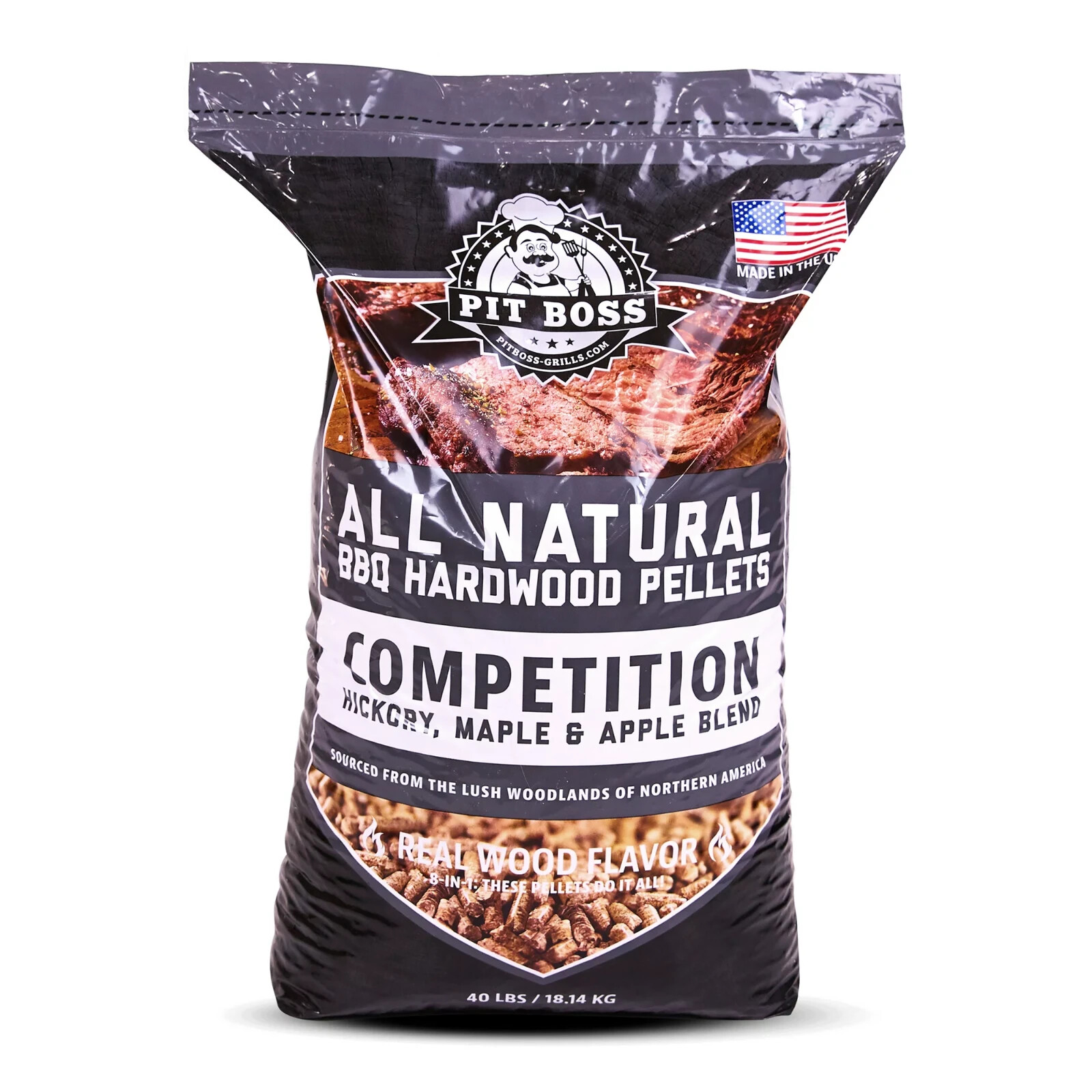

Photos from current listings. Actual item, color, and included accessories may vary.
Mesquite Pellet Buying Guide
Mesquite pellets are 100% hardwood fuel for pellet grills and smokers, prized for intense smoke and high heat but notorious for aggressive flavor and faster burn. The core trade-off is pure mesquite's strong, bitter-prone smoke versus blended or lower-mesquite bags that tame flavor at the cost of smoke character. Buy pure mesquite only for beef and bold cuts in short, hot cooks; choose a blend or lower-mesquite tier for poultry, fish, and long low-and-slow sessions.


At a glance
- Category
- BBQ Fuels & Smoking Wood
- Data updated
- Nov 16, 2026
Current offers
Highlights
- 100% mesquite pellets burn hotter and faster than oak or alder, so expect higher hourly fuel consumption on long cooks; blends with oak or pecan slow burn and soften smoke.
- Pellet diameter is standardized at roughly 6mm (1/4 inch) for all major pellet grills; length varies by mill, and overly long or dusty pellets bridge in the hopper and cause flameouts.
- Hardwood pellets must be low-dust and low-moisture (under about 10%) to feed reliably; mesquite's density means poor-quality bags show heavy fines and clinkers in the fire pot.
- Competition-style blends (mesquite plus pecan, hickory, or oak) are the practical tier for all-purpose cooking; pure mesquite bags are a specialty flavor tool, not a daily driver.
Best use cases
- Best fit: brisket, chuck roast, and burgers on a pellet grill — use pure mesquite or a mesquite-forward blend for a short, hot cook with a heavy smoke ring; skip it for delicate proteins.
- Best fit: weeknight grilling where you want maximum smoke in minimal time — a mesquite blend delivers strong flavor without the bitterness pure mesquite can impart over 8+ hour cooks.
- Wrong fit: low-and-slow poultry, fish, or cheese — mesquite's creosote-heavy smoke turns bitter and acrid; use fruitwood or a mild blend instead and save the mesquite bag for beef.
- Wrong fit: ceramic kamado or charcoal-only smokers — pellets are sized and metered for pellet auger systems; do not substitute pellets for lump charcoal or wood chunks in those cookers.
Buying tips
- Match the bag to cook length: pure mesquite for cooks under about 4 hours; mesquite blends for 4–8 hours; avoid pure mesquite beyond 8 hours unless you want heavy, bitter bark.
- Check the ingredient panel for a single hardwood (100% mesquite) versus a named blend ratio; bags listing 'wood byproducts,' bark, or unspecified filler are a downgrade in smoke quality.
- Buy bags that state low-dust or screened pellets and store them sealed in a dry bin; moisture above roughly 10% causes auger jams and inconsistent ignition.
- For a 40 lb bag, plan on roughly 1–2 lb per hour at 225–250°F on a typical pellet grill, faster with pure mesquite; size your bag count to your cook calendar, not to shelf life alone.
Specs
| Wood Type | 100% mesquite vs mesquite blends |
|---|---|
| Pellet Diameter | ~6mm (1/4 in) standard |
| Smoke Intensity | Heavy, bold — beef and red meat |
| Burn Rate | Fast, hot; blends burn slower |
Related searches
What to check before buying
- Confirm your grill or smoker is an auger-fed pellet unit with a hopper; mesquite pellets do not work in charcoal, gravity-fed charcoal, or stick-burner cookers.
- Verify hopper capacity and cook length: a small hopper plus fast-burning pure mesquite means refills mid-cook, so choose a blend for overnight sessions.
- Check storage: pellets need a dry, sealed container; humid climates and garage floors wick moisture and degrade mesquite pellets faster than denser oak blends.
- Confirm the bag is a food-grade BBQ pellet, not heating-grade or animal-bedding pellet, which can contain binders and non-food additives.
FAQ
Data sources: eBay / Amazon listings and product attribute feeds Data updated Nov 16, 2026.
Some links on this page are affiliate links. If you buy after clicking one, we may earn a commission at no extra cost to you. This does not change which products appear here or their order. Affiliate disclosure.