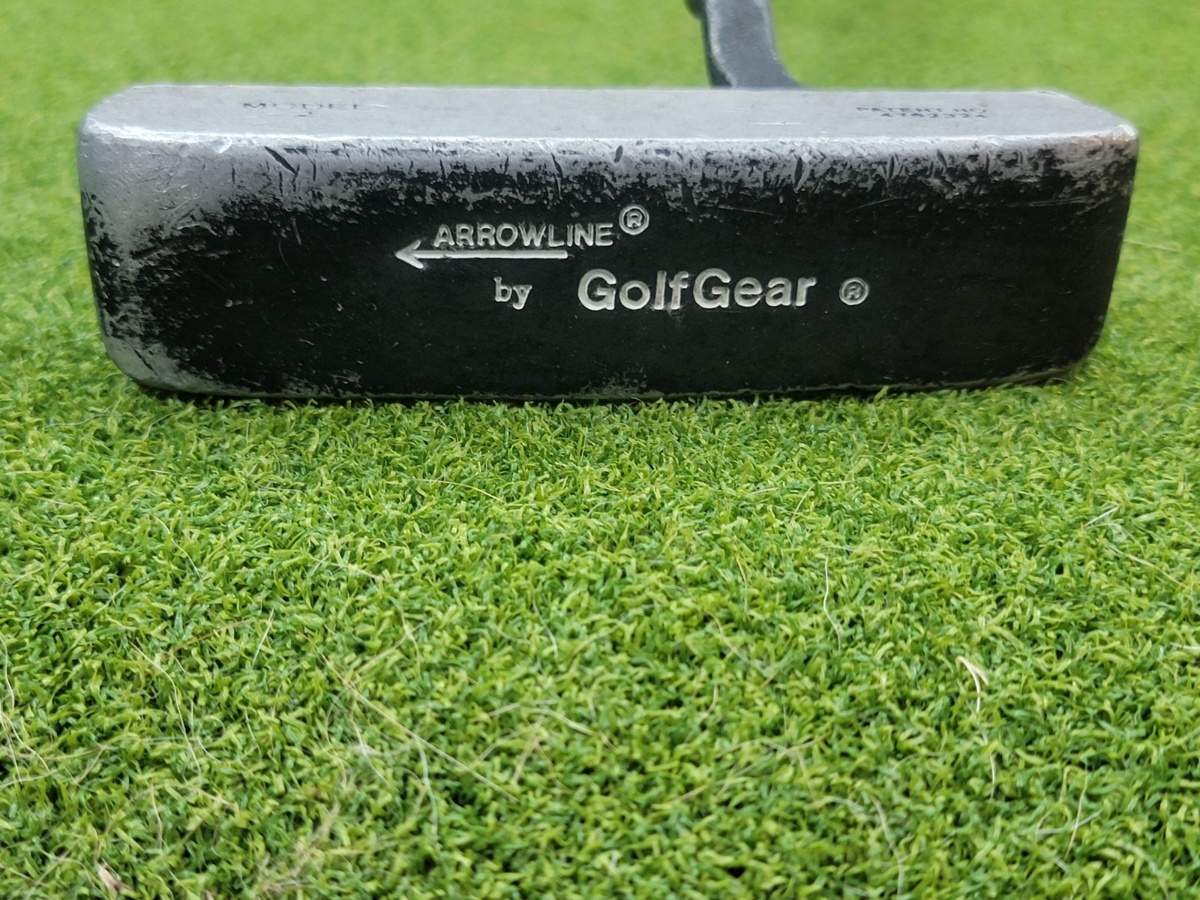

Photos from current listings. Actual item, color, and included accessories may vary.
Golf Putter Buying Guide
A golf putter is the flat-faced, high-MOI scoring club engineered for roll consistency and distance control, where head shape, hosel/neck type, and face material dictate forgiveness and stroke compatibility. The core trade-off is blade (workability, feel) versus mallet (stability, alignment) — and the single biggest decision is matching neck offset to your stroke path and head weight to green speed. Buy a putter with a defined hosel type, stated head weight, and a grip suited to your hand size; skip any listing that omits loft, lie, or neck configuration.


At a glance
- Category
- Golf Clubs & Club Fitting
- Data updated
- Nov 16, 2026
Current offers
Highlights
- Blade putters (roughly 330–350g head) suit arcing strokes and fast greens; mallet putters (360–400g+) resist twisting on off-center hits for straight-back strokes.
- Hosel type defines stroke fit: plumber's neck = moderate arc, flow neck = strong arc, double-bend/single-bend = face-balanced for straight strokes.
- Face inserts change roll: milled steel gives crisp feedback, polymer/TPE inserts soften feel and reduce skid on slow greens.
- Standard loft is 3–4 degrees; lie angle 70–72 degrees — adjust lie before changing length, since 1 degree upright shifts ball flight noticeably.
Best use cases
- Best for straight-back-straight-through strokes: face-balanced mallet with double-bend shaft and 370g+ head — pick this if you consistently miss both left and right.
- Best for arcing strokes: blade or mid-mallet with plumber's neck and 340–355g head — skip heavy counterbalanced mallets that slow your gate.
- Best for slow, shaggy municipal greens: softer insert face and lighter head for firmer roll; skip high-loft (5°+) faces that pop the ball.
- Wrong fit to avoid: a 35-inch putter for a player under 5'6" forces arms to stretch and hands high — size length to wrist-to-floor, not height alone.
Buying tips
- Length rule: wrist-to-floor 29–32 in = 33 in putter; 32–34 in = 34 in; 34–36 in = 35 in; over 36 in = 35–36 in with midsize grip.
- Head weight should rise as length shortens: 33 in putter at 360–380g, 35 in at 340–360g, to preserve swingweight feel.
- Grip diameter: standard 0.580–0.600 core for hands under 8 in long; midsize/oversize for 8 in+ or to quiet wrist action.
- Prefer putters listing exact loft (3–4°), lie (70–72°), and neck type over vague 'tour-inspired' claims; steel shafts beat graphite for feedback consistency.
Specs
| Head Style | Blade / Mid-mallet / Mallet |
|---|---|
| Neck / Hosel | Plumber's / Flow / Double-bend |
| Head Weight | 330–400g by length and green speed |
| Loft / Lie | 3–4° loft / 70–72° lie |
Related searches
What to check before buying
- Measure wrist-to-floor standing in shoes; that number, not your height, sets putter length within 1 inch.
- Confirm your stroke type on a 6-ft straight putt: square face at impact = face-balanced; open/closed gate = toe-hang neck.
- Match head weight to green speed: 330–350g for fast (10+ stimp), 360g+ for slow or Bermuda-grain greens.
- Verify grip size fits your hand span and that the putter includes a headcover to protect the face and finish.
FAQ
Data sources: eBay / Amazon listings and product attribute feeds Data updated Nov 16, 2026.
Some links on this page are affiliate links. If you buy after clicking one, we may earn a commission at no extra cost to you. This does not change which products appear here or their order. Affiliate disclosure.