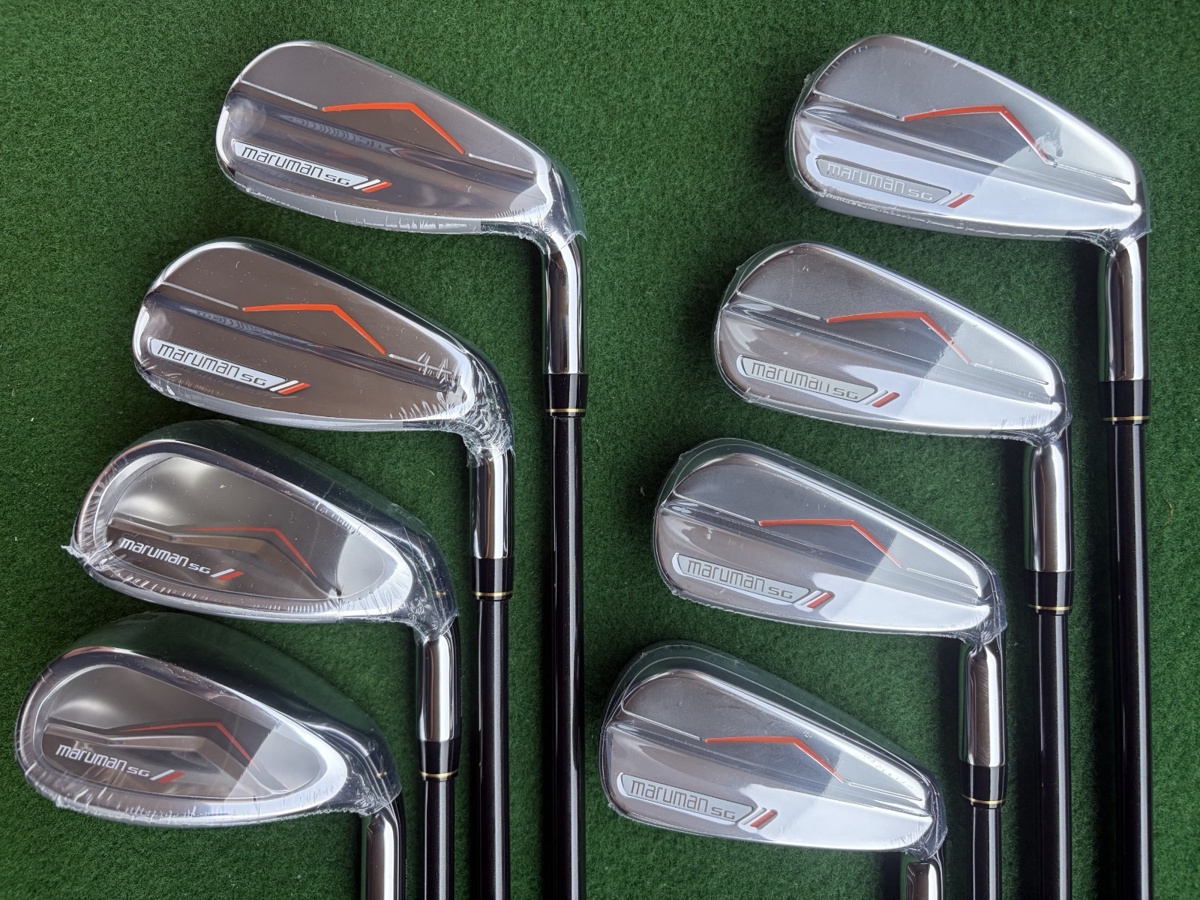

Photos from current listings. Actual item, color, and included accessories may vary.
Iron Set Buying Guide
Irons sets are the scoring core of the bag, and the primary trade-off is between game-improvement forgiveness (thin, hot faces and perimeter weighting) and player's-iron workability (compact heads, forged feel, weaker lofts). A durable, correctly fitted set matches shaft weight and flex to your swing speed and uses consistent loft gapping—avoid mixed-brand 'bargain bundles' with unverifiable shaft specs.


At a glance
- Category
- Golf Clubs & Club Fitting
- Data updated
- Nov 19, 2026
Current offers
Highlights
- Head construction separates tiers: cast stainless game-improvement irons (hollow-body or cavity-back) maximize MOI and ball speed; forged carbon-steel player's irons prioritize feel and shot-shaping with smaller sweet spots.
- Shaft weight and flex drive performance more than head brand: graphite (55–75g) suits sub-85 mph 7-iron speed; steel (95–130g) suits faster tempos and tighter dispersion.
- Loft creep means a modern 7-iron can be 28–30° versus a traditional 34°—compare sets by actual loft gaps (4–6° between irons), not by club number.
- Set composition matters: 5–PW (6 clubs) plus wedges is the common core; hybrid-iron replacements (1–4) help slower swing speeds launch long irons, while 3–4 irons suit high clubhead speed players.
Best use cases
- Best fit: mid-to-high handicappers wanting forgiveness should pick cast cavity-back or hollow-body game-improvement irons with graphite or lightweight steel shafts in regular flex—skip compact forged blades.
- Best fit: low-handicap shot-shapers should choose forged player's cavity or muscle-back irons with heavier steel shafts (S/X flex) and standard lofts—skip oversized offset heads.
- Best fit: beginners and slower swing speeds should buy hybrid-iron sets (4H–PW) or wide-sole super game-improvement irons—skip 3-iron and 4-iron inclusions that launch too low.
- Wrong fit: buying a mixed 'choose any club' hybrid-iron listing without verifying shaft flex and loft gaps leads to inconsistent distance gapping—pick a complete matched set instead.
Buying tips
- Measure 7-iron swing speed: under 75 mph → senior/light graphite; 75–85 mph → regular graphite or light steel; 85–95 mph → regular steel; 95+ mph → stiff steel.
- Check actual lofts: ensure 4–6° gaps between irons and that the PW matches your wedge lofts (e.g., 44° PW pairs with 50/56/60 wedges, not another 44°).
- Verify shaft material and flex are printed on the listing—unbranded graphite 'R flex' without weight specs is a red flag for inconsistent flex across the set.
- Prefer sets with standard Lie angles or adjustable hosels; lie angle 2° upright/flat changes start direction, so plan a lie fitting after purchase.
Specs
| Head Construction | Cast cavity/hollow vs forged carbon steel |
|---|---|
| Shaft Material | Graphite 55–75g / Steel 95–130g |
| Flex by Swing Speed | A/L <75 / R 75–95 / S 95+ mph |
| Set Makeup | 5–PW core / hybrid-iron 4H–PW |
Related searches
What to check before buying
- Know your 7-iron carry distance and swing speed before choosing flex—this determines shaft weight and head category.
- Confirm set makeup includes the clubs you actually hit: 5–PW is the common core; add hybrids or wedges based on your gapping.
- Check grip size (standard vs midsize) and condition—regripping a full set adds cost and should factor into the value.
- Verify orientation (RH/LH) and that the listing states shaft brand, flex, and loft per club rather than generic 'regular flex'.
FAQ
Data sources: eBay / Amazon listings and product attribute feeds Data updated Nov 19, 2026.
Some links on this page are affiliate links. If you buy after clicking one, we may earn a commission at no extra cost to you. This does not change which products appear here or their order. Affiliate disclosure.