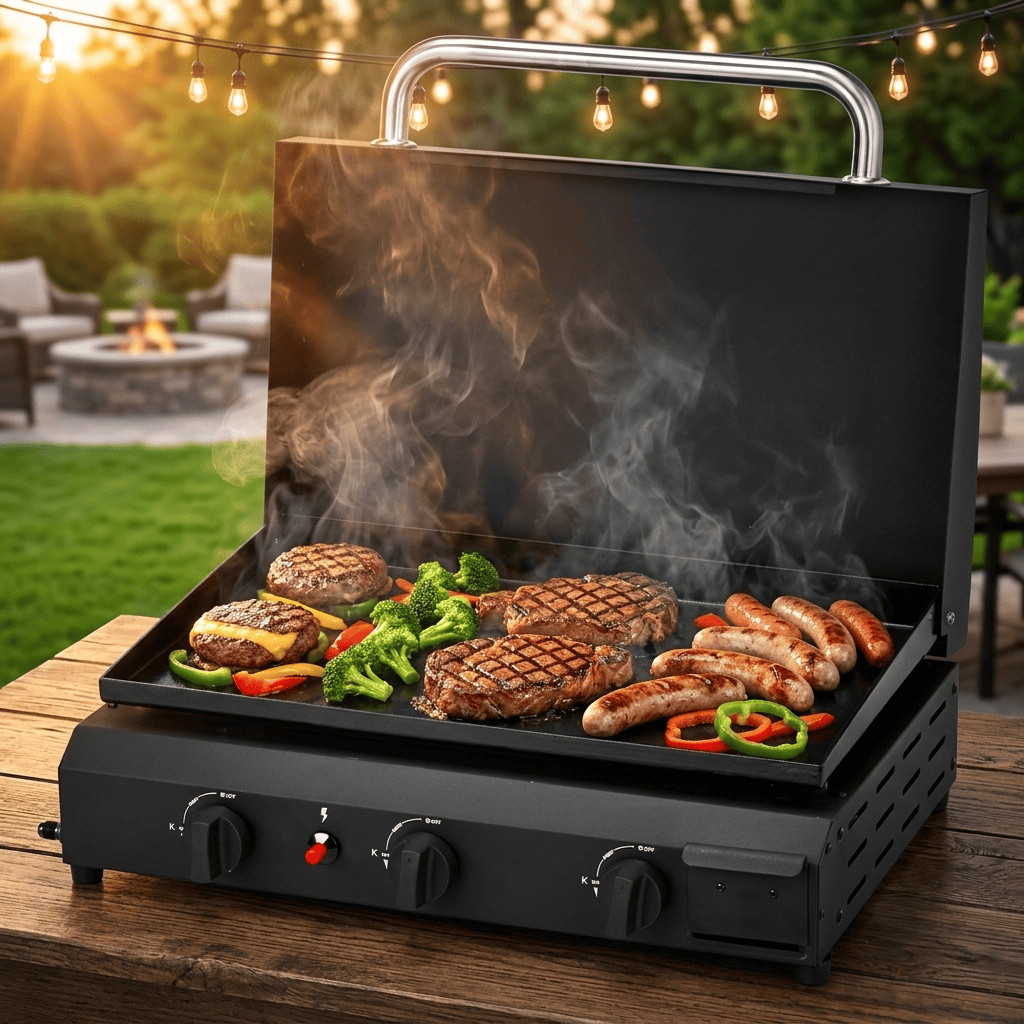

Photos from current listings. Actual item, color, and included accessories may vary.
Cast Iron Flat Buying Guide
A cast iron flat top (griddle plate) turns a gas grill, campfire, or tabletop burner into a searing, smash-burger-ready cooking surface. The key trade-off is mass vs. heat recovery: thicker plates hold temperature but take longer to heat, while thin plates cycle faster but warp under high heat. Buy cold-rolled or machined-top plates at least 3/16 in thick with a flat, warp-resistant base; skip 1/8 in stamped pans and porcelain-coated plates that chip.


At a glance
- Category
- BBQ Grills & Smokers
- Data updated
- Nov 18, 2026
Current offers
Highlights
- Plate thickness determines heat stability: 3/16 in (4.8 mm) is the minimum for searing without hot spots; 1/4 in (6.4 mm) and above resists warping under high burner output.
- Surface finish matters: machined or cold-rolled smooth tops season into a nonstick patina and spread a spatula cleanly; rough as-cast surfaces trap food and need heavy seasoning.
- Burner compatibility: a flat top needs a high-BTU burner or a dedicated griddle insert; on a gas grill, use two adjacent burners and preheat 10-15 minutes to saturate the iron.
- Fit and drainage define usability: a raised lip and grease trough or drain hole prevent pooling; a plate sized to your grate footprint (not the grill body) avoids wobble and flare-ups.
Best use cases
- Best fit: smash burgers, breakfasts, and fajitas on a 3-burner gas grill—pick a 1/4 in plate sized to cover two burners with a front grease channel.
- Best fit: camping and tailgating—choose a 3/16 in tabletop plate with folding handles and a flat bottom that sits on a propane camp stove or portable burner.
- Wrong fit: high-heat wok cooking or open-flame char—flat tops excel at surface contact, not fire exposure; use a cast iron skillet or grill grate instead.
- Wrong fit: low-output portable burners—a thick 1/4 in plate on a weak burner will never recover heat; match plate mass to burner BTU or use a thinner 3/16 in plate.
Buying tips
- Size the plate to your grate footprint: measure the cooking grate width and depth, then choose a plate 1-2 in smaller per side so heat can circulate and the lid closes.
- Check plate thickness and flatness: 3/16 in minimum for gas grills, 1/4 in for frequent searing; a plate that rocks on a flat surface will warp and leak grease.
- Match burner output: allow roughly 8,000-10,000 BTU per burner under the plate; a 1/4 in plate over two 10,000 BTU burners preheats in 10-15 minutes.
- Prefer a machined top and a raised rim with a drain hole; avoid porcelain-enamel coatings that chip and trap moisture, and skip plates without a grease management edge.
Specs
| Plate Thickness | 3/16 in min; 1/4 in for searing |
|---|---|
| Surface Finish | Machined/cold-rolled vs as-cast rough |
| Heat Source | Gas grill, propane stove, open fire |
| Grease Management | Raised rim + drain hole vs flat edge |
Related searches
What to check before buying
- Measure your grill grate or burner footprint (width x depth) and confirm the plate leaves 1-2 in clearance per side and closes under the lid.
- Confirm your heat source: gas grill burners (BTU per burner), portable propane stove, or open fire—each requires a different plate thickness and base flatness.
- Check the plate base: a flat, uncoated bottom sits stable on grates or burners; warped or footed bases rock and create hot spots.
- Plan seasoning and storage: bare cast iron needs oil seasoning and dry storage; a plate with a machined top and no coating is easiest to maintain.
FAQ
Data sources: eBay / Amazon listings and product attribute feeds Data updated Nov 18, 2026.
Some links on this page are affiliate links. If you buy after clicking one, we may earn a commission at no extra cost to you. This does not change which products appear here or their order. Affiliate disclosure.