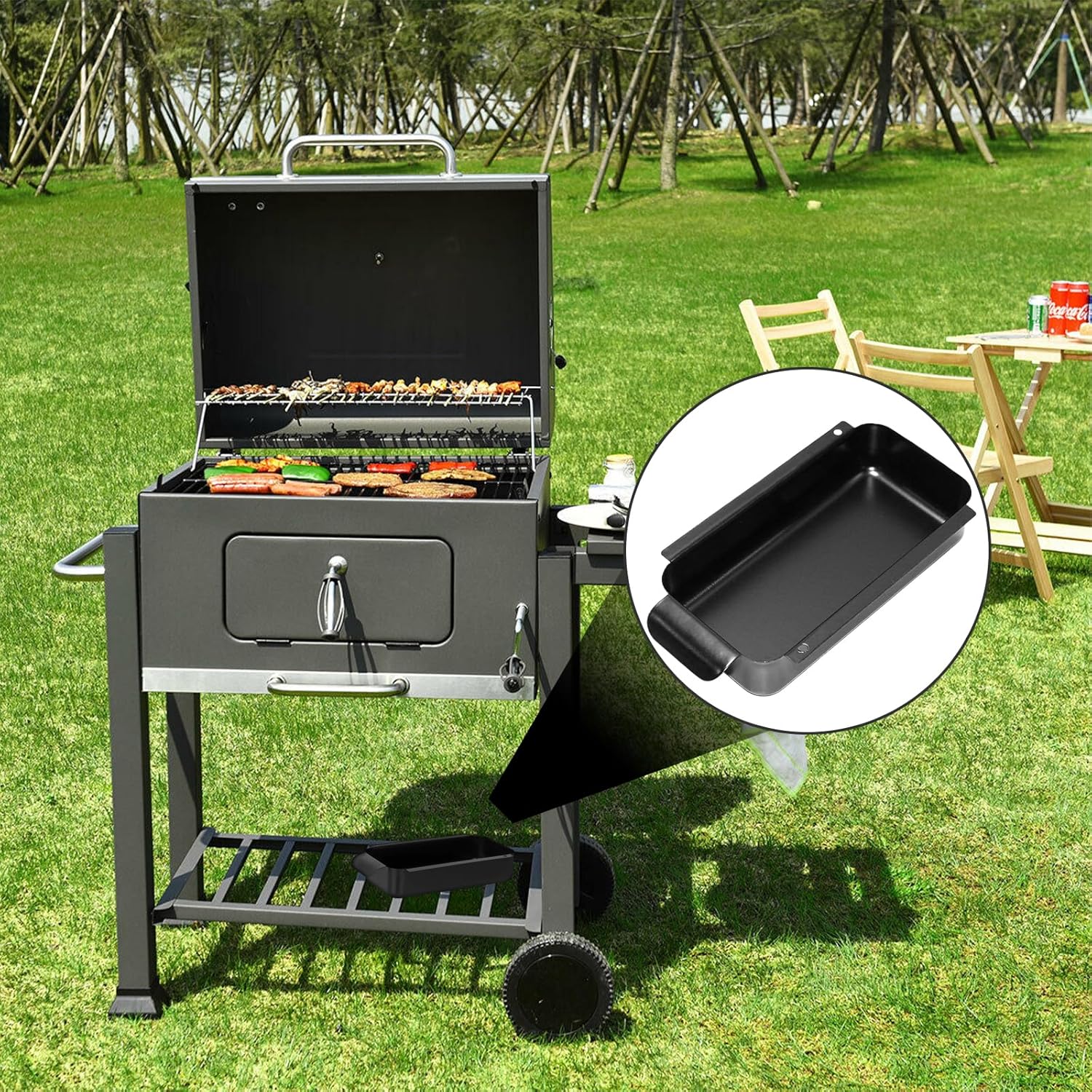

Photos from current listings. Actual item, color, and included accessories may vary.
Char Broil Grill Buying Guide
Char-Broil is a mass-market grill brand spanning gas, charcoal, electric, and infrared models, with the core trade-off being price versus heat distribution and long-term burner/emitter durability. The brand's infrared and TRU-Infrared lines cook more evenly and reduce flare-ups, while entry-level gas models use standard tube burners that rust through faster. Buy the tier that matches your cooking volume and climate: infrared or dual-fuel for year-round use, basic gas or charcoal for occasional backyard cooks.


At a glance
- Category
- BBQ Grills & Smokers
- Data updated
- Nov 17, 2026
Current offers
Highlights
- TRU-Infrared cooking systems use a perforated emitter plate instead of open burners, cutting flare-ups and improving even heat across the grate.
- Entry-level gas grills use stamped steel or cast-iron burners; mid-tier and infrared models step up to stainless burners with longer warranties.
- Char-Broil gas grills are sized by total BTU and main cooking area; 2-burner models suit small patios, 4-5 burner models suit family cooks and entertaining.
- Electric and charcoal Char-Broil models trade portability and simplicity for lower sear temperature and no infrared emitter plate.
Best use cases
- Best fit: a 3-4 burner TRU-Infrared gas grill for a household grilling 3-5 times weekly — even heat and fewer flare-ups suit burgers, chicken, and vegetables. Skip open-burner entry models if you grill fatty cuts often.
- Best fit: a 2-burner compact gas or electric Char-Broil for apartment balconies and small patios — pick electric where open flame is restricted. Skip full-size 5-burner units if storage space is tight.
- Best fit: a charcoal kettle or barrel Char-Broil for high-heat searing and smoke flavor on a budget — charcoal delivers hotter sears than most electric models. Skip charcoal if you want push-button ignition and precise temperature dials.
- Wrong fit: a large infrared grill for a single occasional cook — the emitter plate and stainless burners cost more and reward frequent use. Choose a basic 2-burner gas model instead.
Buying tips
- Match burner count to cooking area: 2-burner grills run roughly 300-400 sq in of main grate; 4-5 burner models exceed 500 sq in for family cooks.
- Choose stainless steel burners and emitter plates over stamped steel if you grill year-round — stainless resists rust and carries longer warranties.
- Check the ignition type: electronic push-button ignition is standard on mid-tier models; basic models use piezo igniters that wear out faster.
- For infrared models, confirm the emitter plate is removable and dishwasher-safe for easier grease cleanup; fixed plates are harder to maintain.
Specs
| Fuel Type | Propane / Natural Gas / Electric / Charcoal |
|---|---|
| Cooking System | TRU-Infrared emitter vs open burner |
| Burner Material | Stainless steel vs stamped steel |
| Grate Material | Cast iron / porcelain-coated steel |
Related searches
What to check before buying
- Measure your patio or deck footprint and confirm clearance for lid opening and side shelves — 4-burner models need roughly 5 ft of width with shelves out.
- Verify your fuel source: propane tank size (standard 20 lb) and whether a natural gas conversion kit is available for your model.
- Confirm your outdoor space allows open flame; choose electric Char-Broil models for balconies or communities with propane restrictions.
- Check that replacement parts (burners, emitter plates, grease trays) are listed for your model series before buying — part availability varies by tier.
FAQ
Data sources: eBay / Amazon listings and product attribute feeds Data updated Nov 17, 2026.
Some links on this page are affiliate links. If you buy after clicking one, we may earn a commission at no extra cost to you. This does not change which products appear here or their order. Affiliate disclosure.