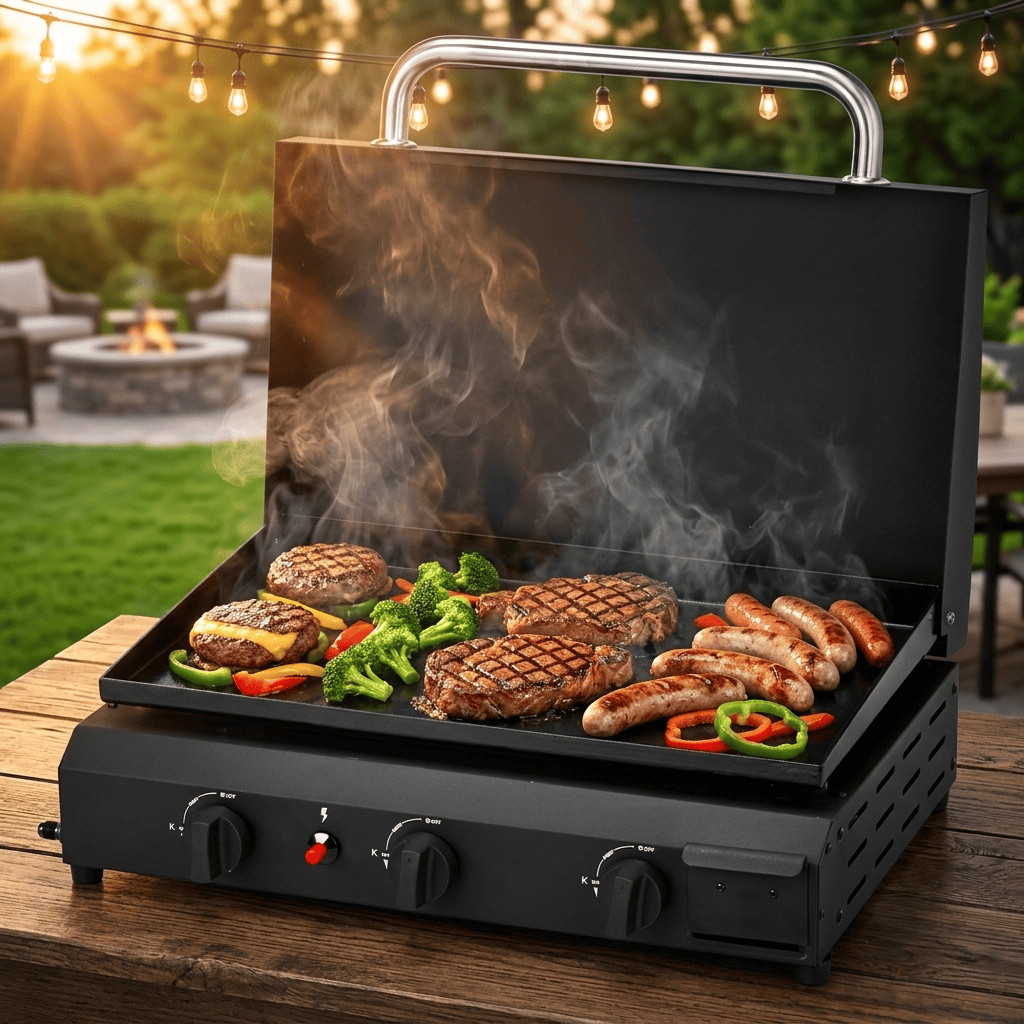

Photos from current listings. Actual item, color, and included accessories may vary.
Flat Iron Buying Guide
A flat iron (griddle) turns a gas or charcoal grill into a solid cooking surface for searing, smash burgers, and full-breakfast batches. The primary trade-off is plate thickness and material against burner output: thin stamped steel heats fast but warps and dumps heat, while 3/16-inch or thicker rolled steel or cast iron holds temperature and survives years of scraping. Buy a plate at least 3/16-inch thick with a perimeter grease trough; skip anything under 1/8-inch thick or without a drain.


At a glance
- Category
- BBQ Grills & Smokers
- Data updated
- Nov 18, 2026
Current offers
Highlights
- Plate thickness is the durability metric: 3/16-inch (4.8 mm) and 1/4-inch (6.4 mm) rolled steel resist warping, while 1/8-inch stamped steel bows under high burner heat.
- Burner output per square inch of plate matters more than total BTUs: 60-100 BTUs per square inch of cooking surface gives recovery after cold food loads.
- Cast iron plates retain heat best for searing but weigh 2-3x steel and need seasoning; cold-rolled steel is the standard for high-volume gas griddles.
- Grease management separates usable griddles from messy ones: a rear or side trough with a removable catch cup beats a flat plate with raised edges and no drain.
Best use cases
- Best fit: tabletop propane griddle with 2-3 burners and a 3/16-inch steel plate for camping, tailgates, and small patios where a full cart griddle is overkill.
- Best fit: drop-in or full-cart gas griddle with independent zone valves and a rear grease trough for smash burgers, hibachi-style rice, and breakfast for a family.
- Wrong fit: a thin 1/8-inch nonstick-coated plate for high-heat searing; the coating degrades above 500 F and the plate warps, so pick bare steel or cast iron.
- Wrong fit: buying a flat iron insert for a charcoal kettle without a grease drain; flare-ups and pooled fat make it a mess, so use a dedicated gas griddle or a drain-equipped insert.
Buying tips
- Match plate size to your burner count: a 3-burner tabletop griddle typically covers 400-550 square inches, enough for 6-8 burgers at once; a 2-burner covers 250-350 square inches.
- Choose 3/16-inch or 1/4-inch cold-rolled steel for gas; choose cast iron only if you sear at high heat and accept 30-50 lb of extra weight.
- Confirm the grease drain points away from the burner controls and that the catch cup is removable and stainless or enameled, not thin aluminum.
- For a grill insert, measure the firebox opening and buy a plate with at least 1 inch of clearance on each side for airflow and lid closure.
Specs
| Plate Material | Cold-rolled steel / cast iron |
|---|---|
| Plate Thickness | 3/16 in (4.8 mm) min / 1/4 in better |
| Burner Output | 60-100 BTU per sq in of plate |
| Grease Management | Rear trough + removable catch cup |
Related searches
What to check before buying
- Measure your cooking area: tabletop griddles need a stable, heat-safe surface at least as large as the unit's footprint plus 6 inches of clearance.
- Check your fuel: propane tabletop models use 1 lb disposable cylinders or a hose to a 20 lb tank; confirm the regulator and hose are included or match your tank.
- Verify lid clearance if using a drop-in plate under a grill lid; most griddles need 4-6 inches of height above the plate for burgers and dome melting.
- Confirm the plate material is bare steel or cast iron if you plan to season it; preseasoned is fine, but nonstick coatings are not for high-heat griddle cooking.
FAQ
Data sources: eBay / Amazon listings and product attribute feeds Data updated Nov 18, 2026.
Some links on this page are affiliate links. If you buy after clicking one, we may earn a commission at no extra cost to you. This does not change which products appear here or their order. Affiliate disclosure.