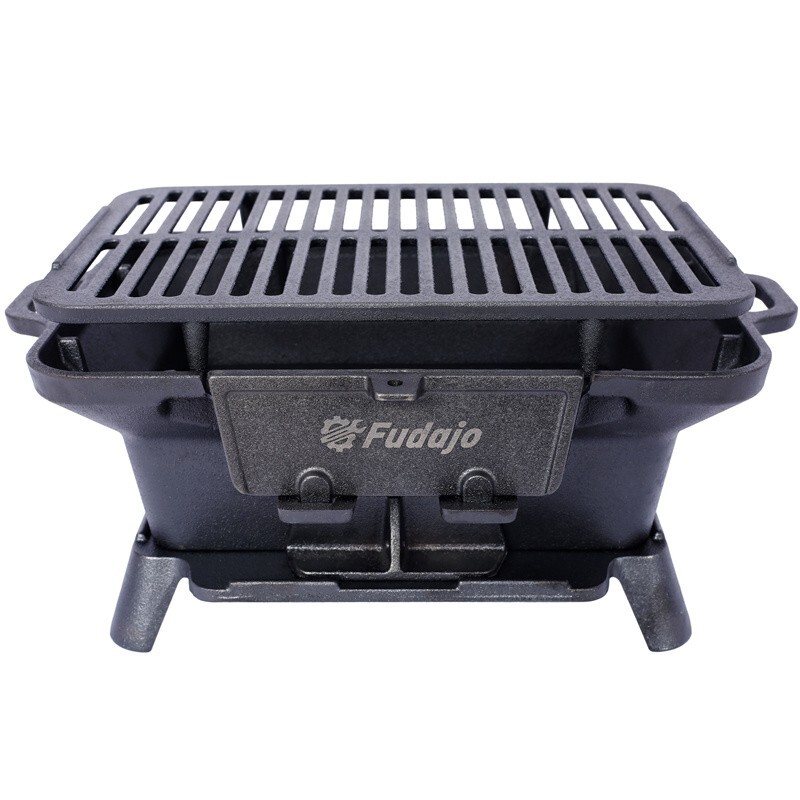

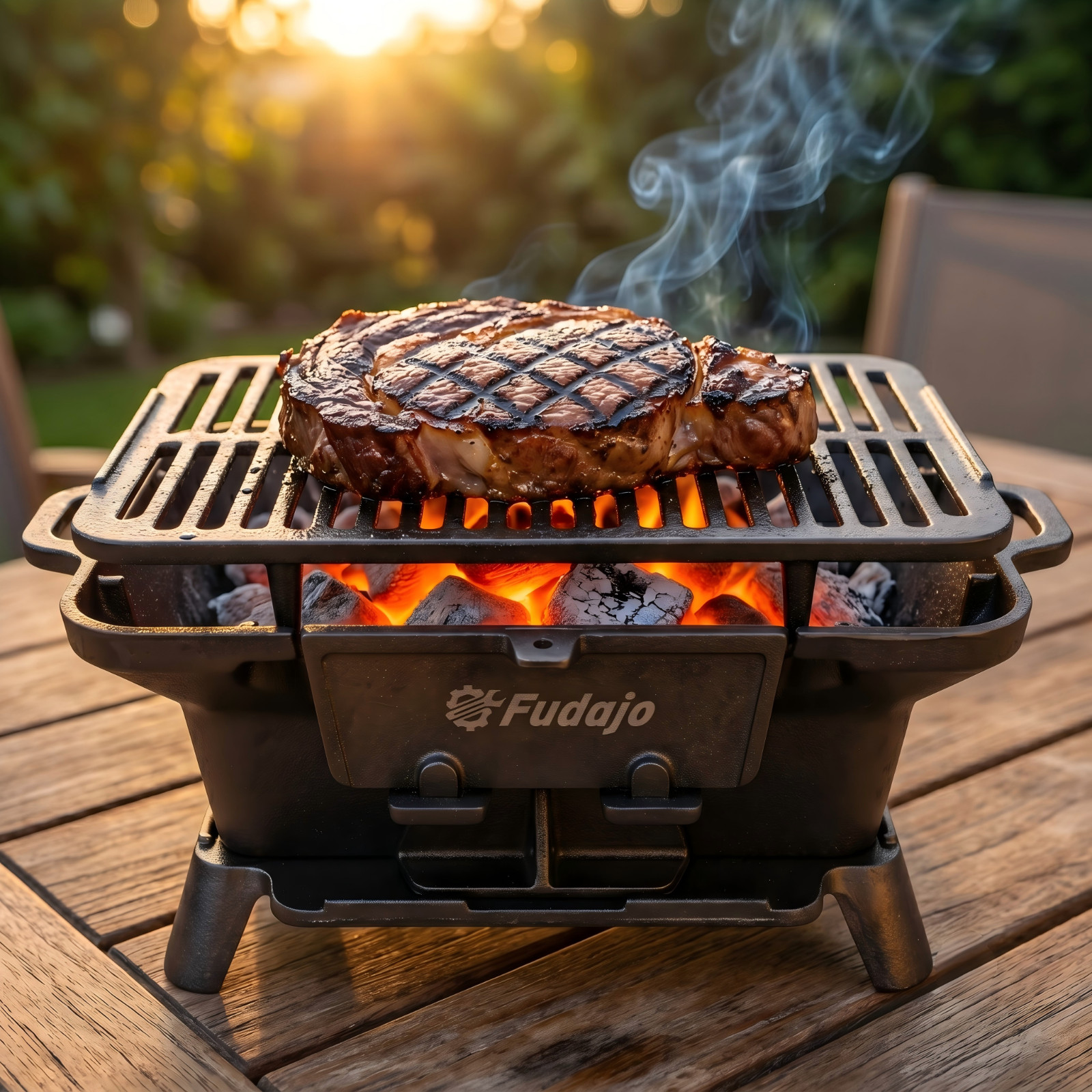
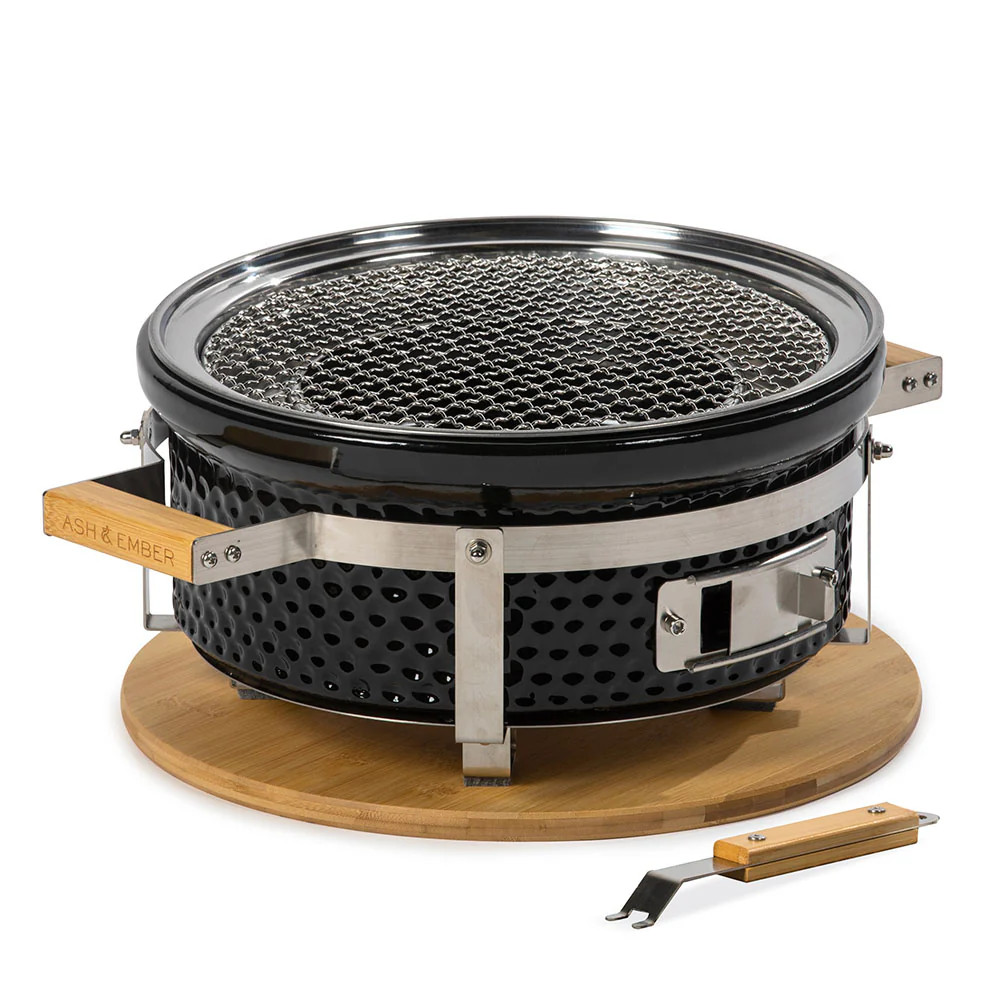
Photos from current listings. Actual item, color, and included accessories may vary.
Hibachi Grill Buying Guide
A hibachi grill is a compact, open-top charcoal cooker built for high, direct heat—typically cast iron or ceramic—designed for tabletop or small-patio use. The core trade-off is material mass versus portability: heavier cast iron and ceramic bodies hold heat and sear reliably, while thin stamped steel cools fast and warps. Buy cast iron or ceramic if you want a durable searing surface; skip thin steel unless you need a disposable camp cooker.


At a glance
- Category
- BBQ Grills & Smokers
- Data updated
- Nov 16, 2026
Current offers
Highlights
- Cast iron bodies (8–15 lb for 12–14 in models) retain heat for consistent searing; ceramic bodies add insulation but crack if thermal-shocked.
- Airflow is controlled by bottom and side vents; without a tight-fitting lid or adjustable dampers, coals burn hot and fast with minimal low-and-slow control.
- Cooking grate thickness matters: 3–5 mm cast iron grates resist warping and hold sear temperature better than 1–2 mm chrome-plated wire.
- Tabletop units run 10–14 in wide and need 1–2 lb of lump charcoal for a 30–60 minute session; full-size hibachi tables are a separate built-in category.
Best use cases
- Best fit: apartment balconies and small patios—pick a 12–14 in cast iron tabletop model with a carrying handle and ash pan.
- Best fit: camping and tailgating—choose a 10–12 in cast iron or steel hibachi under 15 lb with folding legs and a vented lid.
- Wrong fit: feeding 6+ people or cooking low-and-slow—skip hibachi and choose a full-size kettle or offset smoker with a lid and damper.
- Wrong fit: high-wind or rainy exposed decks—skip open-top ceramic unless you add a wind screen and never thermal-shock a hot ceramic body.
Buying tips
- Match width to batch size: 10–12 in suits 1–2 people, 14–16 in suits 3–4; every extra inch adds roughly 1–2 lb of cast iron.
- Choose cast iron over stamped steel for durability; pre-seasoned cast iron needs a light oil coat after each wash to prevent rust.
- For ceramic hibachi, confirm the body is cordierite or fireclay and never pour cold water on a hot bowl—thermal shock is the top crack cause.
- Check vent design: adjustable bottom dampers plus a vented lid give control; open-top units without dampers are sear-only tools.
Specs
| Body Material | Cast iron / ceramic / stamped steel |
|---|---|
| Cooking Width | 10–16 in tabletop; full-size tables separate |
| Fuel Type | Lump charcoal / binchotan |
| Vent Control | Adjustable dampers vs open-top only |
Related searches
What to check before buying
- Measure your table or patio spot: a 14 in hibachi needs at least 18 in of clear width and a heat-safe non-combustible surface.
- Confirm fuel type: hibachi runs on lump charcoal or binchotan; do not use propane or briquettes designed for low-ash long burns without adjusting airflow.
- Check your local fire rules: open-flame charcoal grills are banned on many apartment balconies and in drought-prone areas.
- Plan companion parts: long-handled tongs, a wire brush, a small ash scoop, and a heat-resistant mat or stand for tabletop use.
FAQ
Data sources: eBay / Amazon listings and product attribute feeds Data updated Nov 16, 2026.
Some links on this page are affiliate links. If you buy after clicking one, we may earn a commission at no extra cost to you. This does not change which products appear here or their order. Affiliate disclosure.