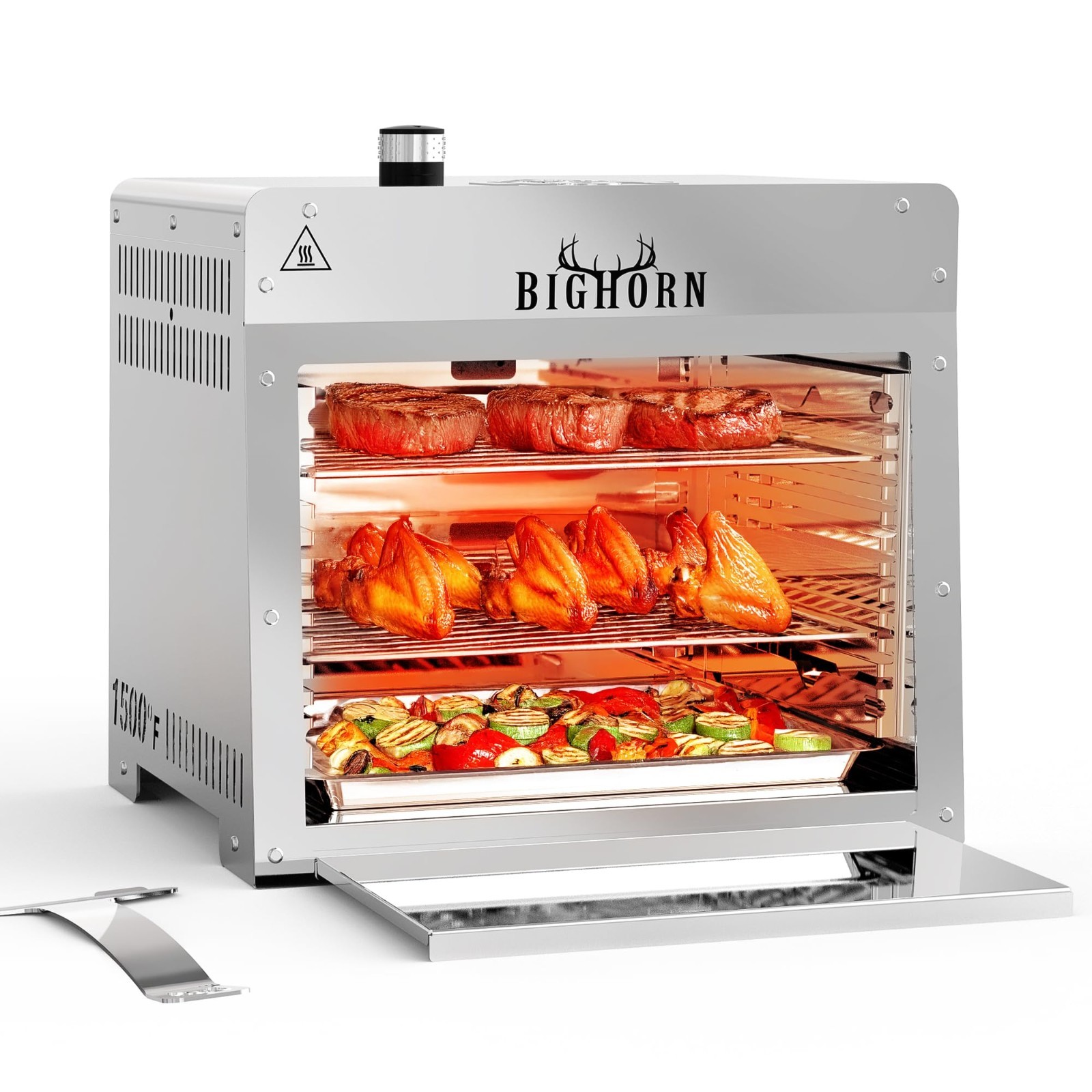

Photos from current listings. Actual item, color, and included accessories may vary.
Small Propane Grill Buying Guide
Small propane grills are compact gas cookers sized for balconies, tailgates, and small patios, typically using 1 lb disposable cylinders or a 20 lb tank via adapter hose. The core trade-off is between high-output infrared or cast-aluminum burners for searing and lightweight steel construction for portability, with thin stamped bodies and low-BTU burners being the main durability compromises. Pick a grill with a cast-aluminum or heavy-gauge stainless firebox and at least 8,000 BTU for real cooking; skip any model with a porcelain-coated steel body under 22-gauge or a burner rated below 6,000 BTU.


At a glance
- Category
- BBQ Grills & Smokers
- Data updated
- Nov 16, 2026
Current offers
Highlights
- Infrared burners reach 1500°F+ for steakhouse searing, while standard blue-flame tube burners top out near 700-900°F and rely on lid-down convection.
- Cast aluminum fireboxes resist rust and hold heat better than stamped steel; 304 stainless steel grates outlast chrome-plated steel by several seasons.
- BTU per square inch of cooking surface is the real heat metric — aim for 80-120 BTU/sq in; a 200 sq in grill needs roughly 16,000-24,000 BTU.
- Regulator and hose assemblies for 1 lb cylinders are standard, but 20 lb tank compatibility requires a specific adapter hose with the correct QCC-1 fitting.
Best use cases
- Best for balcony or apartment use: a 1 lb-cylinder tabletop model with cast aluminum body and folding legs, skipping any full-size cart grill that exceeds balcony fire-code limits.
- Best for tailgating and camping: a sub-30 lb portable with latching lid, locking legs, and a 10,000-15,000 BTU burner, skipping infrared models that need a preheat cycle and drain batteries.
- Best for small-family patio searing: a 2-burner infrared or hybrid model with 20 lb tank adapter and 300+ sq in surface, skipping single-burner tabletop units that can't hold two-zone heat.
- Wrong fit: high-wind exposed decks — skip low-profile tabletop units without a lid thermometer and wind-blocking firebox design.
Buying tips
- Match BTU to surface: for a 200 sq in grill choose 16,000-24,000 BTU total; for 300 sq in choose 24,000-36,000 BTU, and avoid any burner under 8,000 BTU per burner.
- Choose a cast aluminum or 304 stainless firebox over porcelain-coated steel; 22-gauge or thicker steel resists warping, while 24-gauge and thinner dents and rusts within a season.
- Pick stainless steel or cast iron grates over chrome-plated steel — chrome plating flakes off after repeated 500°F+ cycles and exposes rusting mild steel.
- Confirm the regulator type: 1 lb cylinders use a CGA-600 threaded connection, while 20 lb tanks need a QCC-1 adapter hose; a grill that ships only with a 1 lb regulator needs the adapter hose bought separately.
Specs
| Burner Type | Infrared vs standard tube |
|---|---|
| Firebox Material | Cast aluminum / 304 stainless / steel |
| BTU per Sq In | 80-120 BTU/sq in target |
| Fuel Connection | 1 lb CGA-600 / 20 lb QCC-1 |
Related searches
What to check before buying
- Measure your balcony, tailgate, or patio footprint and clearance to railings — tabletop units typically need 24-30 in width and 12 in rear clearance.
- Check your building's fire code for open-flame appliances; many apartments ban grills on balconies above the first floor regardless of size.
- Verify your fuel source: 1 lb cylinders are single-use and cost-effective only for occasional use, while a 20 lb tank requires an adapter hose and safe outdoor storage.
- Confirm your vehicle or storage space can fit the folded dimensions and weight — portables under 30 lb and under 24 in wide fit most car trunks and closet shelves.
FAQ
Data sources: eBay / Amazon listings and product attribute feeds Data updated Nov 16, 2026.
Some links on this page are affiliate links. If you buy after clicking one, we may earn a commission at no extra cost to you. This does not change which products appear here or their order. Affiliate disclosure.