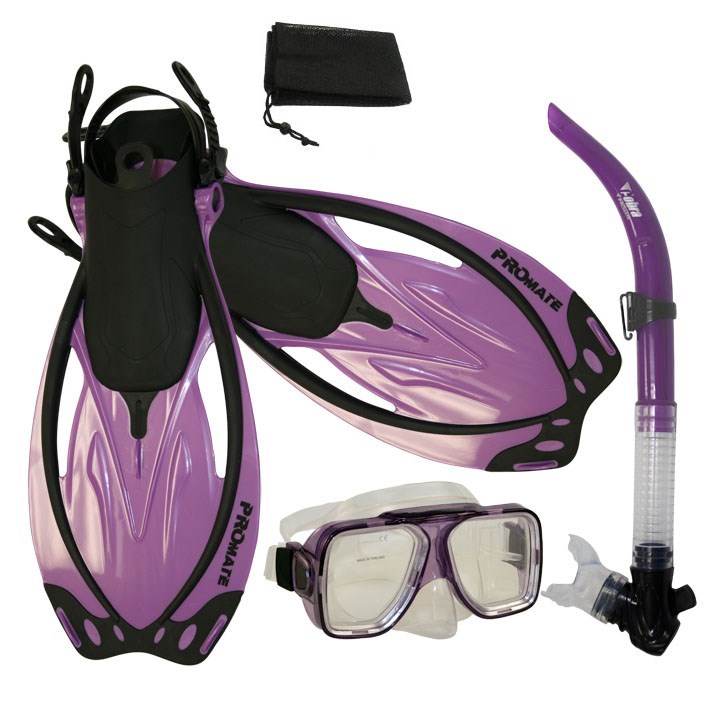

Photos from current listings. Actual item, color, and included accessories may vary.
Dive Mask Buying Guide
A dive mask is the only piece of gear you look through, so lens geometry, skirt seal, and frame construction decide whether you see clearly or fight leaks all dive. The core trade-off is tempered-glass clarity and a silicone skirt that seals against facial hair versus low-volume frameless designs that pack small but demand precise fit. Buy tempered glass with a double-feather silicone skirt sized to your face; skip plastic-lens, single-skirt masks that fog, scratch, and leak.


At a glance
- Category
- Dive Masks, Fins & Snorkels
- Data updated
- Nov 16, 2026
Current offers
Highlights
- Lens material: tempered glass resists scratching and pressure cracking; polycarbonate lenses scratch, fog faster, and are not rated for depth.
- Skirt seal: double-feather silicone with a wide sealing edge blocks water better than single-edge PVC, especially across a mustache or beard.
- Internal volume: low-volume masks sit closer to the eyes, clear easier on descent, and suit freediving; standard-volume masks give wider peripheral view for scuba.
- Frame type: frameless masks fold flat for packing and reduce failure points; framed masks with stainless or composite rims hold lens shape but add bulk.
Best use cases
- Scuba diving: pick a tempered-glass framed or frameless mask with standard internal volume and a wide silicone skirt for peripheral view and pressure equalization.
- Snorkeling and travel: choose a low-volume frameless tempered-glass mask that packs flat and clears with a single exhale; skip bulky dual-lens framed masks.
- Mustache or beard: select a double-feather silicone skirt with a broad sealing surface and test the seal by inhaling gently through the nose; skip single-edge PVC skirts.
- Prescription wearers: buy a mask with bonded prescription lenses or optical inserts matched to your Rx; skip stick-on lenses that distort and leak.
Buying tips
- Fit rule: place the mask on your face without the strap and inhale gently through the nose; it should hold for several seconds with no hand support.
- Skirt grade: double-feather silicone (two sealing edges) outlasts and outseals single-edge PVC; silicone resists UV and salt water without hardening.
- Lens spec: confirm 'tempered glass' marked on the lens; tempered glass meets dive safety standards, while plain glass or plastic does not.
- Strap and buckles: choose a silicone strap with quick-release buckles that rotate, so the strap aligns with your head angle and reduces skirt lift.
Specs
| Lens Material | Tempered glass vs polycarbonate |
|---|---|
| Skirt Seal | Double-feather silicone vs single PVC |
| Internal Volume | Low-volume vs standard-volume |
| Frame Type | Frameless vs framed |
Related searches
What to check before buying
- Measure face width at the temples and cheekbone span; a skirt wider than your face leaks at the sides, narrower pinches.
- Test the seal with facial hair present, since a mustache breaks the upper-lip seal unless the skirt has a wide double feather.
- Confirm the mask accepts your prescription insert or bonded lens option if you wear corrective lenses.
- Check that the mask pairs with your snorkel clip and fin package without strap interference, especially in bundled gear sets.
FAQ
Data sources: eBay / Amazon listings and product attribute feeds Data updated Nov 16, 2026.
Some links on this page are affiliate links. If you buy after clicking one, we may earn a commission at no extra cost to you. This does not change which products appear here or their order. Affiliate disclosure.