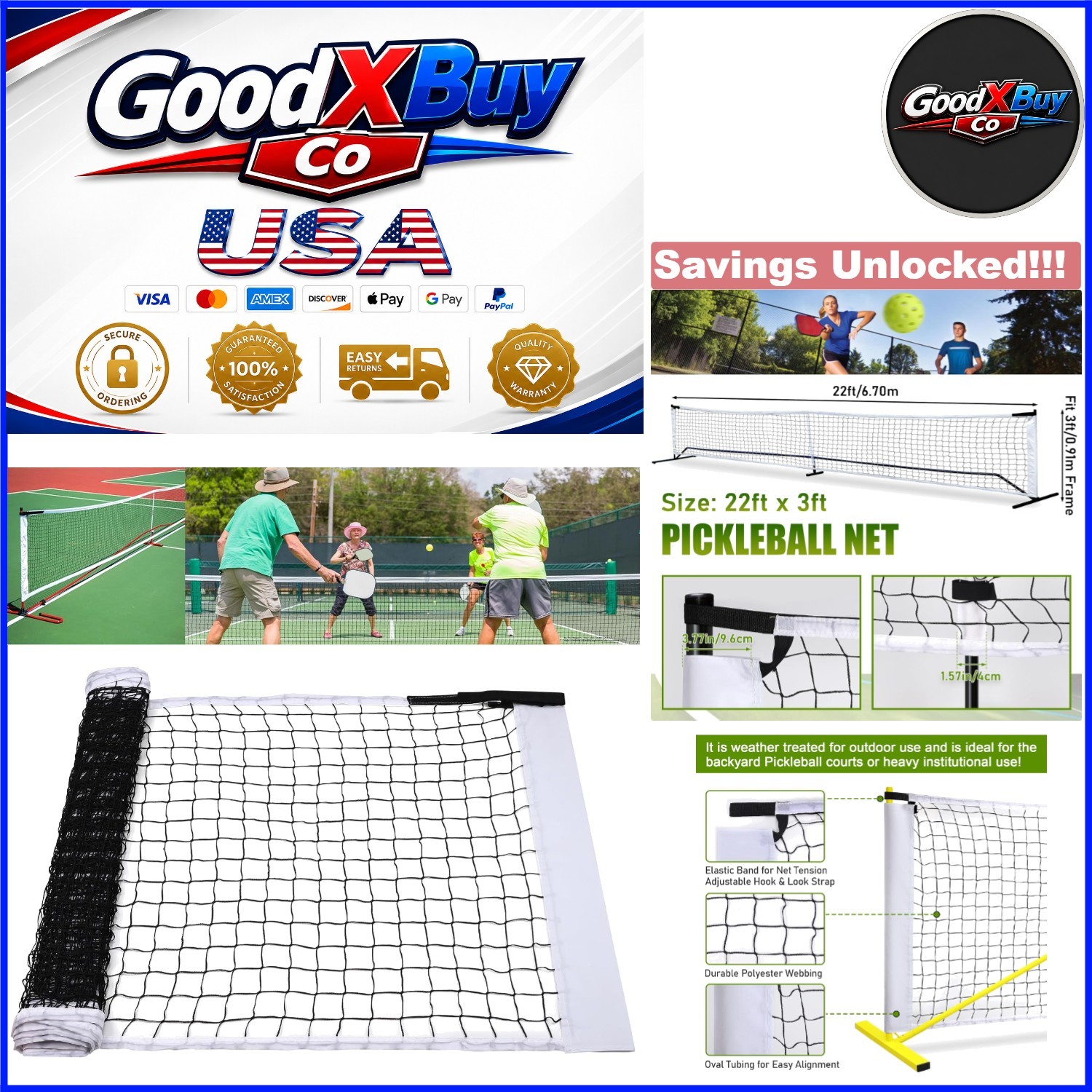

Photos from current listings. Actual item, color, and included accessories may vary.
Indoor Pickleball Net Buying Guide
An indoor pickleball net is a portable or semi-permanent net system sized and built for gym floors, rec rooms, and basements rather than driveways. The core trade-off is between regulation 22-foot width for real play versus compact mini widths for drills and tight spaces, and between lightweight pop-up frames versus weighted-base systems that stay put on smooth floors. The decision rule: buy a full 22-foot net with a weighted or sandbag-stabilized base for actual games, and a mini net only for solo practice or space-constrained drills.


At a glance
- Category
- Pickleball Nets & Court Gear
- Data updated
- Nov 16, 2026
Current offers
Highlights
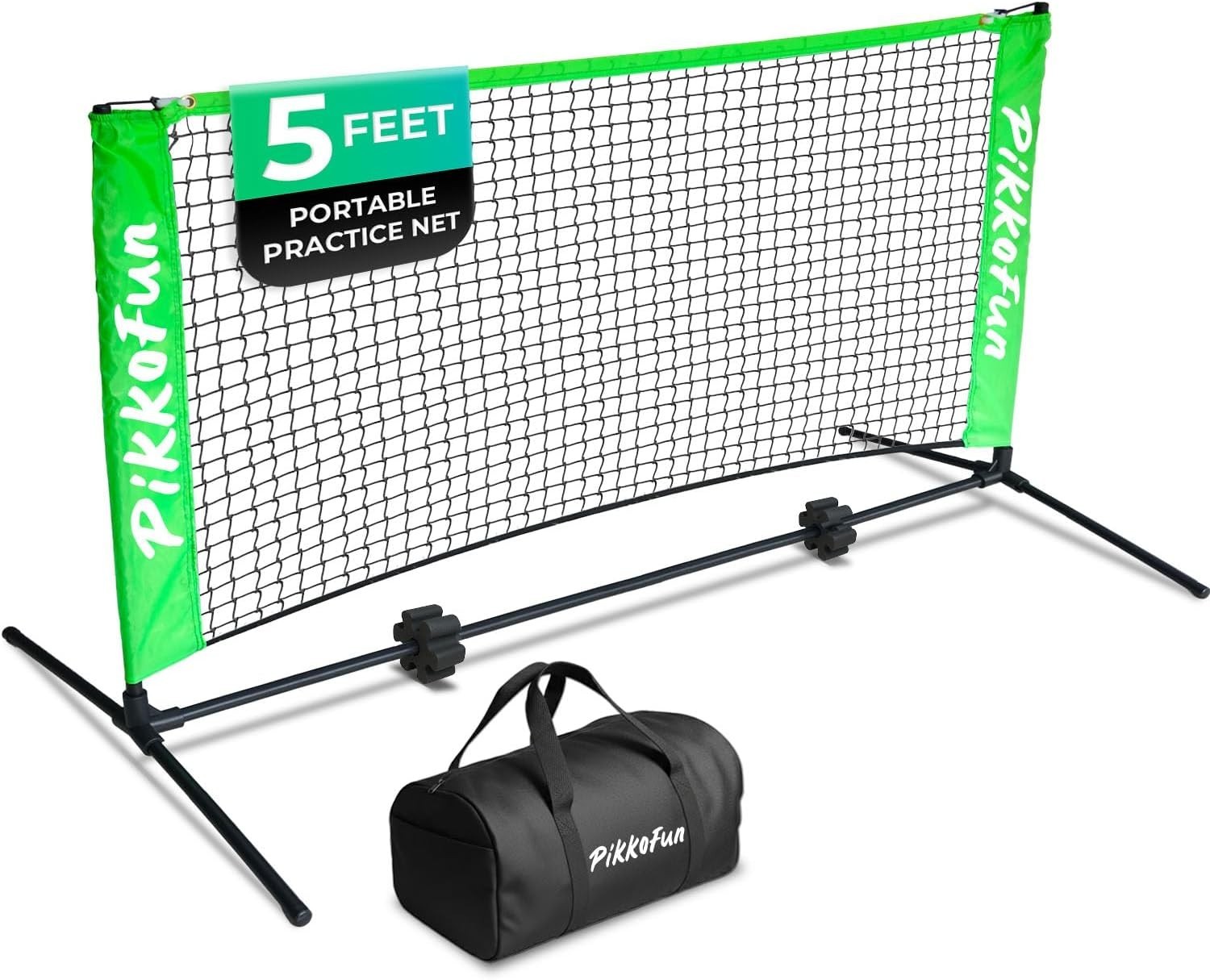
- Regulation pickleball net width is 22 feet with 34-inch center height and 36-inch post height; mini nets are typically 10-12 feet wide and 30-36 inches tall.
- Indoor frames rely on either fiberglass pop-up poles with elastic cords or steel/aluminum tubing with push-button locks; steel bases resist tipping on slick gym floors.
- Net mesh quality is graded by denier and knot structure; 420D or higher nylon with reinforced edge binding resists ball impact fraying better than thin polyester.
- Weighted base systems using sandbags or water-fillable legs are the primary stability mechanism indoors, since floor anchors are not an option on hardwood or tile.
Best use cases
- Best fit: full 22-foot regulation-width net with sandbag-weighted base for driveway-to-gym conversion and actual games; skip mini nets if you intend to play singles or doubles matches.
- Best fit: 10-12 foot mini net for basement drill work, volleying practice, and small-room skills training; skip full-width nets in rooms shorter than 30 feet.
- Best fit: steel-tubing frame with push-button assembly for shared gym or multi-use rec room where setup and teardown happen weekly; skip pop-up fiberglass if the net stays up and gets leaned on.
- Wrong fit: lightweight pop-up net on polished hardwood without weights — it will slide and tip on hard serves; choose weighted-base or sandbag-equipped frames instead.
Buying tips
- Measure your room first: a regulation 22-foot net needs at least 30 feet of length and 20 feet of width to play safely, so basements under 30 feet require a mini net.
- Match frame material to use frequency: fiberglass pop-up poles suit occasional storage-and-travel use, while steel or aluminum push-button tubing holds tension better for permanent indoor setups.
- Check net height spec at center vs posts — regulation calls for 34 inches center and 36 inches at posts; a flat 36-inch net is a training aid, not match-legal.
- Confirm the base type: sandbag loops or water-fill legs are mandatory for indoor hard floors; stake-style bases are outdoor-only and will not hold on gym surfaces.
Specs
| Net Width | 22 ft regulation / 10-12 ft mini |
|---|---|
| Center Height | 34 in regulation / 30-36 in mini |
| Frame Material | Fiberglass pop-up vs steel/aluminum |
| Base Type | Sandbag/weighted vs stake (outdoor only) |
Related searches
What to check before buying
- Room length of at least 30 feet and width of 20 feet for a full 22-foot net; smaller rooms need a 10-12 foot mini net.
- Floor type check: hardwood, tile, and gym surfaces require weighted or sandbag-stabilized bases, not stakes.
- Ceiling height of at least 12 feet to allow lob shots and overhead play without hitting fixtures.
- Storage and setup check: confirm collapsed length and carry-bag dimensions fit your closet or vehicle if the net is not permanent.
FAQ
Data sources: eBay / Amazon listings and product attribute feeds Data updated Nov 16, 2026.
Some links on this page are affiliate links. If you buy after clicking one, we may earn a commission at no extra cost to you. This does not change which products appear here or their order. Affiliate disclosure.