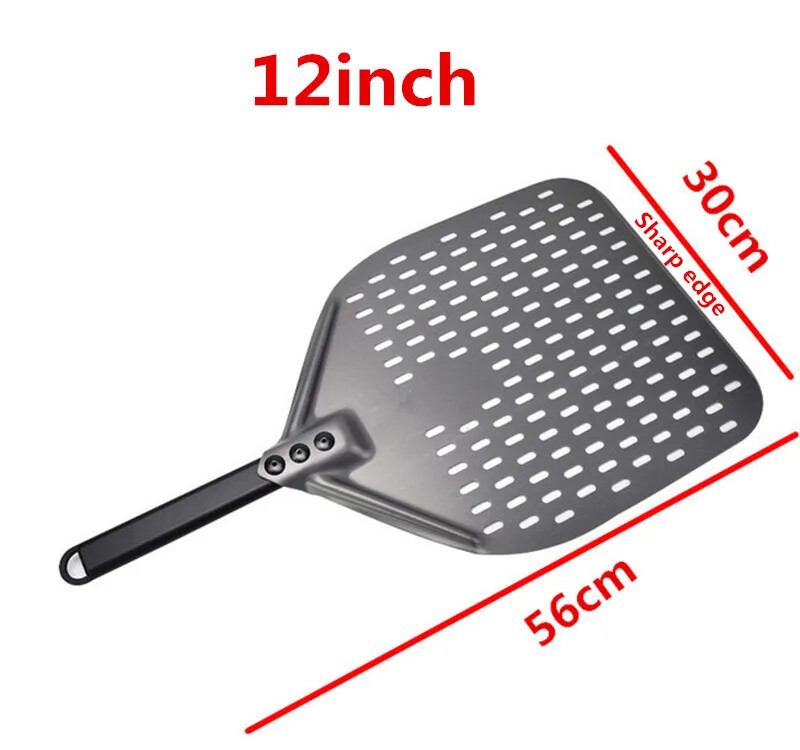

Photos from current listings. Actual item, color, and included accessories may vary.
Pizza Peel Buying Guide
A pizza peel is the transfer and retrieval tool that determines whether your crust sticks, folds, or lands cleanly—performance hinges on head material (aluminum vs. wood vs. steel), head thickness, and handle length relative to your oven depth. The decisive rule: for home ovens and outdoor pizza ovens, choose a thin (≤2 mm) aluminum or steel head with a detachable handle for storage; for serving and prep only, a wooden peel is acceptable but never for high-heat launching.


At a glance
- Category
- Pizza Peels, Cutters & Tools
- Data updated
- Nov 16, 2026
Current offers
Highlights
- Head material dictates heat tolerance and friction: anodized aluminum (1.5–2 mm) launches cleanly and resists warping; wood (beech/bamboo) is for serving and prep, not 400°C+ oven launching.
- Handle length must exceed oven depth by at least 6 inches for safe hand clearance—home ovens need 12–16 in shafts, while outdoor dome ovens require 24–32 in.
- Detachable handles use threaded or bayonet couplings; threaded 3/8-in fittings are more durable than press-fit, and removable handles enable compact storage in small kitchens.
- Head size maps to pizza diameter plus 2 inches: a 12-in peel suits 10-in pies, 14-in peel suits 12-in pies, and 16-in peel suits 14-in pies; oversized heads are unwieldy in narrow home ovens.
Best use cases
- Home oven (max 550°F) with a baking steel or stone: pick a 12–14 in aluminum peel with a 12–16 in handle; skip thick wooden peels because they absorb moisture and stick.
- Outdoor pizza oven (800–950°F): pick a 14–16 in aluminum or steel peel with a 24–32 in handle; skip plastic-handled peels that melt and short handles that put your forearm in the heat zone.
- Grill or pellet smoker pizza setup: pick a 12–14 in aluminum peel with a detachable handle for portability; skip large 16-in heads that exceed grill grate clearance.
- Serving and prep station only: a wooden peel is fine for building and presenting pies, but do not use it to launch into a hot oven—reserve a thin metal peel for the oven.
Buying tips
- Match head width to pizza diameter plus 2 in: 12-in head for 10-in pies, 14-in for 12-in, 16-in for 14-in; a head narrower than the dough causes edge droop and topping spill.
- Demand head thickness ≤2 mm for launching: thinner aluminum slides under dough with less flour; thicker heads (3 mm+) are durable but increase friction and require more bench flour.
- For outdoor ovens, choose a handle at least 24 in and a metal or heat-resistant grip; plastic grips degrade above 400°F and threaded wooden handles can loosen with heat cycling.
- Prefer a tapered or beveled front edge: a knife-edge bevel (0.5–1 mm) slides under the crust without lifting; blunt or rolled edges catch dough and tear the base.
Specs
| Head Material | Aluminum / Wood / Stainless Steel |
|---|---|
| Head Width | 12 / 14 / 16 in (pizza + 2 in) |
| Handle Type | Fixed vs Detachable (threaded) |
| Heat Rating | Home oven 550°F vs outdoor 900°F+ |
Related searches
What to check before buying
- Measure your oven's usable depth and door height: handle length should exceed depth by 6 in, and head-plus-handle must clear the door opening.
- Confirm your pizza diameter and stone/steel size: peel head should be 2 in wider than the largest pie you plan to launch.
- Check storage space: a detachable handle reduces length by 12–24 in; fixed-handle peels need a dedicated vertical or diagonal storage spot.
- Verify heat exposure: for ovens above 700°F, choose all-metal construction with no plastic rivets, grips, or adhesives.
FAQ
Data sources: eBay / Amazon listings and product attribute feeds Data updated Nov 16, 2026.
Some links on this page are affiliate links. If you buy after clicking one, we may earn a commission at no extra cost to you. This does not change which products appear here or their order. Affiliate disclosure.