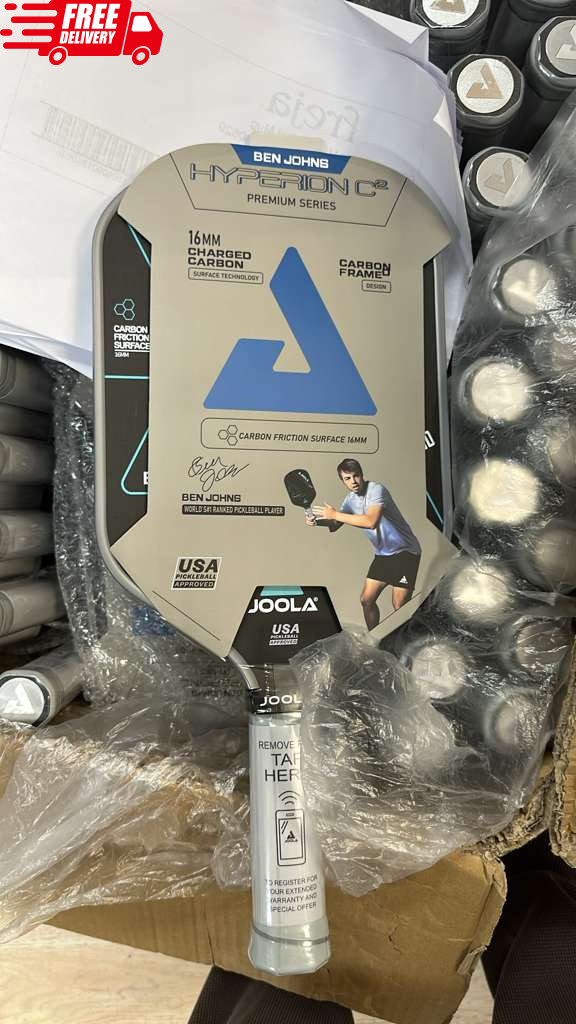

Photos from current listings. Actual item, color, and included accessories may vary.
Joola Hyperion Cfs Buying Guide
The Joola Hyperion CFS is a flagship power-paddle family built around a carbon-friction-surface (CFS) face and a polymer honeycomb core, with the 16mm version prioritizing control and the 14mm version prioritizing pop. The core trade-off is thickness: 16mm gives a quieter, more forgiving sweet spot for resets and dinks, while 14mm delivers faster hands and more put-away power at the cost of stability on off-center hits. Buyers should treat the CFS face as a wear item and pick thickness by playing style, not by marketing tier.


At a glance
- Category
- Pickleball Paddles
- Data updated
- Nov 18, 2026
Current offers
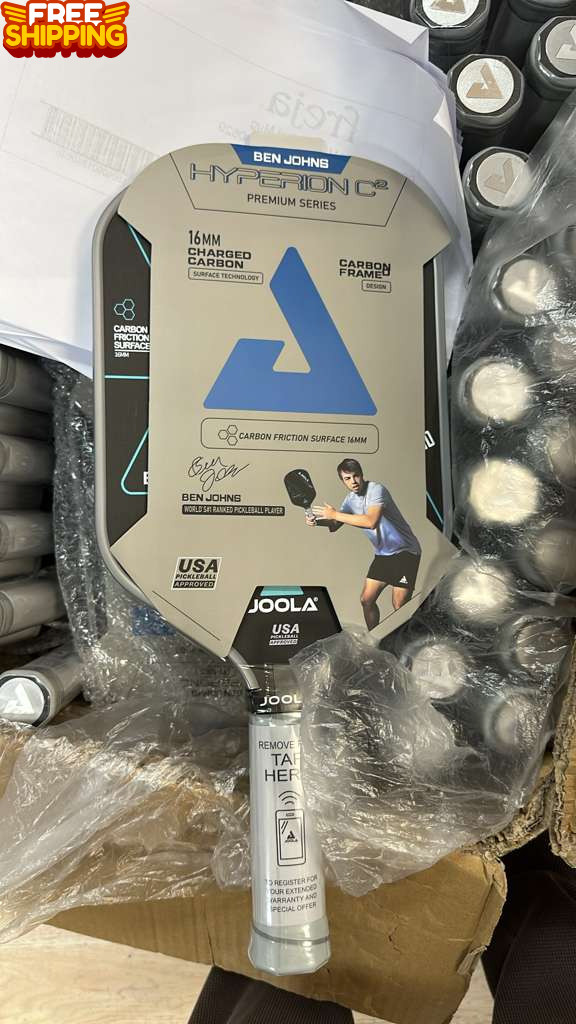
Highlights
- CFS face uses a woven carbon-friction surface that generates spin through texture and dwell time, but the texture wears with heavy play and eventually needs replacement or a new paddle.
- 16mm polymer honeycomb core produces a lower swing weight feel and a larger effective sweet spot, favoring control, blocking, and third-shot drops.
- 14mm core raises ball rebound speed and hand speed at the kitchen line, but shrinks the sweet spot and demands cleaner contact.
- Hyperion C2 vs original Hyperion CFS: the C2 is the second-generation carbon-face build with refined edge guard and core bonding; both share the 16mm/14mm thickness split.
Best use cases
- Best fit: control-first intermediate players who dink, reset, and block — choose the 16mm Hyperion CFS for its larger sweet spot and slower, more predictable rebound.
- Best fit: aggressive kitchen-line players and former tennis players who attack speed-ups — choose the 14mm version for faster hands and higher pop.
- Wrong fit: beginners still learning stroke mechanics should skip the CFS line entirely; its power ceiling and small margin for error punish inconsistent contact.
- Wrong fit: players wanting a soft, arm-friendly feel for tennis elbow should skip this stiff carbon-face power frame and look at a lower-density core or thicker grip build.
Buying tips
- Pick 16mm if your priority is dinks, resets, and blocks; pick 14mm only if you already have reliable contact and want more put-away speed.
- Confirm the paddle is the CFS carbon-face build, not a fiberglass or composite Hyperion variant — the face material drives spin and durability.
- Match grip circumference to hand size: most Hyperion models ship around 4.25 in; players with larger hands should add an overgrip rather than buy undersized.
- Check the edge guard and core bonding at purchase; a loose edge guard or dead spot near the perimeter signals a defective unit and should be returned immediately.
Specs
| Face Material | Carbon friction surface (CFS) |
|---|---|
| Core Thickness | 16mm control / 14mm power |
| Core Type | Polymer honeycomb |
| Grip Circumference | ~4.25 in standard |
Related searches
What to check before buying
- Measure your hand from the base of the palm to the tip of the ring finger; choose a grip circumference within about 0.25 in of that measurement.
- Confirm your paddle weight tolerance: Hyperion CFS models typically run in the mid-7 to low-8 oz range, so demo or buy from a seller offering weight selection if you are sensitive to swing weight.
- Verify the paddle meets USA Pickleball approved-paddle standards if you play sanctioned tournaments; the Hyperion CFS line is approved, but confirm the specific model year.
- Check that your paddle cover or bag accommodates a 16mm-thick edge; thinner 14mm frames fit standard covers more easily.
FAQ
Data sources: eBay / Amazon listings and product attribute feeds Data updated Nov 18, 2026.
Some links on this page are affiliate links. If you buy after clicking one, we may earn a commission at no extra cost to you. This does not change which products appear here or their order. Affiliate disclosure.