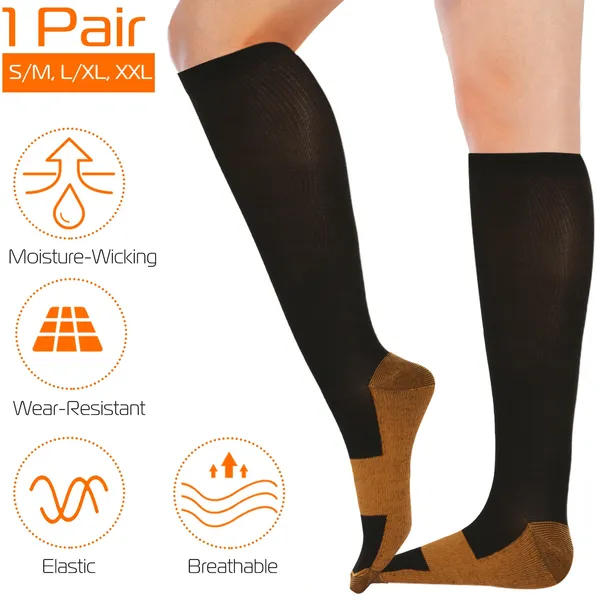

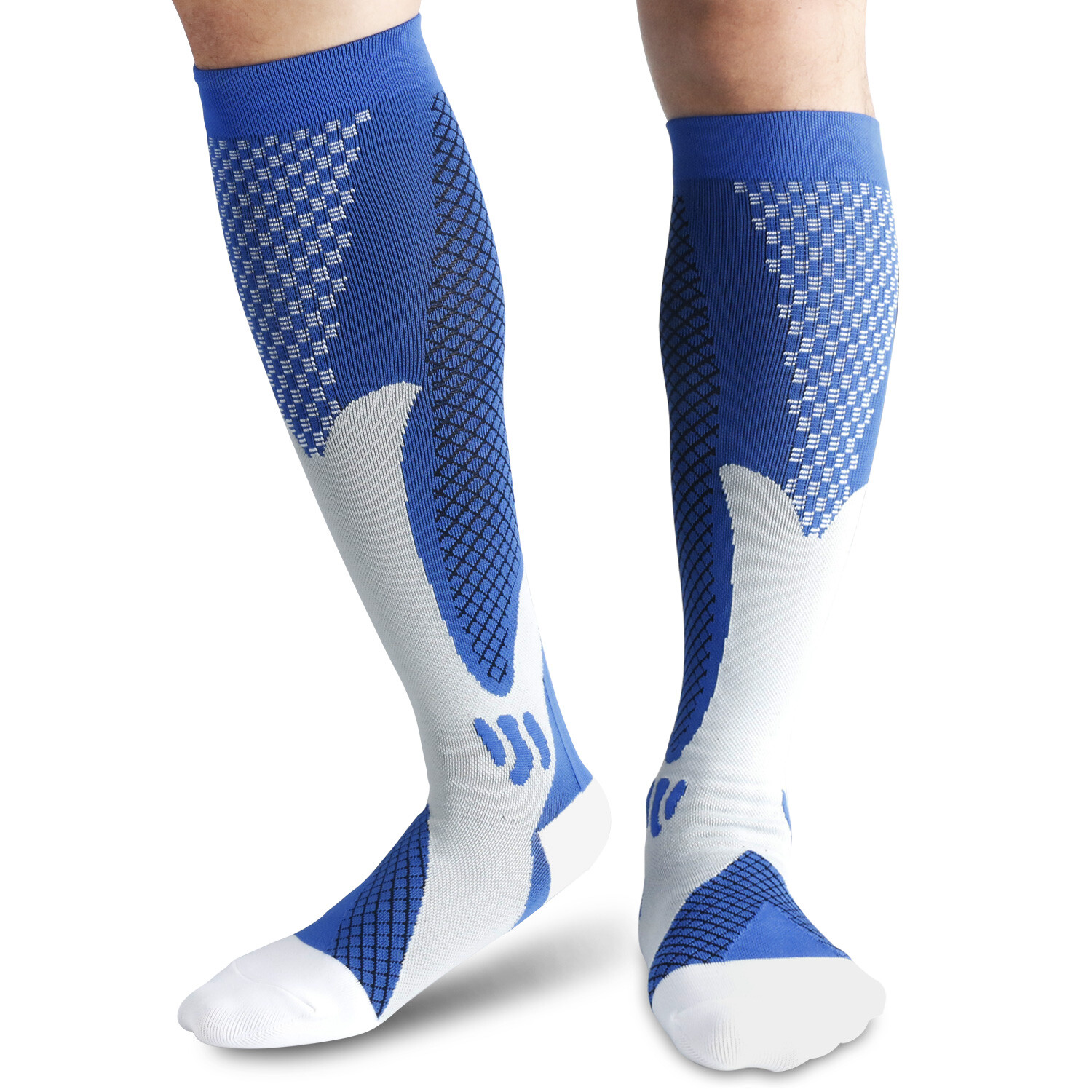
Photos from current listings. Actual item, color, and included accessories may vary.
Compression Sock Buying Guide
Compression socks are graduated-support garments that apply measured pressure (mmHg) to improve circulation, reduce swelling, and aid recovery during running or prolonged standing. The primary trade-off is between medical-grade compression (20-30+ mmHg) that requires accurate sizing and lower-pressure athletic sleeves that prioritize breathability and ease of use. The clear decision rule: choose a knee-high sock with a validated mmHg tier and ribbed non-roll cuff for clinical or travel needs, and a calf sleeve only for sport-specific muscle support without foot compression.


At a glance
- Category
- Running Apparel
- Data updated
- Nov 16, 2026
Current offers
Highlights
- Compression tiers are standardized: 15-20 mmHg for mild fatigue/travel, 20-30 mmHg for moderate swelling and running recovery, 30-40 mmHg for clinical edema and post-surgical needs.
- Graduated pressure means the ankle measures highest (100%) and pressure decreases toward the calf; true medical socks list ankle and calf circumferences on the size chart.
- Fiber blend determines durability and stretch: 70-85% nylon with 15-25% spandex balances breathability and rebound; higher spandex improves compression but reduces moisture management.
- Cuff construction separates stay-put socks from roll-down failures: ribbed or silicone-backed non-roll bands maintain position without excess tightness; cheap elastic cuffs migrate within hours.
Best use cases
- Long flights and desk-bound travel: pick 15-20 mmHg knee-high socks with a ribbed cuff; skip 30-40 mmHg unless medically advised, as higher pressure is unnecessary for healthy travelers.
- Running recovery and shin splints: choose 20-30 mmHg calf sleeves or knee-highs with graduated support; skip copper-infused marketing claims—fiber blend matters more than copper content.
- Neuropathy or lymphedema: select 20-30 or 30-40 mmHg knee-highs with a validated size chart and non-roll silicone cuff; skip calf sleeves, which leave the foot uncompressed and are insufficient for edema management.
Buying tips
- Measure ankle circumference at the narrowest point and calf at the widest; match both to the brand's size chart—never buy by shoe size alone, as calf girth drives fit and pressure accuracy.
- For running, prioritize 20-30 mmHg graduated socks with mesh zones; for recovery-only wear, 15-20 mmHg is sufficient and easier to don.
- Check the fiber blend: 15-25% spandex provides reliable rebound; below 10% spandex loses compression after repeated washes.
- Knee-high socks must cover the calf to just below the knee; calf sleeves stop at the ankle and do not address foot swelling or plantar issues.
Specs
| Compression Tier | 15-20 / 20-30 / 30-40 mmHg |
|---|---|
| Fiber Blend | 70-85% nylon / 15-25% spandex |
| Length Style | Knee-high vs calf sleeve |
| Cuff Construction | Ribbed/silicone non-roll band |
Related searches
What to check before buying
- Measure ankle and calf circumference with a flexible tape; compare both to the size chart, not shoe size, to ensure correct mmHg delivery.
- Confirm the sock length reaches just below the knee for full calf coverage; calf sleeves are separate products with different use cases.
- Check cuff style: ribbed or silicone non-roll bands stay in place; smooth elastic cuffs tend to slide down during activity.
- Verify the compression tier matches your need: 15-20 mmHg for travel/mild fatigue, 20-30 mmHg for running recovery, 30-40 mmHg for clinical edema.
FAQ
Data sources: eBay / Amazon listings and product attribute feeds Data updated Nov 16, 2026.
Some links on this page are affiliate links. If you buy after clicking one, we may earn a commission at no extra cost to you. This does not change which products appear here or their order. Affiliate disclosure.