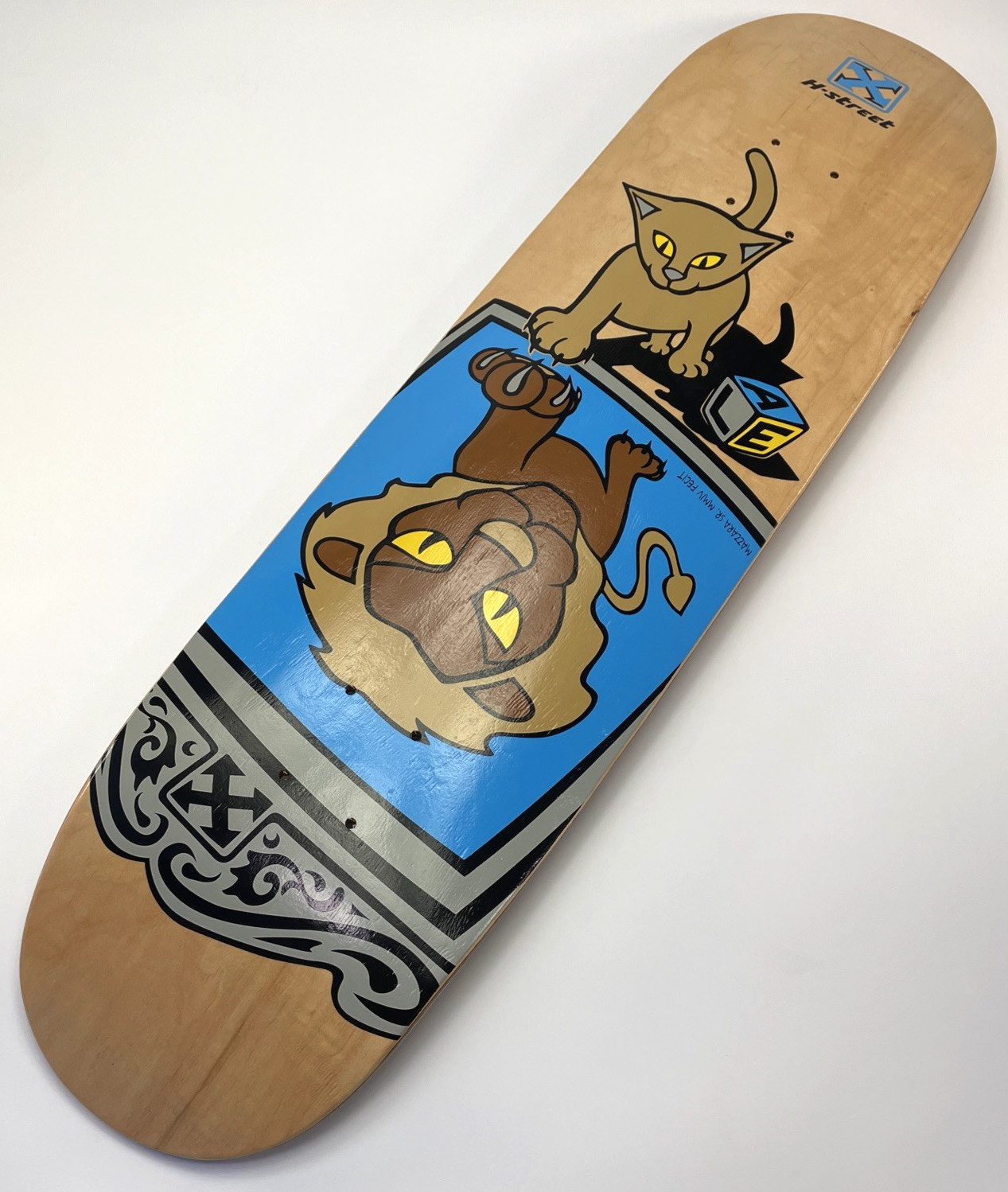

Photos from current listings. Actual item, color, and included accessories may vary.
Street Skateboard Buying Guide
Street skateboard decks are 7-ply maple platforms built for ollies, flip tricks, and ledge/rail impact, where the core trade-off is pop longevity versus weight and flex. Durable decks use North American maple, consistent concave, and reinforced construction; compromise decks use cheaper glues or thinner plies that soften or chip early. The clear rule: choose a deck with a proven 7-ply maple layup, correct width for your shoe size, and a shape/concave matched to your trick style—skip anything with vague wood species or non-standard truck drilling.


At a glance
- Category
- Skateboard Decks
- Data updated
- Nov 16, 2026
Current offers
Highlights
- 7-ply hard-rock maple is the durability benchmark; Canadian maple grades resist delamination best, while birch or bamboo blends soften faster under street impact.
- Deck width dominates truck response: 7.5–7.75 in suits technical flip tricks, 7.75–8.25 in is the all-around street standard, and 8.25–8.5 in stabilizes landing on gaps and rails.
- Concave depth and kick steepness determine pop timing: mellow concave suits cruising and transition, medium is the street default, and steep kicks generate faster pop but demand precise foot placement.
- Pro-model decks carry team-tested shape and graphic tiers but the same woodshop construction; the pro name affects shape consistency, not inherent ply strength.
Best use cases
- Best fit for technical street skating (flip tricks, manuals, ledges): pick a 7.75–8.0 in deck with medium concave and standard 14.25–14.5 in wheelbase for quick rotation and controlled pop.
- Best fit for bigger riders or gap/rail skating: choose 8.25–8.5 in width with a 14.5–15 in wheelbase and steep kicks for landing stability and reduced ghost-pop.
- Wrong fit: buying a 7.5 in deck for a adult shoe size 10+; foot overhang causes toe/heel drag and inconsistent flick—size width to your shoe, not to graphic appeal.
- Wrong fit: selecting a pro-model deck solely for the name when the width and concave differ from your last deck; match shape first, then graphics.
Buying tips
- Match deck width to shoe size: US 6–8 → 7.5–7.75 in; US 8.5–10 → 7.75–8.25 in; US 10.5+ → 8.25–8.5 in. Wider decks reduce lever flick speed but add landing stability.
- Verify 7-ply maple construction and epoxy or waterproof glue; decks under 7 plies or with unspecified wood are street-compromise builds that lose pop within weeks.
- Wheelbase (typically 14–15 in) should scale with deck length: shorter wheelbase (14–14.25 in) for technical flip timing, longer (14.5–15 in) for high-speed stability and manuals.
- Truck axle width must match deck width within 0.25 in; mismatched trucks cause axle slip and uneven wear—confirm your truck's axle width equals your chosen deck width.
Specs
| Deck Construction | 7-ply hard-rock maple (street standard) |
|---|---|
| Street Width Range | 7.5–8.5 in by shoe size |
| Concave Profile | Mellow / Medium / Steep |
| Wheelbase | 14.0–15.0 in (street 14.25–14.5) |
Related searches
What to check before buying
- Measure your current deck width and wheelbase; replicate or adjust by 0.25 in increments rather than guessing from graphics.
- Confirm your shoe size against the width table, and test stance overhang: toes and heels should sit roughly flush with deck edges, not overhanging.
- Check truck compatibility: standard 8.0 in axle fits 7.75–8.25 in decks; 8.5 in axle suits 8.25–8.5 in decks. Verify your existing trucks before buying a deck.
- Grip tape and hardware are separate: budget for 9 in wide grip and 7/8 in or 1 in hardware; ensure your local spot's concrete/rough ground suits harder or softer wheels.
FAQ
Data sources: eBay / Amazon listings and product attribute feeds Data updated Nov 16, 2026.
Some links on this page are affiliate links. If you buy after clicking one, we may earn a commission at no extra cost to you. This does not change which products appear here or their order. Affiliate disclosure.