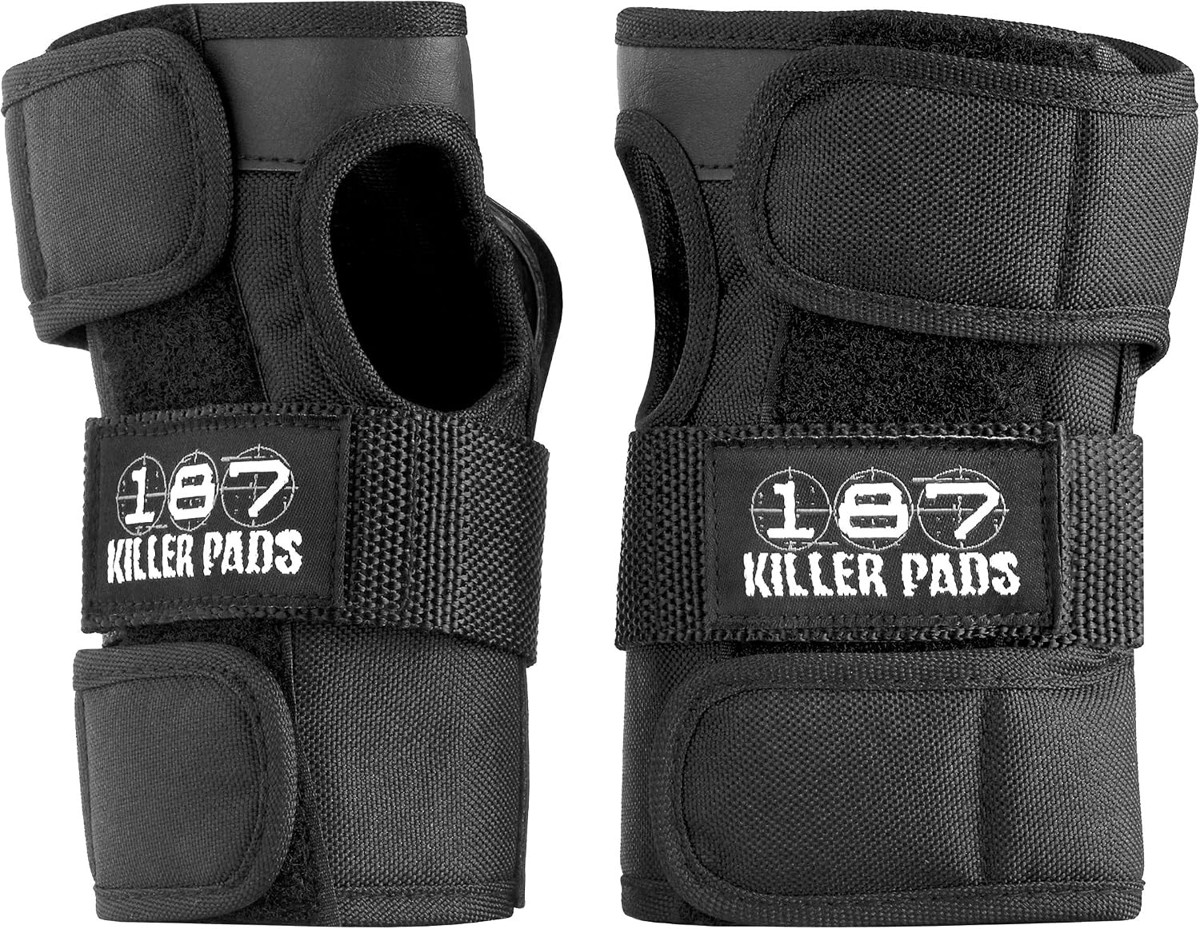

Photos from current listings. Actual item, color, and included accessories may vary.
187 Killer Pad Buying Guide
187 Killer Pads is a skate and roller-derby protection brand known for its Pro and Pro Derby tiers, which use thicker dual-density foam and heavier denier nylon than entry-level pads. The core trade-off is bulk versus airflow: Pro-series pads prioritize impact absorption with dense, replaceable foam and wide Velcro straps, while cheaper single-density pads flatten quickly. Buy Pro-tier if you take falls on concrete or ramps weekly; skip entry-level or fashion guards for anything beyond casual cruising.


At a glance
- Category
- Sports Protection
- Data updated
- Nov 16, 2026
Current offers
Highlights
- Pro-series knee pads use dual-density foam (firm outer cap, softer inner layer) plus a replaceable plastic knee cap, while entry-level pads use single-density foam with a non-replaceable cap.
- Pro wrist guards use wide, dual-strap Velcro closures around a rigid splint on both palm and back, whereas basic guards rely on elastic sleeves that roll during impact.
- 187 Pro pads use heavy-denier nylon shells (often 1000D+) and reinforced stitching at strap anchors; lower tiers use lighter fabric that abrades through in falls.
- Pro Derby knee pads are a specific cut with a slimmer profile and wider back strap for roller derby, distinct from the bulkier Pro Skate knee pad.
Best use cases
- Best fit: park, vert, and street skaters who fall hard and often—buy the Pro Knee and Pro Wrist Guard tier with replaceable caps and dual straps; skip fashion or single-strap guards.
- Best fit: roller derby players—choose the Pro Derby knee pad cut for its slimmer profile and secure back strap; standard Pro Skate pads feel bulky in a pack.
- Wrong fit: casual cruising or kids' first pads—entry-level 187 pads (or the brand's basic wrist guard) are adequate and cheaper; Pro-tier density is overkill and stiff for light use.
- Wrong fit: snowboarding or mountain biking—187 pads are skate-oriented; wrist guards with a hard palm splint are fine for snow, but knee pads lack the articulation and weather resistance for riding.
Buying tips
- Size by measuring around the knee or wrist with a soft tape and match the brand's size chart; 187 pads run true to size but Pro models fit snug—size up if between sizes for knee pads.
- For wrist guards, ensure the splint sits on the palm side and the straps wrap above and below the wrist joint; a guard that only uses elastic cuffs will slip on impact.
- Check that the knee cap is replaceable and the foam is dual-density; a stitched-in, non-replaceable cap means the pad is disposable once the plastic wears through.
- Match pad tier to sport: Pro Skate for park/vert, Pro Derby for roller derby, and the brand's basic line for casual or youth use; mixing tiers across knee and wrist is fine.
Specs
| Pad Tier | Pro / Pro Derby / Entry-level |
|---|---|
| Knee Foam | Dual-density (Pro) vs single-density |
| Wrist Closure | Dual Velcro straps vs elastic sleeve |
| Knee Cap | Replaceable (Pro) vs stitched-in |
Related searches
What to check before buying
- Measure knee circumference (or wrist circumference for guards) with a soft tape and compare to the brand's size chart before ordering; do not rely on clothing size.
- Confirm your shoe or skate size and pad coverage: knee pads should overlap the top of your skate boot without restricting ankle flex.
- Check that your wrist guard straps can be tightened over a wrist guard or glove liner if you wear them, and that the splint does not extend past the palm crease.
- For derby, verify league rules on hard-cap knee pads and wrist guard coverage; some leagues require specific cap thickness or full palm coverage.
FAQ
Data sources: eBay / Amazon listings and product attribute feeds Data updated Nov 16, 2026.
Some links on this page are affiliate links. If you buy after clicking one, we may earn a commission at no extra cost to you. This does not change which products appear here or their order. Affiliate disclosure.