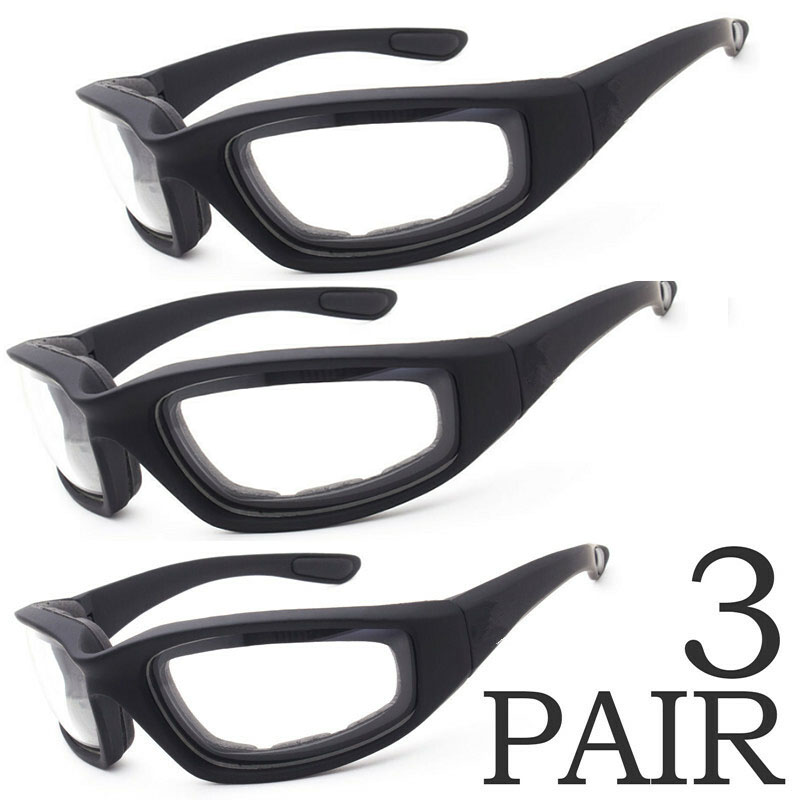

Photos from current listings. Actual item, color, and included accessories may vary.
Cycling Eyewear Buying Guide
Cycling eyewear is protective sports eyewear engineered to block UV, wind, and debris while maintaining clear peripheral vision in a head-down riding position. The decisive trade-off is lens optical quality and impact-rated frame geometry versus vented, interchangeable-lens budget builds. Durable options use polycarbonate lenses with UV400 ratings and wrap-around coverage; compromises skimp on lens clarity, ventilation, and retention.


At a glance
- Category
- Sports Protection
- Data updated
- Nov 17, 2026
Current offers
Highlights
- Polycarbonate lenses are the impact-resistant standard: they meet ANSI Z87.1 high-velocity impact and block 100% of UVA/UVB when rated UV400.
- Wrap-around 8-base curve frames widen peripheral coverage and reduce wind intrusion; flatter 6-base frames expose more eye surface to debris.
- Vented lenses and hydrophilic nose/temple pads manage fog and slip; non-vented budget lenses fog quickly on climbs and stop-and-go rides.
- Interchangeable lens systems let riders swap tinted, clear, and low-light lenses; fixed single-lens frames force a second pair for night riding.
Best use cases
- Road and gravel riders: pick a wrap-around UV400 polycarbonate frame with vented lens and hydrophilic nose pad; skip flat fashion sunglasses that slip and fog.
- Mountain bikers: choose a trail-specific frame with wide peripheral coverage and a clear or low-light lens option; skip dark fixed-tint lenses for shaded singletrack.
- Commuting and casual fitness: a single UV400 wrap-around pair with anti-fog coating is sufficient; skip interchangeable-lens kits if you never ride at night.
Buying tips
- Confirm UV400 or 100% UVA/UVB protection on the lens or packaging; unrated tinted lenses can darken vision without blocking harmful UV.
- Match frame base curve to use: 8-base wrap for road and MTB airflow protection, 6-base for casual commuting where full coverage is less critical.
- Check lens category: Cat 1-2 for overcast or woodland, Cat 3 for bright sun; Cat 4 is too dark for road riding and illegal for driving in many regions.
- Prioritize hydrophilic rubber nose and temple pads and a vented lens; these two features most directly prevent slipping and fogging on long rides.
Specs
| Lens Material | Polycarbonate (impact-rated) |
|---|---|
| UV Rating | UV400 / 100% UVA-UVB |
| Frame Geometry | 8-base wrap vs 6-base flat |
| Lens System | Fixed vs interchangeable |
Related searches
What to check before buying
- Measure your helmet's front brim and temple gap: wrap frames must sit flush without pressing into the helmet brow or leaving a wind gap.
- Confirm the frame fits your face width: too-narrow temples cause pressure headaches, too-wide frames slide down on rough descents.
- Verify lens interchangeability if you ride dawn or dusk; fixed lenses mean buying a second pair for low light.
- Check that the lens carries a visible UV400 or EN ISO 12312-1 rating; unmarked tinted plastic is not protective eyewear.
FAQ
Data sources: eBay / Amazon listings and product attribute feeds Data updated Nov 17, 2026.
Some links on this page are affiliate links. If you buy after clicking one, we may earn a commission at no extra cost to you. This does not change which products appear here or their order. Affiliate disclosure.