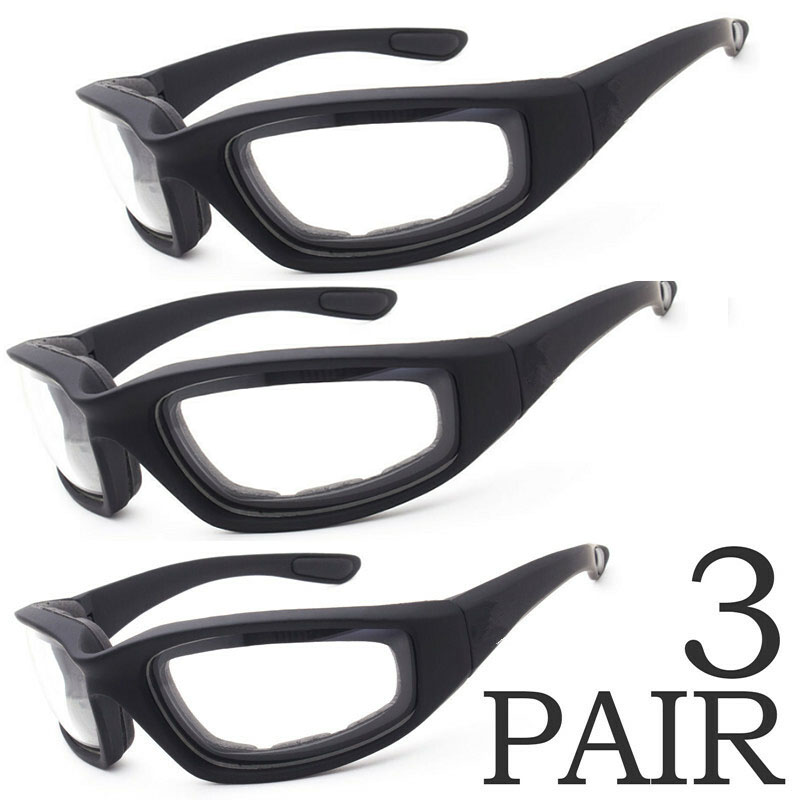

Photos from current listings. Actual item, color, and included accessories may vary.
Cycling Sunglass Buying Guide
Cycling sunglasses are wrap-around or shield-style eyewear built to block wind, road grit, and UV while staying put under a helmet. The core trade-off is optical clarity and impact-rated lens material versus weight and venting: cheap molded-in-tint plastic lenses distort and fog, while proper polycarbonate or Trivex lenses with interchangeable or photochromic options keep vision true and airflow controlled. The decision rule: buy lenses rated UV400 with a shatter-resistant polycarbonate or Trivex base and a grippy nose/temple interface; skip any pair where the lens tint is a surface coating on clear plastic or the frame lacks adjustable nosepieces.


At a glance
- Category
- Sports Protection
- Data updated
- Nov 17, 2026
Current offers
Highlights
- UV400 blocks wavelengths up to 400 nm; polycarbonate lenses inherently filter UV and pass ANSI Z87.1 high-velocity impact, while acrylic and coated clear plastics do neither reliably.
- Wrap-around 8-base curvature and a shield or single-lens design cut wind and peripheral glare; interchangeable lens kits let one frame cover bright sun, flat light, and low-light trail riding.
- Photochromic lenses shift from category 1-2 (overcast/woods) to category 3 (bright sun) automatically; fixed category 3 lenses are too dark for dawn starts and dense tree cover.
- Grippy hydrophilic rubber on nose pads and temple tips holds fit when sweating; adjustable nose pieces and 3-position temple arms accommodate helmet straps and varied face widths.
Best use cases
- Road and crit racing: pick a single shield lens with venting and a category 2-3 tint plus hydrophilic nose/temple grips; skip heavy dual-lens lifestyle frames that fog at stoplights.
- Trail and MTB: buy interchangeable or photochromic lenses with a clear or category 1 spare for shaded woods; skip fixed dark category 3 lenses that go black under canopy.
- Commuting and casual riding: choose a lightweight wrap with UV400 polycarbonate and a category 2 tint; skip open-side fashion shades that let wind and debris reach the eyes.
- Fishing and driving crossover: select polarized UV400 lenses to cut water and road glare; skip non-polarized tinted lenses if glare management is the priority.
Buying tips
- Lens material beats tint: choose polycarbonate or Trivex over acrylic or coated clear plastic every time; these are impact-rated, UV-filtering, and optically truer.
- Match lens category to light: category 2 for mixed/overcast, category 3 for bright sun, category 1 or photochromic for woods and dawn; a single category 3 lens is the wrong default for trail riders.
- Check frame geometry: 8-base wrap or shield lenses block wind best; adjustable nosepieces and rubberized temple tips are the fit-retention parts that actually matter under a helmet.
- Polarization is a glare tool, not a default upgrade: it helps on water and asphalt but can mask icy patches and LCD screens; buy polarized only when glare reduction outweighs contrast needs.
Specs
| Lens Material | Polycarbonate / Trivex vs Acrylic |
|---|---|
| UV Protection | UV400 (to 400 nm) |
| Lens Category | Cat 1-3 / Photochromic / Polarized |
| Frame Style | 8-base wrap / Shield / Interchangeable |
Related searches
What to check before buying
- Measure your helmet's front vent and strap path: sunglasses temples must sit under, not over, the helmet's retention system without pressure points.
- Confirm face width and nose bridge fit: wrap frames with adjustable nosepieces fit most faces; fixed-nose shields can gap on narrow bridges or sit on cheeks on wide faces.
- Check lens/light plan for your typical ride: note whether you need a spare clear or category 1 lens for woods and dawn, and buy an interchangeable kit if so.
- Verify UV400 and impact marking (ANSI Z87.1 or equivalent) on the lens or packaging; this is the baseline durability and eye-safety standard.
FAQ
Data sources: eBay / Amazon listings and product attribute feeds Data updated Nov 17, 2026.
Some links on this page are affiliate links. If you buy after clicking one, we may earn a commission at no extra cost to you. This does not change which products appear here or their order. Affiliate disclosure.