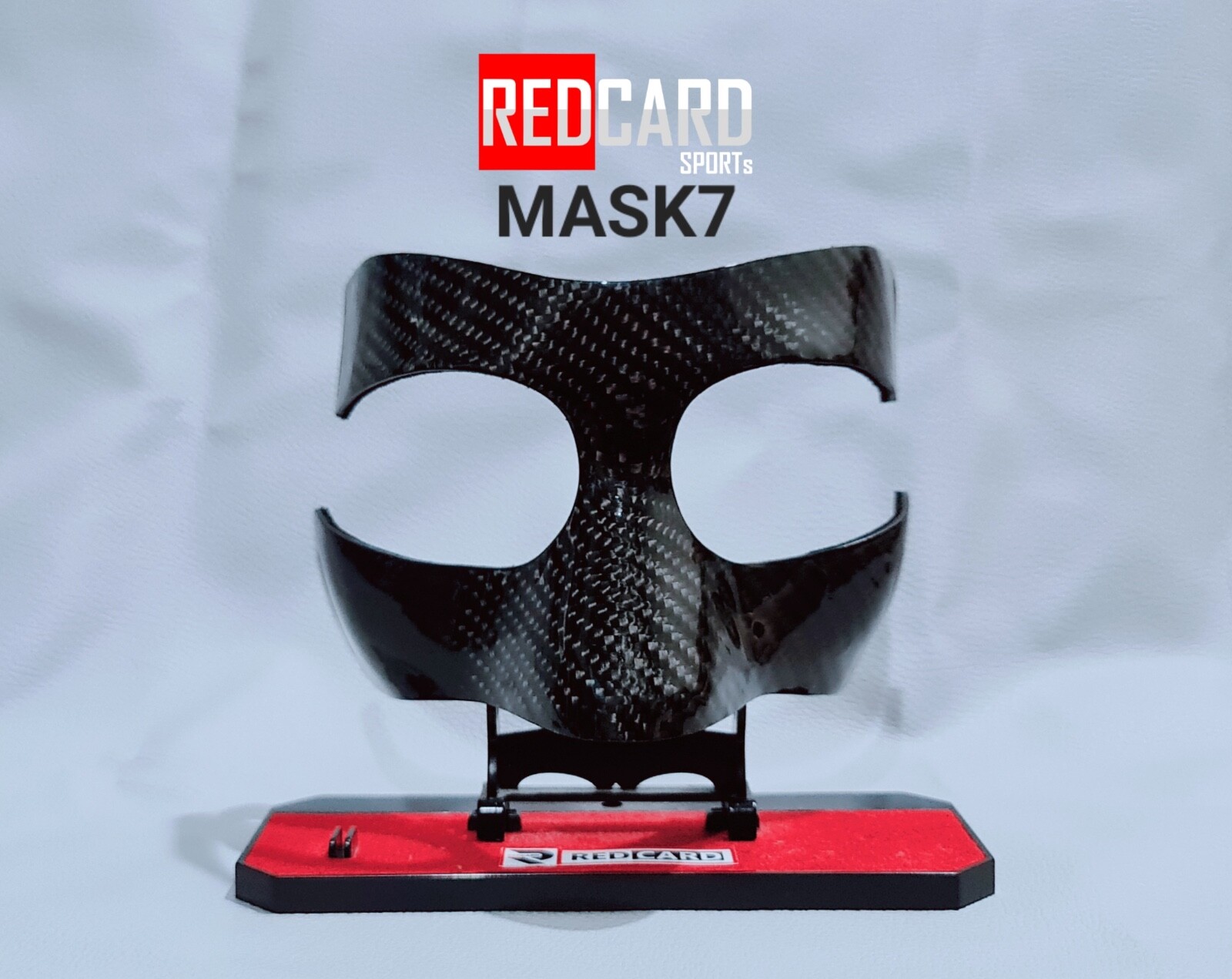

Photos from current listings. Actual item, color, and included accessories may vary.
Face Guard Buying Guide
A face guard is a rigid or semi-rigid shield worn over the nose and cheekbones to prevent impact injury during contact sports or post-injury healing. The core trade-off is between rigid carbon-fiber/composite shells that block direct force and flexible polymer or padded guards that absorb and disperse energy but may allow pressure transfer. Choose a rigid shell when the goal is preventing fracture or protecting a healing break; choose a soft or semi-rigid guard only for low-impact training where unobstructed breathing and vision matter more than hard deflection.


At a glance
- Category
- Sports Protection
- Data updated
- Nov 19, 2026
Current offers
Highlights
- Carbon-fiber composite shells (often 1.5-2.5 mm thick) deliver the highest stiffness-to-weight ratio, resisting deformation on direct frontal impact better than ABS or polycarbonate guards.
- Thermoformable polymer guards can be heat-shaped to the individual nose bridge and cheek contour, while pre-formed carbon shells rely on adjustable strap tension and foam padding for fit.
- Open-frame designs (single nose bar or floating mask) prioritize airflow and peripheral vision; closed-shell designs maximize coverage but trap heat and restrict downward sight lines.
- Free-size guards rely on adjustable straps and bendable aluminum or thermoplastic nosepieces; custom-molded options are shaped to a plaster or 3D scan of the athlete's face for zero-slip retention.
Best use cases
- Best fit: rigid carbon-fiber or composite nose guard for athletes returning from a broken nose or playing contact sports (basketball, football, martial arts) where direct impact must be deflected—skip soft neoprene guards that transfer force.
- Best fit: thermoformable clear polymer guard for youth or multi-sport use where one guard must fit several athletes and visibility is critical—skip rigid carbon if the guard will be shared or reshaped repeatedly.
- Best fit: low-profile open-frame guard for training and non-contact drills where breathing volume and field of view matter—skip closed-shell masks for endurance sports where heat buildup and CO2 rebreathing impair performance.
- Wrong fit: any face guard without a retention strap or helmet-compatible mounting for high-impact collision sports—these require sport-specific cages or visors certified to the sport's helmet standard.
Buying tips
- Measure nose-bridge width and face length before ordering: free-size guards fit most adults via strap adjustment, but a bridge wider than roughly 45 mm needs a wide-fit or custom-molded shell to avoid pressure points.
- Match shell material to impact level: carbon fiber and glass-reinforced nylon resist deformation under hard contact, while single-layer ABS and EVA foam are for light training only and will crack under repeated high-force impacts.
- Confirm the guard's strap system interfaces with your headgear or helmet—most standalone guards use adjustable elastic or velcro straps, but helmet sports require cage/visor mounts that meet the helmet's certification.
- Check ventilation and weight: guards under about 50 g with open-frame geometry reduce heat and fatigue; closed shells above 100 g trap moisture and are better suited to short bouts than full games.
Specs
| Shell Material | Carbon fiber / ABS / polycarbonate |
|---|---|
| Coverage Type | Nose bar / full face / cheek |
| Fit System | Free-size strap / custom mold |
| Weight Range | Light <50g / Heavy >100g |
Related searches
What to check before buying
- Measure nose bridge width and face length with a flexible tape; compare against the guard's stated fit range or adjustable strap length before selecting free-size vs custom.
- Confirm the guard is compatible with your sport's required headgear or helmet—standalone straps do not substitute for a certified helmet cage in football, hockey, or lacrosse.
- Check skin-contact materials: medical-grade silicone or closed-cell foam padding prevents irritation during sweaty use; open-cell foam absorbs sweat and harbors bacteria.
- Verify the shell can be cleaned and disinfected (removable padding, non-porous surface) and that replacement straps or pads are available for long-term use.
FAQ
Data sources: eBay / Amazon listings and product attribute feeds Data updated Nov 19, 2026.
Some links on this page are affiliate links. If you buy after clicking one, we may earn a commission at no extra cost to you. This does not change which products appear here or their order. Affiliate disclosure.