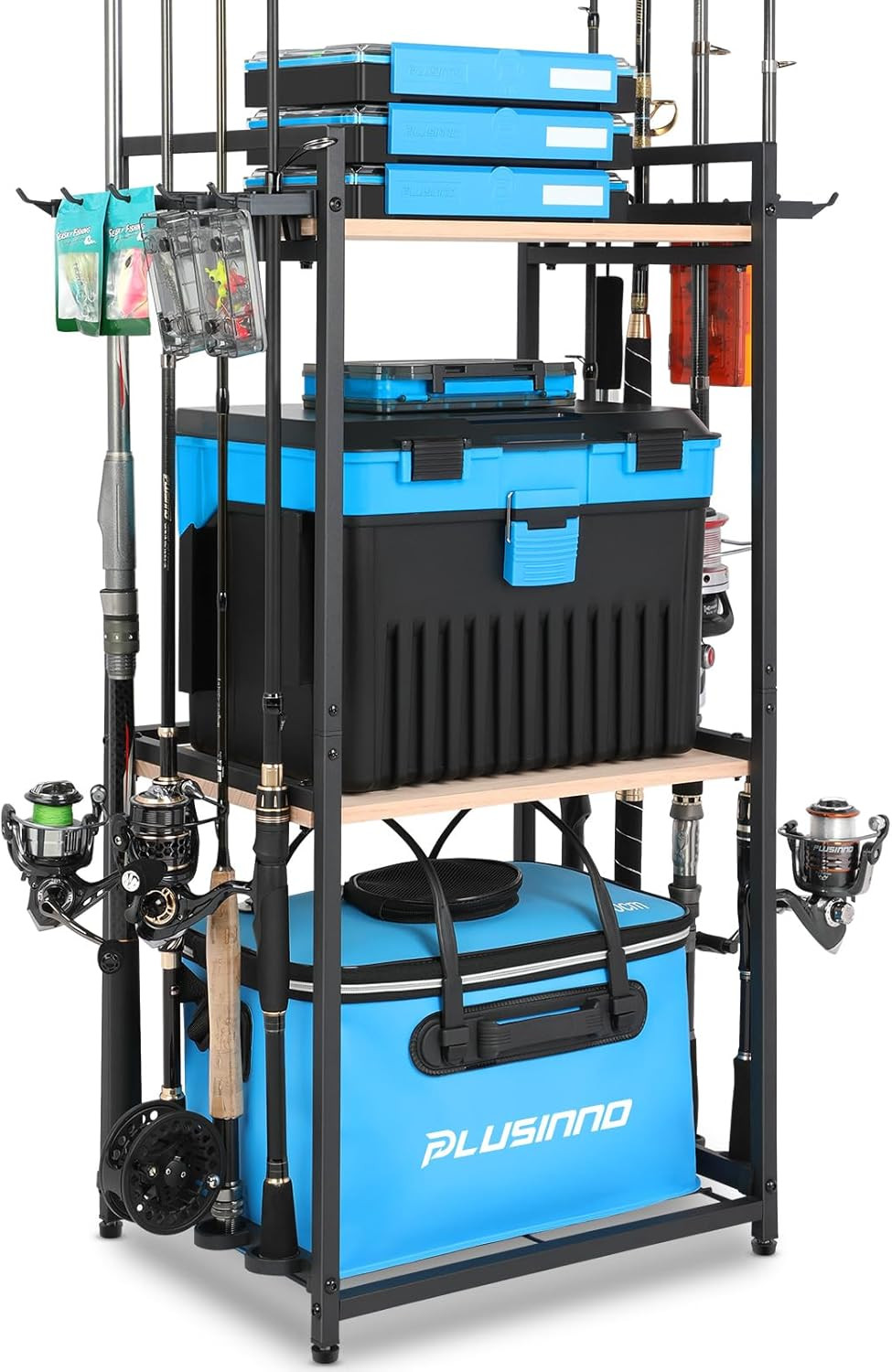

Photos from current listings. Actual item, color, and included accessories may vary.
Fishing Pole Rack Buying Guide
A fishing pole rack is a dedicated storage system that protects rod blanks and guides from leaning, tangling, and accidental damage while keeping tackle accessible. The core trade-off is between fixed vertical/ceiling racks for permanent garages and adjustable side-rail holders for boats and kayaks, where corrosion resistance and mounting security decide longevity. Choose a rack rated for your rod count and environment—powder-coated steel for garages, marine-grade aluminum or UV-stabilized polymer for saltwater—and skip thin-gauge wire or unsealed wood that warps and rusts.


At a glance
- Category
- Tackle Storage & Tools
- Data updated
- Nov 16, 2026
Current offers
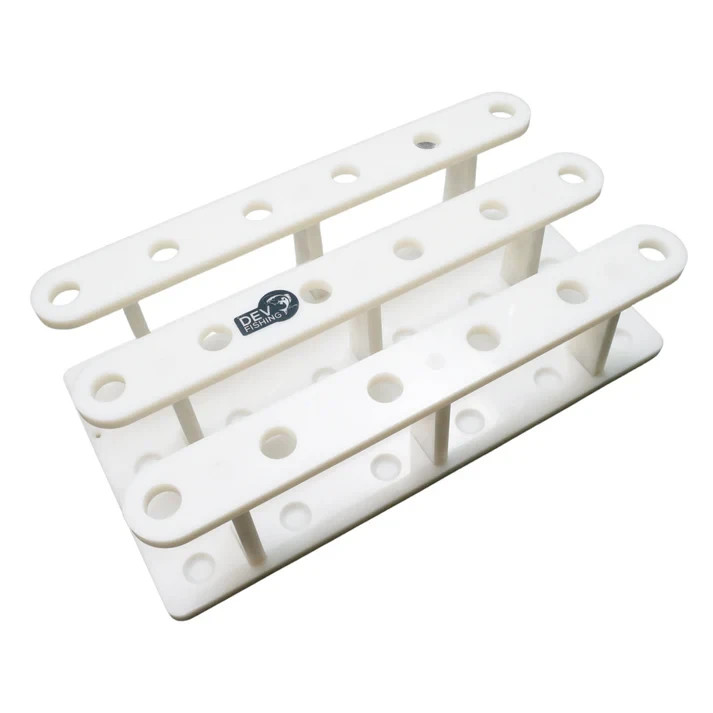
Highlights
- Garage racks use horizontal 3-tier foam-covered steel or wood rails; ceiling racks use paired overhead straps or clamps spaced to rod length.
- Boat and kayak holders mount via side-rail clamps or flush deck bases; adjustable models rotate 360° and fit rails from roughly 0.75 to 1.5 inches.
- Saltwater durability requires anodized aluminum or marine-grade stainless hardware; powder-coated steel is garage-only and will rust in coastal spray.
- Rod capacity is set by slot count and spacing—standard racks hold 6 to 18 rods; overhead racks need ceiling height above rod length plus 12 inches.
Best use cases
- Best fit: garage or basement wall—pick a 3-tier horizontal rack with foam padding and 12-inch stud spacing; skip flimsy wire racks that sag under heavy offshore rods.
- Best fit: boat or kayak—choose side-rail clamp holders with adjustable rotation and stainless bolts; skip permanent flush-mount bases if you trailer and need quick removal.
- Best fit: ceiling storage in a tall garage—use overhead strap or clamp pairs rated for the rod's weight and spaced at least 12 inches inside the rod length.
- Wrong fit: saltwater dock or uncovered pier—avoid powder-coated steel and untreated wood; specify anodized aluminum or UV-stabilized polymer only.
Buying tips
- Match slot spacing to rod butt diameter: standard 1.5- to 2-inch openings fit most bass and inshore rods; offshore rods need 2.5-inch or larger cradles.
- For ceiling racks, measure rod length and add 12 inches clearance; pair clamps no more than 60 inches apart to prevent blank sag.
- Boat rail clamps must match rail diameter—common side rails are 0.75, 1.0, and 1.25 inches; buy shim inserts if the clamp range is wider than 0.25 inch.
- Choose stainless steel or anodized hardware for any rack stored outdoors; zinc-plated bolts fail within one saltwater season.
Specs
| Mount Type | Wall / ceiling / side-rail / deck |
|---|---|
| Rod Capacity | 6-18 rods typical |
| Frame Material | Powder-coated steel / anodized aluminum |
| Saltwater Rating | Marine-grade hardware required |
Related searches
What to check before buying
- Measure wall or ceiling run and confirm stud spacing—most horizontal racks need at least 32 inches of mounting width across two studs.
- Check ceiling height against your longest rod plus 12 inches of lift clearance for overhead racks.
- Confirm rail or deck thickness on your boat or kayak; side-rail clamps need a flat clamping surface at least 1 inch deep.
- Verify rod butt and guide diameters fit the cradle opening, especially for offshore trolling rods with large guides.
FAQ
Data sources: eBay / Amazon listings and product attribute feeds Data updated Nov 16, 2026.
Some links on this page are affiliate links. If you buy after clicking one, we may earn a commission at no extra cost to you. This does not change which products appear here or their order. Affiliate disclosure.