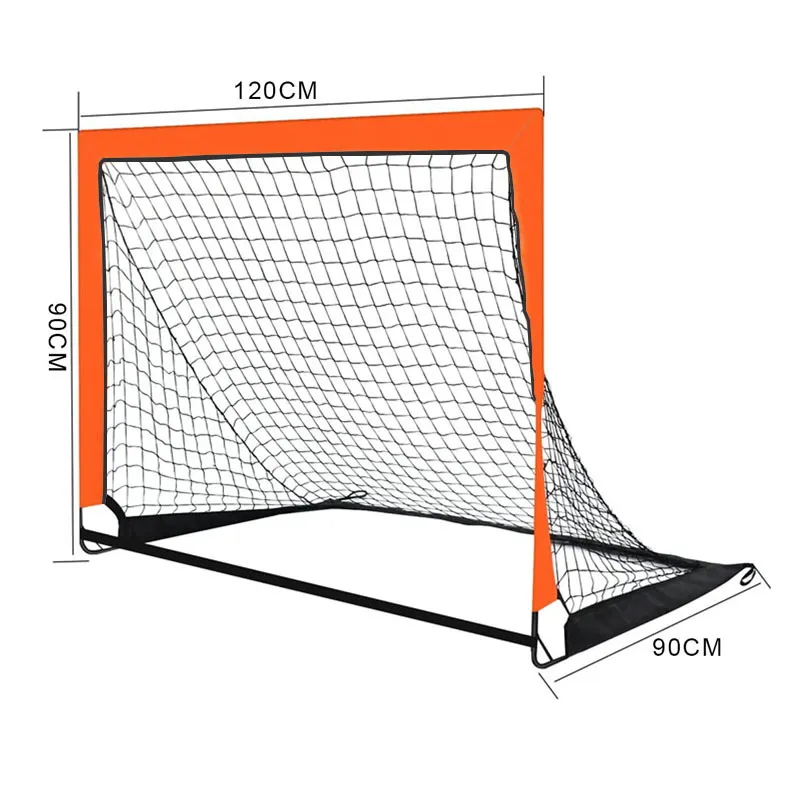

Photos from current listings. Actual item, color, and included accessories may vary.
Indoor Soccer Net Buying Guide
An indoor soccer net is a compact, freestanding goal system sized for basements, garages, gyms, and small yards, where the core trade-off is between folded portability and frame rigidity under repeated ball impact. Durable options use thicker steel tubing, reinforced corner joints, and weighted or anchored bases, while compromises rely on thin fiberglass rods and friction-fit plastic connectors that loosen after a few sessions.


At a glance
- Category
- Team Sports
- Data updated
- Nov 17, 2026
Current offers
Highlights
- Frame tubing diameter drives durability: 25–32 mm powder-coated steel resists denting, while 6–10 mm fiberglass rods flex and splinter on hard shots.
- Pop-up goals use bungee-linked rod sleeves and fold to a disc, but have no crossbar rigidity; telescoping or sectional steel goals hold shape for real shot practice.
- Netting denier and mesh size matter: 210D–420D knotless polyethylene with 4–5 cm mesh survives repeated impact; thin 70D netting tears at seams within weeks.
- Ground anchoring separates stable from sliding goals: sandbags, ground stakes, or weighted base tubes are required on smooth concrete and gym floors.
Best use cases
- Basement or garage training: pick a 4–6 ft steel-frame goal with sandbag anchoring and 420D netting; skip ultralight pop-ups that slide and deform on concrete.
- Gym or futsal court: choose a larger 6–8 ft goal with weighted base tubes and thicker 32 mm tubing; pop-up discs are too shallow for full-power shots.
- Backyard dual indoor/outdoor use: select a powder-coated steel frame rated for outdoor UV exposure with ground stakes; skip fiberglass pop-ups left in sun and rain.
- Toddler or light recreational play: a small pop-up goal is acceptable for soft balls only; skip it for any player striking at speed.
Buying tips
- Match goal width to space: a 4 ft goal needs at least 6 ft of clear width; a 6 ft goal needs 8–10 ft to absorb wide shots and net bulge.
- Check tube wall thickness, not just diameter: 1.2–1.5 mm steel walls hold shape; sub-1 mm walls dent at the crossbar joint on hard impacts.
- For pop-ups, confirm bungee-and-sleeve construction with a sewn net perimeter; friction-fit rods without bungee cords collapse mid-session.
- Verify anchoring hardware is included: at least four ground stakes or two sandbags per goal, since most indoor floor damage and sliding complaints trace to missing weights.
Specs
| Frame Type | Steel tube vs fiberglass pop-up |
|---|---|
| Goal Width | 4 ft / 6 ft / 8 ft |
| Net Material | 210D–420D knotless PE |
| Anchoring | Sandbags / stakes / weighted base |
Related searches
What to check before buying
- Measure ceiling height: indoor goals generally need 7–8 ft clearance for shots; a 6 ft goal plus net top requires at least 7 ft.
- Check floor type: concrete and gym floors need sandbag or weighted-base anchoring; carpet and turf accept ground stakes.
- Confirm doorway and stair width exceeds the folded package size, typically 3–4 ft for pop-ups and longer boxed lengths for steel goals.
- Verify net attachment method: sewn sleeves and bungee loops outlast plastic clips that crack in cold basements.
FAQ
Data sources: eBay / Amazon listings and product attribute feeds Data updated Nov 17, 2026.
Some links on this page are affiliate links. If you buy after clicking one, we may earn a commission at no extra cost to you. This does not change which products appear here or their order. Affiliate disclosure.