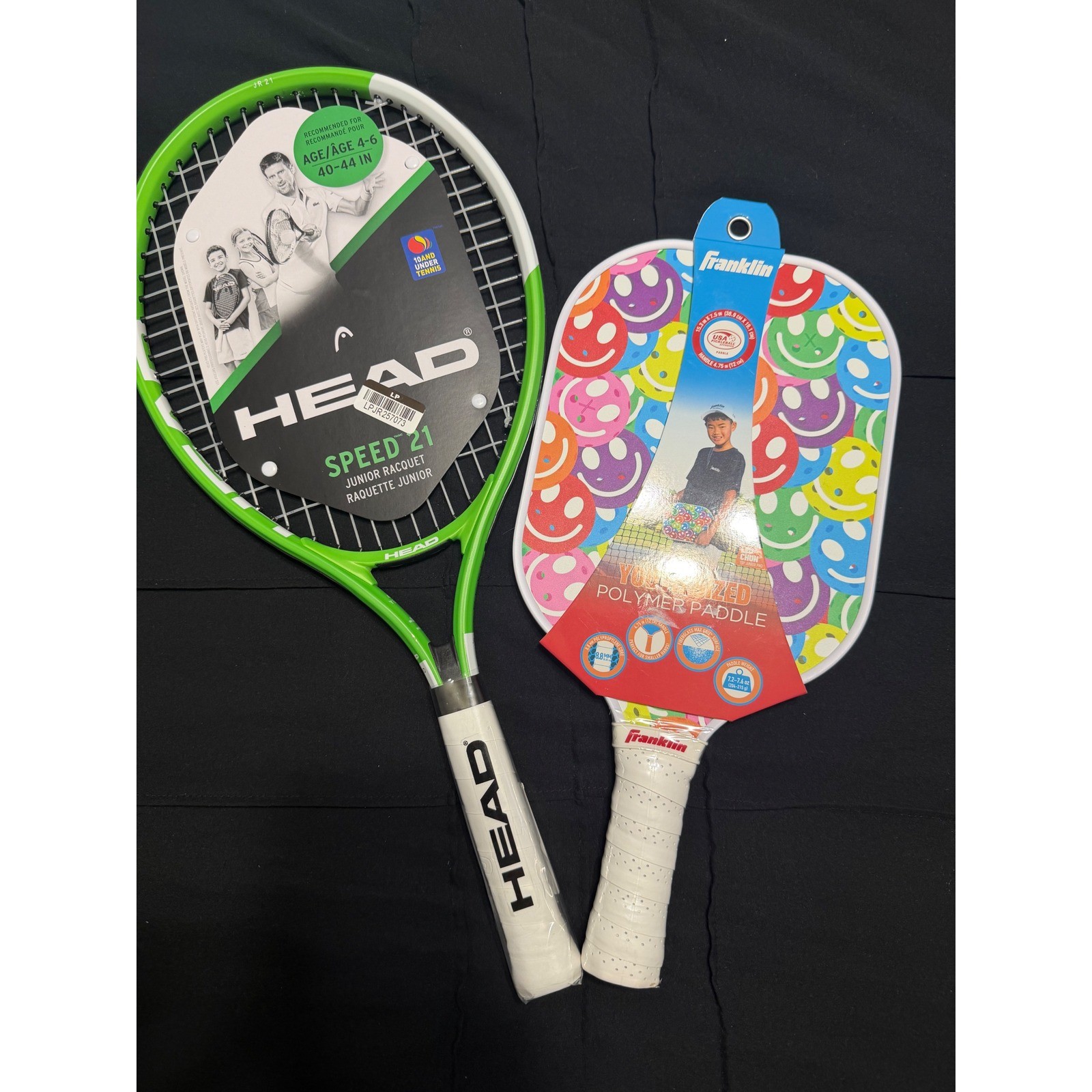

Photos from current listings. Actual item, color, and included accessories may vary.
Junior Tennis Racquet Buying Guide
Junior tennis racquets are scaled-down frames sized by child height and age to build correct swing mechanics without joint strain. The core trade-off is between lightweight aluminum frames (cheap, harsh, short lifespan) and graphite/composite construction (better vibration dampening, consistent flex, longer usable life). The decision rule: match racquet length to the child's height first, then require a composite or graphite frame at the 25-inch tier and above, reserving aluminum only for 17-21 inch starter frames.


At a glance
- Category
- Tennis & Racquet Sports
- Data updated
- Nov 16, 2026
Current offers
Highlights
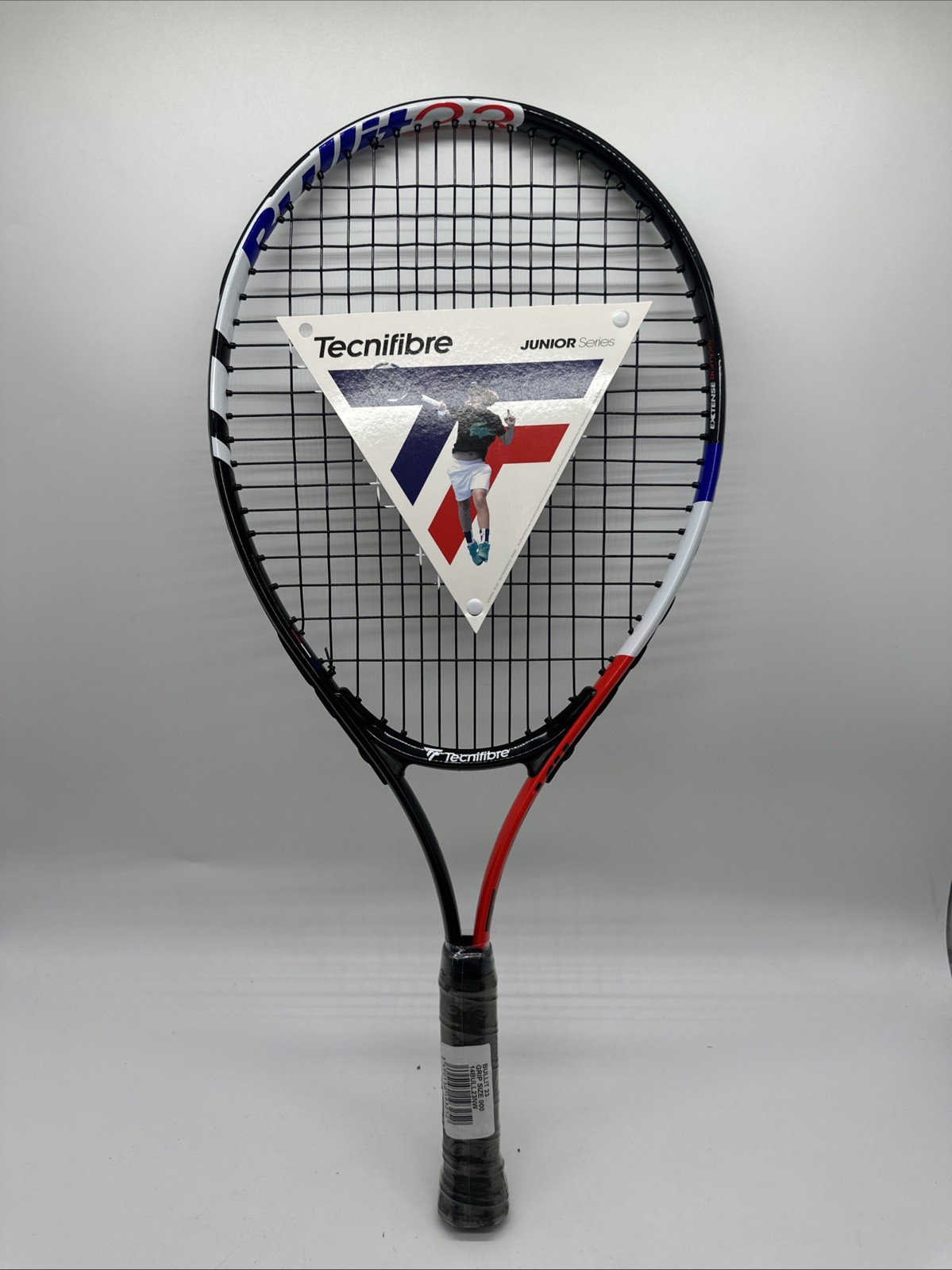
- Length tiers map to height: 17-19 in for ages 2-4, 21 in for 4-6, 23 in for 6-8, 25 in for 8-10, 26 in for 10-12 before adult 27 in.
- Frame material drives durability: graphite/composite flexes consistently and dampens shock, while aluminum is stiff, transmits vibration, and dents on frame hits.
- Grip size scales with length: 21-23 in frames use 3 3/4 to 3 7/8 in grips, 25-26 in frames use 4 0/8 to 4 1/8 in grips for correct hand wrap.
- Strung weight rises with tier: 17-21 in frames sit near 6-7.5 oz, 23 in near 7.5-8 oz, and 25-26 in near 8-9.5 oz to match growing swing speed.
Best use cases
- Best fit: a 5-year-old under 44 in tall gets a 21-inch aluminum or composite frame with a 3 3/4 grip—skip 23-inch frames that force an overextended two-handed backhand.
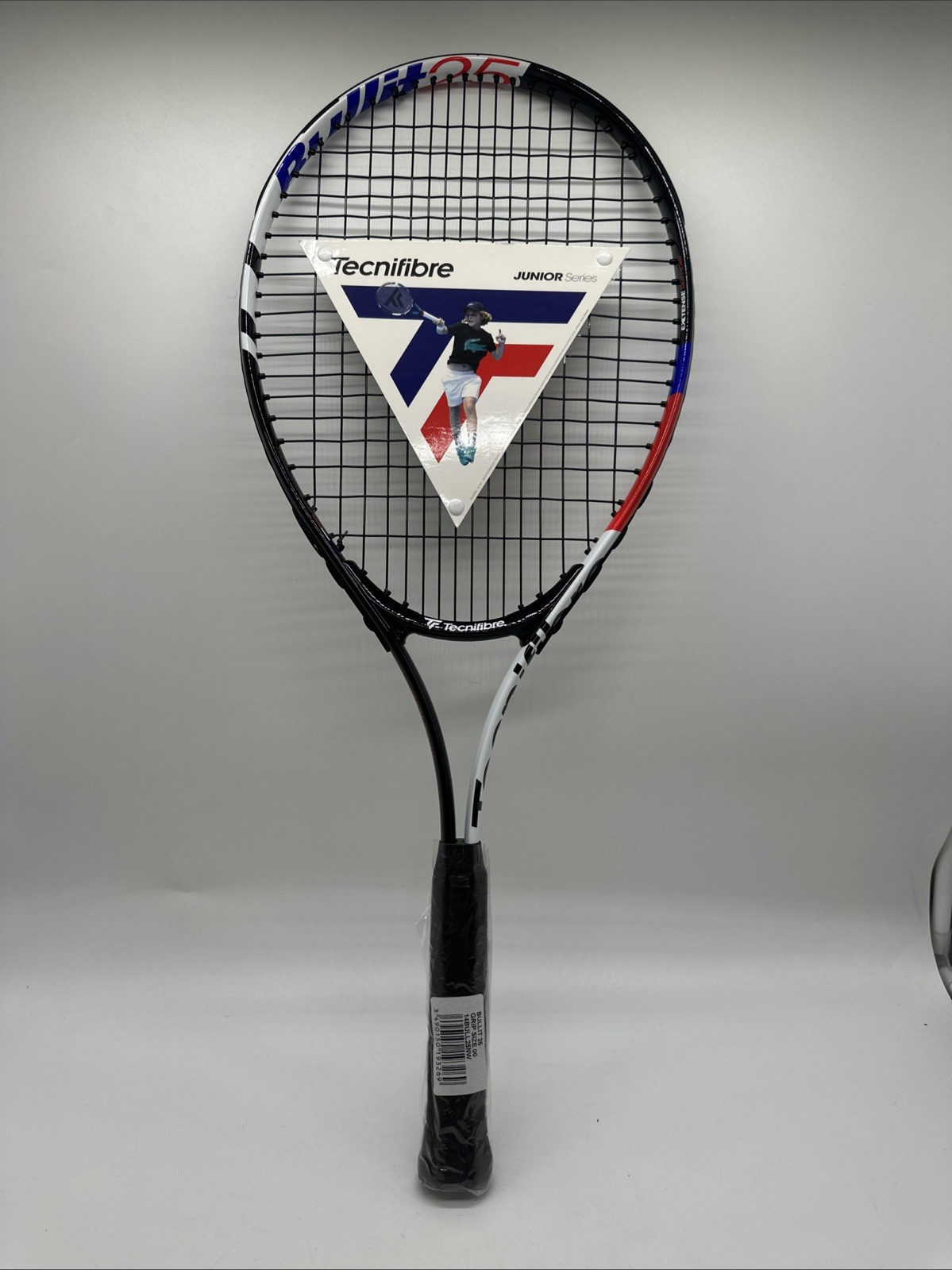
- Best fit: an 8-10-year-old 48-55 in tall gets a 25-inch graphite/composite frame at 8-9.5 oz—skip adult 27-inch frames that cause late contact and elbow strain.
- Wrong fit: buying a 26-inch frame for a child under 50 in tall overloads the shoulder and delays swing timing; stay at 23-25 inches until height crosses 55 in.
- Best fit: a 10-12-year-old transitioning to adult play gets a 26-inch composite frame—skip 25-inch junior frames only if grip size and weight already feel undersized.
Buying tips
- Measure the child's height in shoes: under 40 in → 19 in, 40-44 in → 21 in, 44-48 in → 23 in, 48-55 in → 25 in, 55-60 in → 26 in, over 60 in → adult 27 in.
- Demand graphite or composite at 25 in and above; aluminum is acceptable only for 17-21 in starter frames where low swing speed limits shock.
- Match grip circumference to hand length: 3 3/4 in for palms under 4 in, 3 7/8 in for 4-4.5 in, 4 0/8 to 4 1/8 in for palms over 4.5 in.
- Buy pre-strung frames at 21-23 in for beginners; at 25-26 in, plan to restring synthetic gut at 45-55 lb tension for arm comfort and control.
Specs
| Length Tiers | 17 / 19 / 21 / 23 / 25 / 26 in |
|---|---|
| Frame Material | Graphite/composite vs aluminum |
| Grip Size Range | 3 3/4 to 4 1/8 in |
| Strung Weight | 6-9.5 oz by length tier |
Related searches
What to check before buying
- Stand the child against a wall in shoes and record height in inches before selecting the 21/23/25/26 inch tier.
- Wrap a tape measure around the dominant hand's palm to confirm the grip size printed on the frame matches 3 3/4, 3 7/8, or 4 1/8 in.
- Confirm the frame includes a head cover and arrives pre-strung; unstrung 25-26 in frames require a separate stringing cost and tension choice.
- Check the frame's strung weight against the tier: 6-7.5 oz for 21-23 in, 8-9.5 oz for 25-26 in, avoiding oversized heads above 105 sq in for control.
FAQ
Data sources: eBay / Amazon listings and product attribute feeds Data updated Nov 16, 2026.
Some links on this page are affiliate links. If you buy after clicking one, we may earn a commission at no extra cost to you. This does not change which products appear here or their order. Affiliate disclosure.