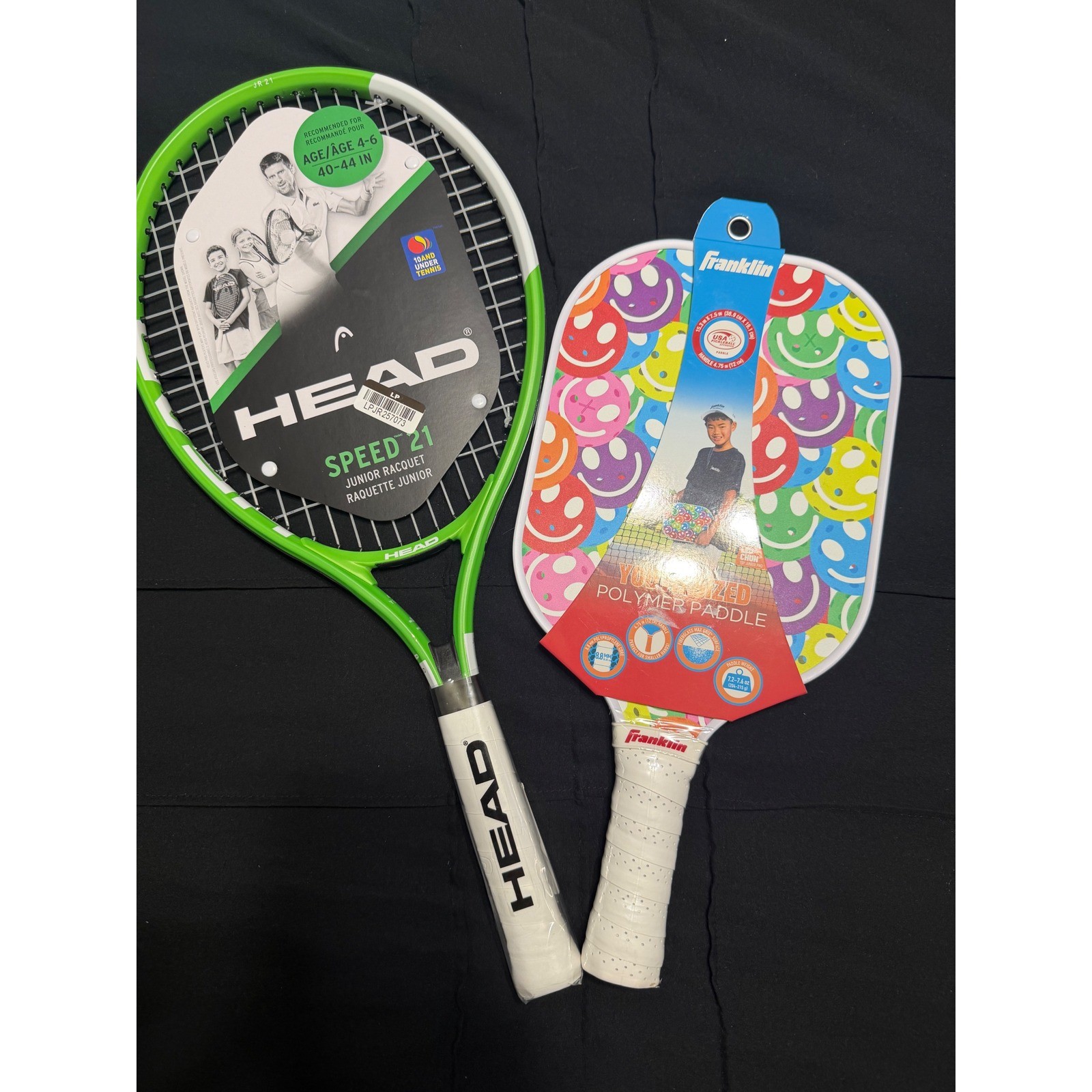

Photos from current listings. Actual item, color, and included accessories may vary.
Paddle Tennis Racket Buying Guide
Paddle tennis rackets encompass solid-core platform tennis paddles, perforated pickleball paddles, and pop tennis paddles — three distinct architectures with different ball, court, and durability demands. The core trade-off is core material (honeycomb polymer vs. foam vs. wood) versus face thickness and edge guard construction, which together control power, control, and lifespan. Buy by matching the paddle's certified playing standard to your court: platform tennis requires a solid, textured paddle; pickleball requires a USA Pickleball-approved perforated model; pop tennis uses a stringed or perforated short paddle.


At a glance
- Category
- Tennis & Racquet Sports
- Data updated
- Nov 16, 2026
Current offers
Highlights
- Platform tennis paddles are solid-core (foam or honeycomb) with a textured, perforated face and no strings; they are 17–18 in long and must be used with a depressurized platform tennis ball.
- Pickleball paddles are perforated polymer-honeycomb cores faced with fiberglass, carbon fiber, or graphite; face thickness of 13–16 mm governs control, while 10–12 mm favors power.
- Pop tennis paddles are shorter (typically 21–26 in) with a perforated or stringed face and are played on a 60-ft court with a depressurized tennis ball.
- Edge guard material — molded TPU or wrapped bumper — is the primary wear point; a wrapped edge guard outlasts a glued-on trim on gritty platform and pickleball courts.
Best use cases
- Platform tennis on a raised mesh court: choose a solid-core paddle with a perforated textured face and a wrapped edge guard; skip perforated pickleball paddles, which are illegal for platform play.
- Pickleball on a 20x44-ft court: choose a USA Pickleball-approved perforated honeycomb paddle at 13–16 mm core thickness for control or 10–12 mm for power; skip solid platform paddles, which are too heavy and unperforated.
- Pop tennis or junior short-court play: choose a 21–26-in perforated or stringed short paddle sized to the player's height; skip full-length 27-in tennis rackets, which are too long for the compact court.
Buying tips
- Match paddle length to the sport: platform tennis 17–18 in, pickleball 15.5–17 in, pop tennis 21–26 in — a standard 27-in tennis racket is wrong for all three.
- Pick core thickness by role: 13–16 mm honeycomb for control and touch, 10–12 mm for power and drive; thicker cores weigh more and slow hand speed at the net.
- Choose face material by durability: carbon fiber and graphite resist wear and add stiffness; fiberglass is softer and more forgiving but scuffs faster on abrasive courts.
- Check certification for league play: pickleball paddles must carry USA Pickleball approval; platform tennis paddles must meet APTA solid-core and dimension rules.
Specs
| Sport Type | Platform / Pickleball / Pop tennis |
|---|---|
| Core Construction | Honeycomb / Foam / Wood solid |
| Face Material | Carbon fiber / Graphite / Fiberglass |
| Paddle Length | 15.5-18 in platform/pickle; 21-26 in pop |
Related searches
What to check before buying
- Measure your court and net height first: platform tennis uses a raised 34-in net, pickleball 34 in at center, pop tennis 31.5–36 in — paddle choice follows the court.
- Confirm the ball type your league supplies: depressurized platform ball, perforated plastic pickleball, or depressurized tennis ball for pop tennis.
- Check grip circumference (typically 4–4.25 in for pickleball, 4.25–4.5 in for platform) against your hand size for control.
- Verify your league's paddle certification list before buying, and confirm replacement grip and edge-guard availability for long-term use.
FAQ
Data sources: eBay / Amazon listings and product attribute feeds Data updated Nov 16, 2026.
Some links on this page are affiliate links. If you buy after clicking one, we may earn a commission at no extra cost to you. This does not change which products appear here or their order. Affiliate disclosure.