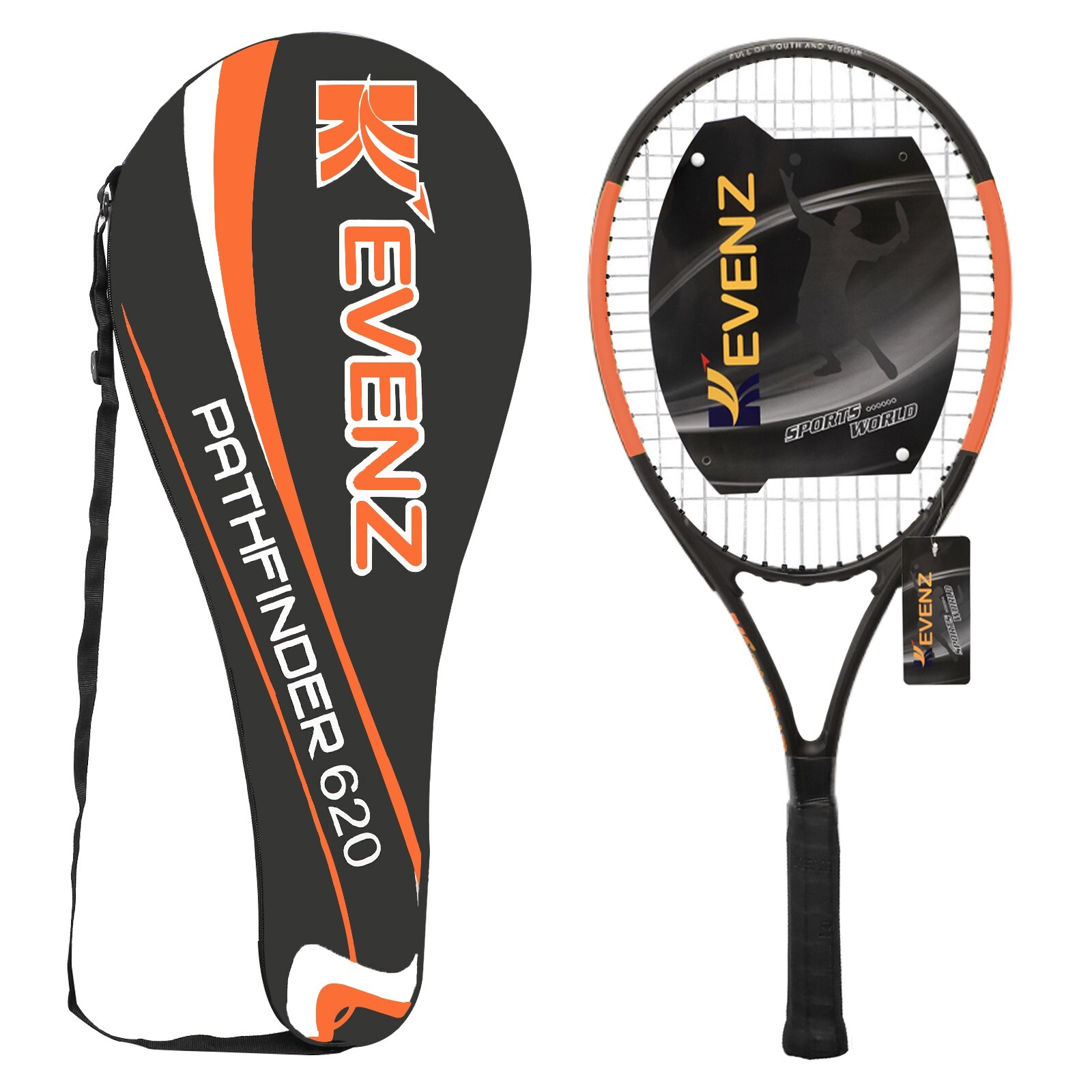

Photos from current listings. Actual item, color, and included accessories may vary.
Professional Tennis Racket Buying Guide
A professional tennis racket is a high-performance frame built for advanced players who generate their own power and demand precise control, typically weighing 300–340g unstrung with a head size of 95–100 sq in. The core trade-off is between mass and maneuverability: heavier frames stabilize against heavy incoming balls but demand early preparation and sound technique. The decision rule is simple—buy a frame whose unstrung weight and swingweight match your physical strength and stroke mechanics, not a cosmetic 'pro' label, and reject any racket that lacks published weight, balance, and head-size specs.


At a glance
- Category
- Tennis & Racquet Sports
- Data updated
- Nov 16, 2026
Current offers
Highlights
- Unstrung weight tiers: 300–315g suits strong intermediate-to-advanced all-court players; 315–340g is for advanced tournament players with fully developed strokes.
- Head size 95–100 sq in balances control and forgiveness; 100–105 sq in adds margin on off-center hits but reduces precision on flat, aggressive drives.
- Frame construction matters: braided graphite or graphite/KEVLAR layups damp vibration and hold stiffness over time; aluminum or titanium-reinforced budget frames deform and lose playability.
- String pattern 16x19 suits topspin and power; 18x20 delivers flatter, more controlled trajectories and longer string life for hard hitters.
Best use cases
- Best fit: competitive tournament players hitting 4–5 times weekly should pick a 305–320g, 98–100 sq in graphite frame with a 16x19 pattern for spin and depth.
- Best fit: strong baseline counterpunchers facing heavy pace should choose a 320–340g frame with a head-light balance to stabilize the racket head through contact.
- Wrong fit: recreational players playing once a week should skip 320g+ player frames—they will lose racket-head speed and develop arm fatigue; choose 275–295g instead.
- Wrong fit: juniors and beginners should avoid 'professional' adult frames entirely; a 250–270g frame with a 100–105 sq in head builds sound mechanics without injury risk.
Buying tips
- Match unstrung weight to your level: under 300g for improving intermediates, 300–320g for advanced, 320g+ only for tournament players with proven stroke mechanics.
- Choose grip size by hand measurement: index-finger gap of about one finger width between fingertips and palm corresponds to 4 3/8 in (G3) for most adult men; 4 1/4 in (G2) for most women.
- Insist on published balance (points head-light) and swingweight—frames under 5 points head-light at 320g+ feel sluggish on serve returns and at the net.
- Prefer frames with replaceable grommet/bumper sets and standard grip pallet shapes so the racket can be maintained and resized over its service life.
Specs
| Unstrung Weight | 300–340 g (advanced tier) |
|---|---|
| Head Size | 95–100 sq in (control) |
| String Pattern | 16x19 spin / 18x20 control |
| Frame Material | Braided graphite / graphite-kevlar |
Related searches
What to check before buying
- Measure your grip circumference and confirm the frame is offered in at least G2 (4 1/4 in) to G4 (4 1/2 in) to avoid a poor handle fit.
- Confirm the racket ships unstrung or specify string tension; factory strings on pro frames are typically basic synthetics and should be replaced before competitive play.
- Check the frame's strung weight and swingweight against your current racket to avoid a jump that causes arm strain or timing loss.
- Verify the butt cap and pallet system accept standard replacement grips and that grommet sets are available for the model.
FAQ
Data sources: eBay / Amazon listings and product attribute feeds Data updated Nov 16, 2026.
Some links on this page are affiliate links. If you buy after clicking one, we may earn a commission at no extra cost to you. This does not change which products appear here or their order. Affiliate disclosure.