Photos from current listings. Actual item, color, and included accessories may vary.
Tennis Ball Machine Buying Guide
A tennis ball machine is a programmable launcher that feeds balls at set speed, spin, and interval for solo practice. The core trade-off is between AC-powered units with unlimited runtime and heavy build versus battery-powered portables where capacity, throw speed, and spin modes shrink as runtime grows. Buy AC if you practice at a fixed court with power; buy battery only when you need true portability and accept fewer spin modes and lower top speed.


At a glance
- Category
- Tennis & Racquet Sports
- Data updated
- Nov 17, 2026
Current offers
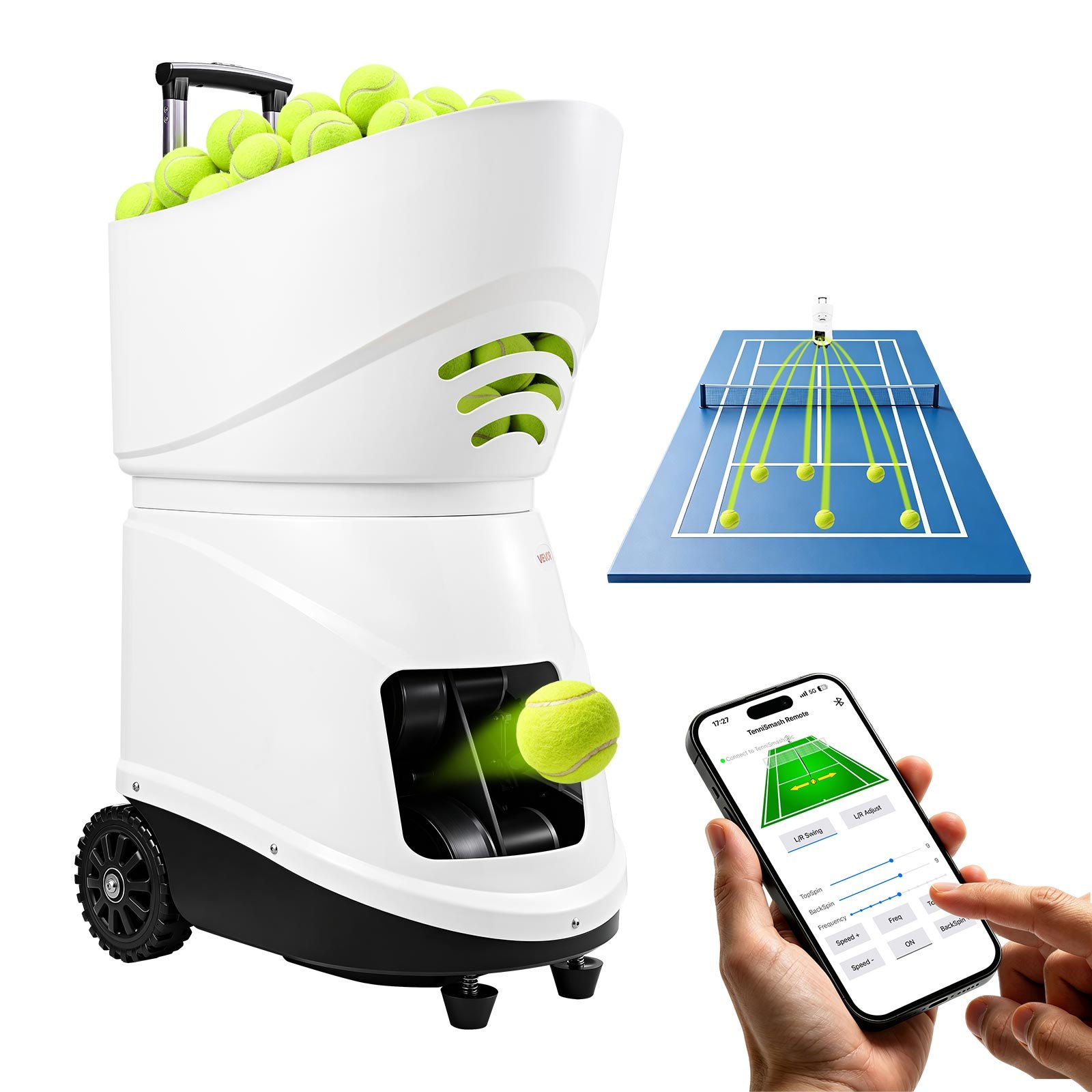 Tennis Ball Machine,2H Runtimeand150 Capacity Auto Launcher, for Beginners and Pro Practice Training, with App Remote Control, Spin 2 Modes, and Speeds up to 80MPH$1,060.99
 View on Mallflare
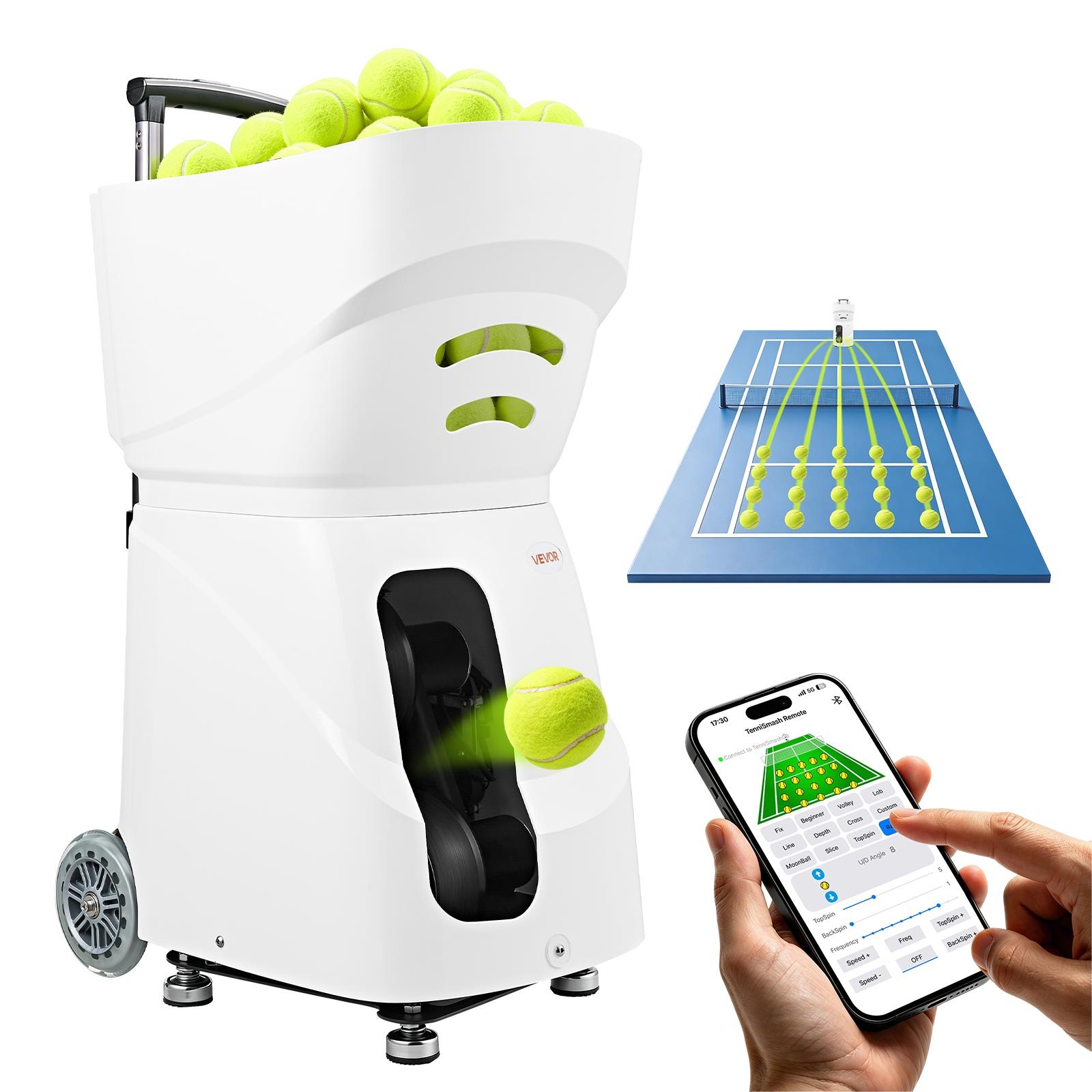 Tennis Ball Machine,4H Runtimeand110 Capacity Auto Launcher, for Beginners and Pro Practice Training, with App Remote Control, Spin 21 Modes, and Speeds up to 75MPH$1,134.99View on Mallflare
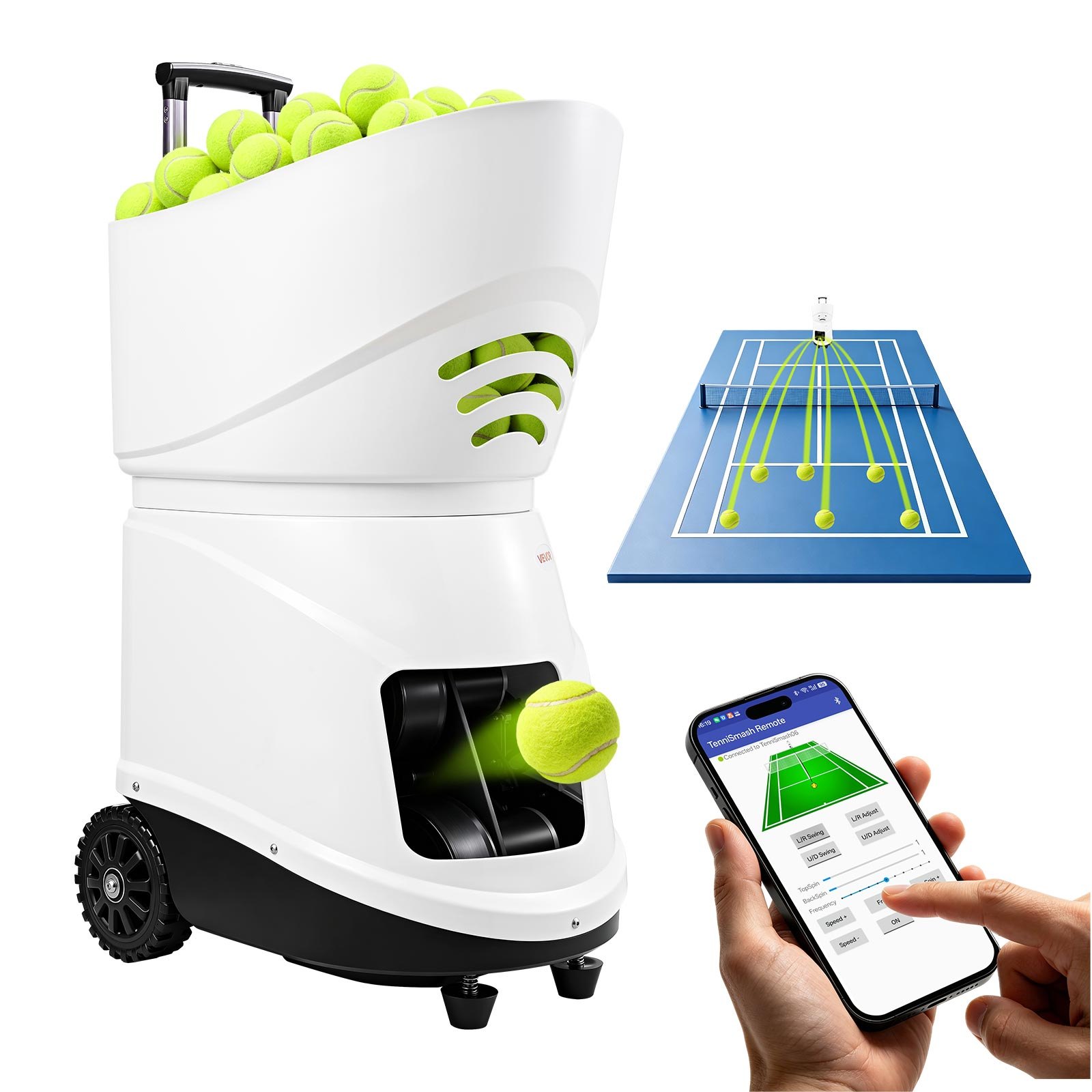 Tennis Ball Machine,4H Runtimeand150 Capacity Auto Launcher, for Beginners and Pro Practice Training, with App Remote Control, Spin 3 Modes, and Speeds up to 80MPH$1,183.99View on Mallflare
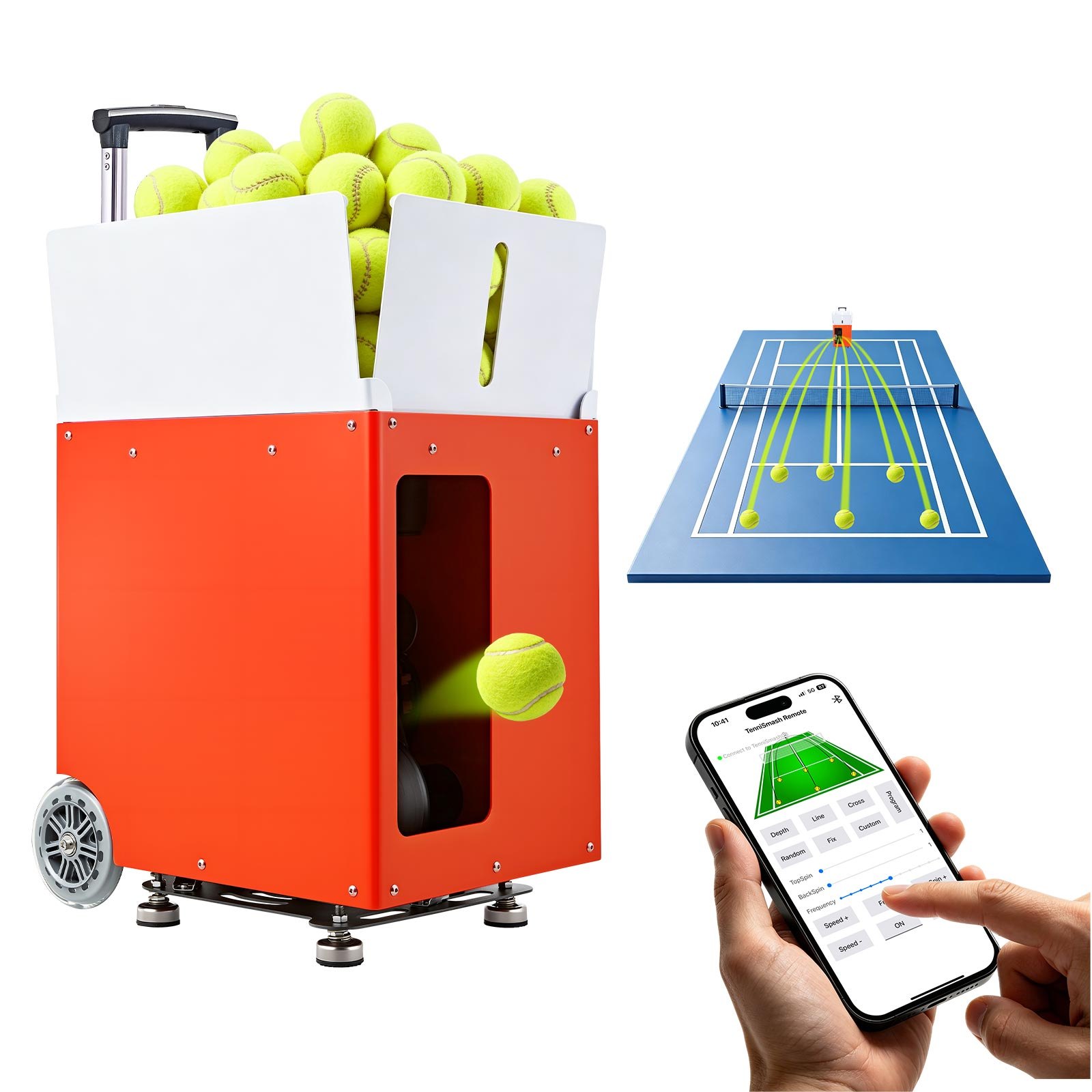 Tennis Ball Machine,4H Runtimeand110 Capacity Auto Launcher, for Beginners and Pro Practice Training, with App Remote Control,Spin Control, 20 Modes, and Speeds up to 75MPH$1,269.99View on Mallflare
Highlights
- Throw speed spans roughly 30-80 MPH; units rated below 60 MPH suit beginners and kids, while 70-80 MPH is needed for advanced pace practice.
- Spin control ranges from 2-3 basic modes (topspin/backspin) up to 20+ programmable combinations; more modes mean finer trajectory and bounce control.
- Hopper capacity of 110-150 balls determines feed time per load; at a 4-second interval, 110 balls gives ~7 minutes of continuous drill.
- Battery runtime tiers of 2H vs 4H reflect cell count and weight; 4H units typically weigh more and cost more but cover full lessons or long sessions.
Best use cases
- Best fit: recreational players and beginners should pick a 2-3 spin mode, 60-75 MPH, 110-150 capacity battery unit for portable baseline drills; skip 80 MPH oscillating models that add cost without usable pace.
- Best fit: advanced juniors and tournament players need 75-80 MPH, 20+ spin modes, and oscillation to practice movement and heavy topspin; skip low-speed 2H units that cannot replicate match pace.
- Best fit: coaches and clubs running multi-hour sessions should choose AC-powered or 4H battery units with 150-ball hoppers; skip 2H/110-ball portables that require reloading and recharging mid-session.
- Wrong fit: anyone without a court power outlet or a vehicle to transport a 60-90 lb machine should avoid AC-only units and high-capacity battery models respectively.
Buying tips
- Match top speed to your level: under 60 MPH for beginners and kids, 60-75 MPH for intermediates, 75-80 MPH for advanced players; higher speed costs more and drains battery faster.
- Choose hopper capacity by drill length: 110 balls yields ~7 minutes at a 4-second feed; 150 balls yields ~10 minutes; plan reload time into your session.
- Prefer brushless DC motors over brushed motors for longer life and quieter operation; brushed motors wear out faster under continuous feed loads.
- Check spin mode count: 2-3 modes cover basic topspin/backspin; 20+ modes allow programmable spin and oscillation combinations for advanced footwork drills.
Specs
| Power Source | AC corded vs rechargeable battery |
|---|---|
| Top Speed | 30-80 MPH by skill tier |
| Hopper Capacity | 110-150 standard tennis balls |
| Battery Runtime | 2-4 hours per charge |
Related searches
What to check before buying
- Measure your court or practice space: machines need 10-15 feet behind the baseline and a clear flight path; confirm you have at least 60 feet of depth.
- Confirm power access: AC units require a standard outlet within cord reach; battery units need a 110V/220V charger matching your outlet standard.
- Verify ball compatibility: machines accept standard 2.6-inch tennis balls; avoid pressureless or oversized balls that jam the feed mechanism.
- Plan transport: battery units weigh 30-60 lb and often have wheels; measure your vehicle trunk and stair access before choosing a 4H high-capacity model.
FAQ
Data sources: eBay / Amazon listings and product attribute feeds Data updated Nov 17, 2026.
Some links on this page are affiliate links. If you buy after clicking one, we may earn a commission at no extra cost to you. This does not change which products appear here or their order. Affiliate disclosure.