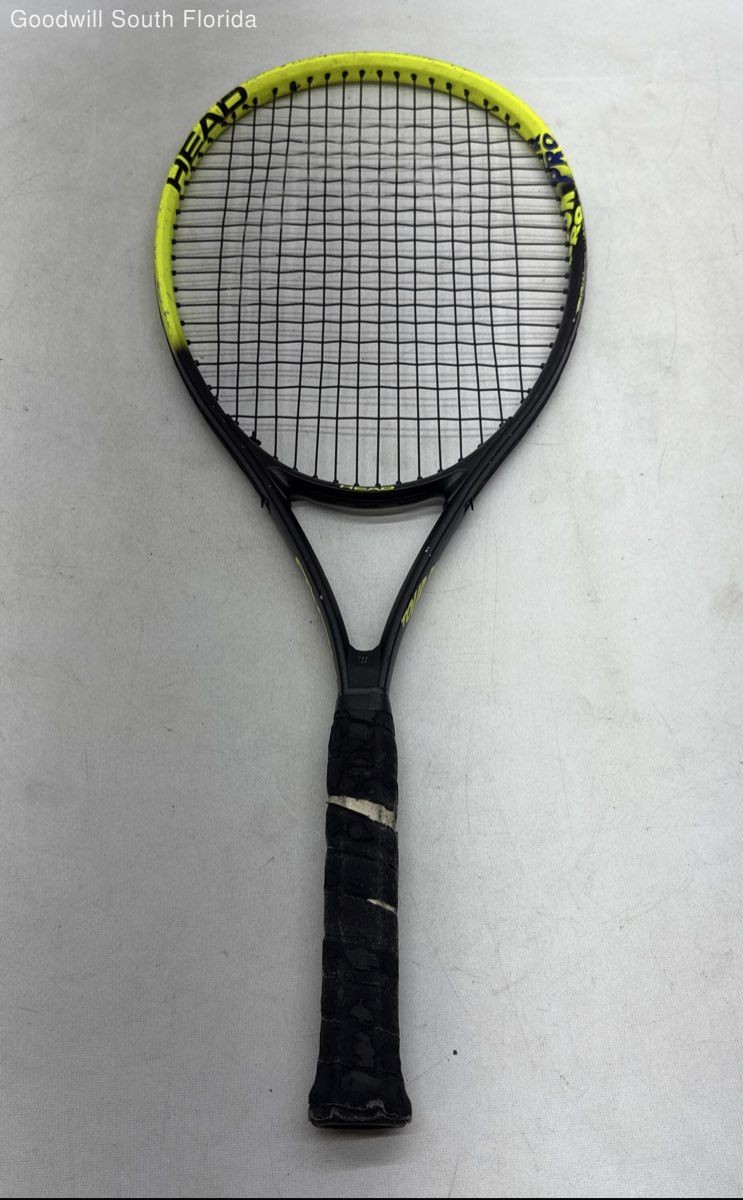

Photos from current listings. Actual item, color, and included accessories may vary.
Tennis Racket Grip Buying Guide
Tennis racket grips are the replaceable interface between hand and handle, and the core trade-off is tackiness versus durability: soft polyurethane feels plush but wears fast, while firmer synthetic/rubber blends last longer but transmit more shock. The decision rule is to pick an overgrip for feel and sweat management if your handle size is already correct, and a replacement grip only when you need to rebuild handle diameter or restore cushioning.


At a glance
- Category
- Tennis & Racquet Sports
- Data updated
- Nov 16, 2026
Current offers
Highlights
- Overgrips add roughly 0.4-0.7 mm per layer, so one wrap bumps grip size about half a size; two layers effectively add a full size.
- Replacement grips are 1.5-2.0 mm thick and set the base handle diameter; overgrips are 0.5-0.75 mm and are meant to be rewrapped every 8-15 playing hours.
- Perforated and dry-feel overgrips use perforated PU or microfiber backing for sweat channeling; tacky smooth PU gives maximum grip but degrades fastest in heat.
- Grip size is measured in inches (4 1/8 to 4 5/8) or European equivalents (L0-L5); size 3 (4 3/8) fits most adult hands at 17-19 cm palm length.
Best use cases
- Pick a thin 0.5-0.6 mm perforated overgrip if your handle size is already correct and you sweat heavily—skip thick cushioned wraps that will enlarge the grip.
- Pick a replacement grip if the original handle is worn through, slick, or too small; rebuilding diameter with 1.8-2.0 mm leather or PU is the only way to change base size.
- Pick a tacky smooth overgrip for dry cool conditions and hard-court baseliners; skip it for humid climates where it becomes slippery within a set.
- Pick a contoured or ribbed overgrip for players with hand/wrist sensitivity who want orientation feedback; skip it if you need a clean bevel feel for frequent grip changes.
Buying tips
- Measure palm length from the crease at the wrist to the tip of the ring finger: under 17 cm use size 1-2 (4 1/8-4 1/4), 17-19 cm use size 3 (4 3/8), 19-21 cm use size 4 (4 1/2).
- Buy overgrips in 3-packs or 10-packs: a single overgrip lasts 8-15 hours, so a 10-pack covers a full season of 2-3 sessions per week.
- Choose PU overgrips for tack and comfort, natural leather for durability and bevel feel, and microfiber for sweat absorption; rubber/synthetic blends are the budget option with the shortest lifespan.
- Match width to handle: standard overgrip tape is 25-27 mm wide; wider 30 mm tape suits larger handles and reduces overlap ridges.
Specs
| Grip Type | Overgrip vs Replacement grip |
|---|---|
| Thickness | Overgrip 0.5-0.75 mm / Replacement 1.5-2.0 mm |
| Grip Size | L0-L5 / 4 1/8-4 5/8 in |
| Material | PU / Leather / Microfiber / Synthetic |
Related searches
What to check before buying
- Confirm your current grip size printed on the butt cap (L0-L5 or 4 1/8-4 5/8) before buying an overgrip, since each layer adds half a size.
- Check whether your racket uses a replacement grip or an overgrip as the base layer; overgrips wrap over an existing grip, not directly on bare handle.
- Measure handle circumference with a tape at the top of the grip: 4 3/8 in (11.1 cm) is size 3, and adding two overgrips moves you to roughly 4 1/2 in.
- Account for climate: humid or high-sweat environments favor perforated or dry overgrips; cool dry conditions favor tacky smooth PU.
FAQ
Data sources: eBay / Amazon listings and product attribute feeds Data updated Nov 16, 2026.
Some links on this page are affiliate links. If you buy after clicking one, we may earn a commission at no extra cost to you. This does not change which products appear here or their order. Affiliate disclosure.