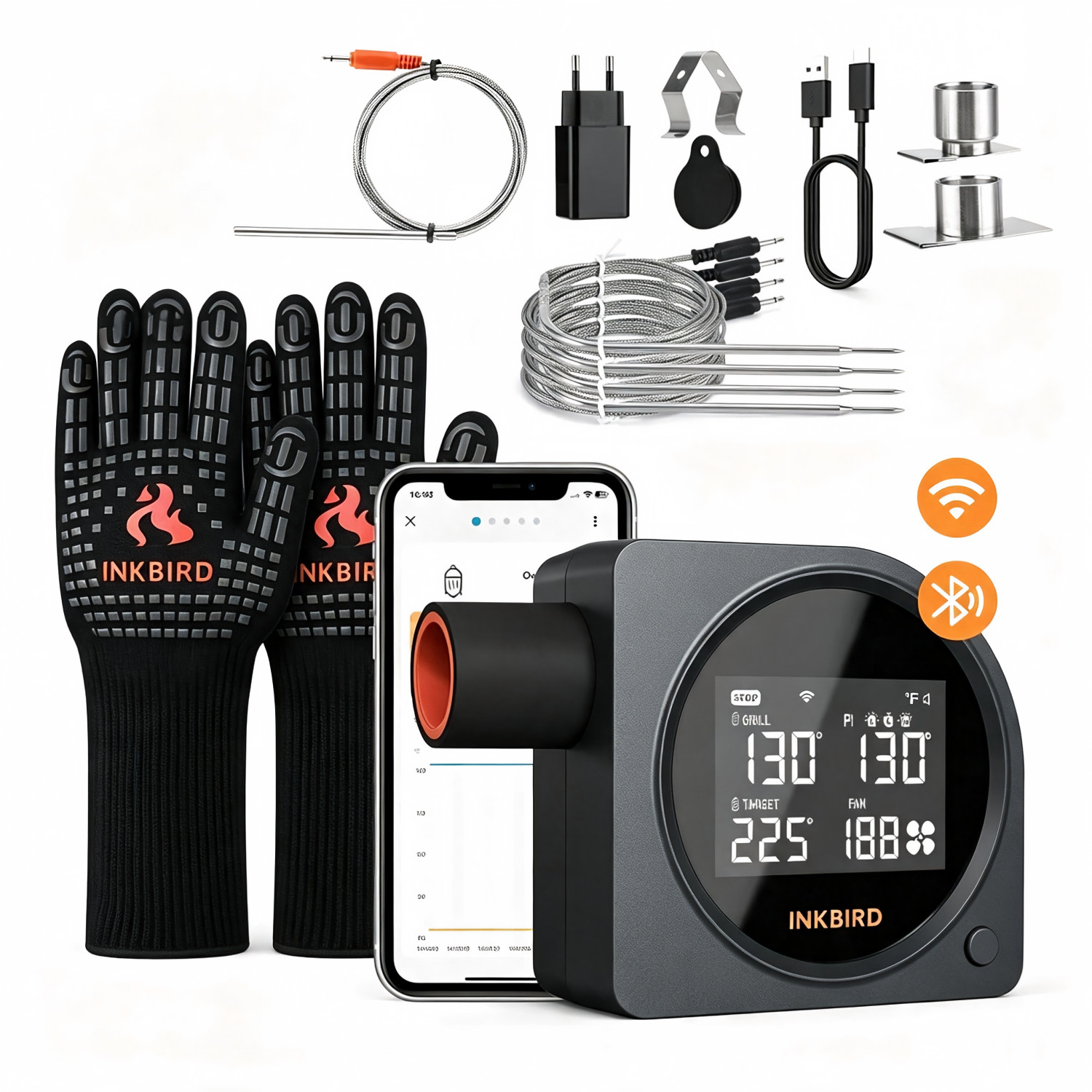

Photos from current listings. Actual item, color, and included accessories may vary.
INKBIRD BBQ Temperature Controller Buying Guide
An INKBIRD BBQ temperature controller is a fan-driven automatic draft system that holds a smoker or charcoal grill at a set pit temperature by cycling air into the fire. The defining trade-off is blower architecture and probe quality: a properly sized variable-speed fan paired with a fast, accurate thermocouple or RTD probe holds ±5°F, while a fixed-speed fan with a slow thermistor overshoots and swings. Buy the controller whose fan CFM and probe type match your cooker's volume, and skip any unit that lacks a true variable-speed blower and at least a 3-probe kit for brisket and ribs.


At a glance
- Brand
- Not synced yet
- Model
- Not synced yet
- MPN
- Not synced yet
- Category
- BBQ Thermometers & Controllers
- Status
- Offers available
- Data updated
- Nov 16, 2026
Current offers
Highlights
- Fan-driven draft control uses a variable-speed blower (typically 5–20 CFM across INKBIRD tiers) to add oxygen only when the pit falls below setpoint, preventing the temperature spikes of fixed-speed on/off fans.
- Probe type determines response speed: thermocouple probes react in seconds and hold ±1–2°F, while thermistor probes are slower and drift more in high-heat, which matters for brisket and poultry.
- WiFi models (2.4 GHz only, no 5 GHz) allow cloud monitoring and app alerts, while Bluetooth-only units are limited to roughly 100 ft line-of-sight; the two radios are not interchangeable across INKBIRD generations.
- Build is metal housing with high-temp plastic fan and probe connectors; probe cables and connectors are the wear items, so replaceable probes and a standard plug type extend controller life.
Best use cases
- Best fit: charcoal kettle, drum, or offset smoker owners who want overnight brisket or pork butt at ±5°F — pick a kit with a variable-speed fan, at least two food probes, and a pit probe.
- Best fit: pellet grill owners who want app alerts without the built-in controller — choose a WiFi model and use the fan port only if the grill has a compatible draft inlet; otherwise rely on probe-only monitoring.
- Wrong fit: gas grills and kamado-style ceramic cookers with sealed draft doors — a forced-air fan is unnecessary or incompatible, so skip fan controllers and use a multi-probe thermometer instead.
- Wrong fit: buyers wanting a standalone instant-read for searing and grilling — a fan controller is a low-and-slow tool, not a handheld thermometer; pick a separate instant-read pen for high-heat checks.
Buying tips
- Match fan CFM to cooker volume: small kettles (under 22 in) need roughly 5–10 CFM, while large offsets and drums need 15–20 CFM; an oversized fan overshoots and a tiny fan starves the fire.
- Choose thermocouple or RTD probes over thermistors for pit control because they hold accuracy within ±1–2°F at 225–275°F, where thermistors can drift several degrees.
- For remote monitoring pick a WiFi model on 2.4 GHz; for backyard-only use Bluetooth is sufficient and cheaper, but range drops sharply through walls.
- Confirm the probe plug standard (typically 2.5 mm or 3.5 mm mono) and buy spare probes at the same time, since probe cables fail before the controller does.
Specs
| Control Type | Fan-driven draft controller |
|---|---|
| Connectivity | WiFi 2.4 GHz / Bluetooth |
| Probe Type | Thermocouple / RTD / thermistor |
| Fan Output | 5–20 CFM variable speed |
Alternatives to compare
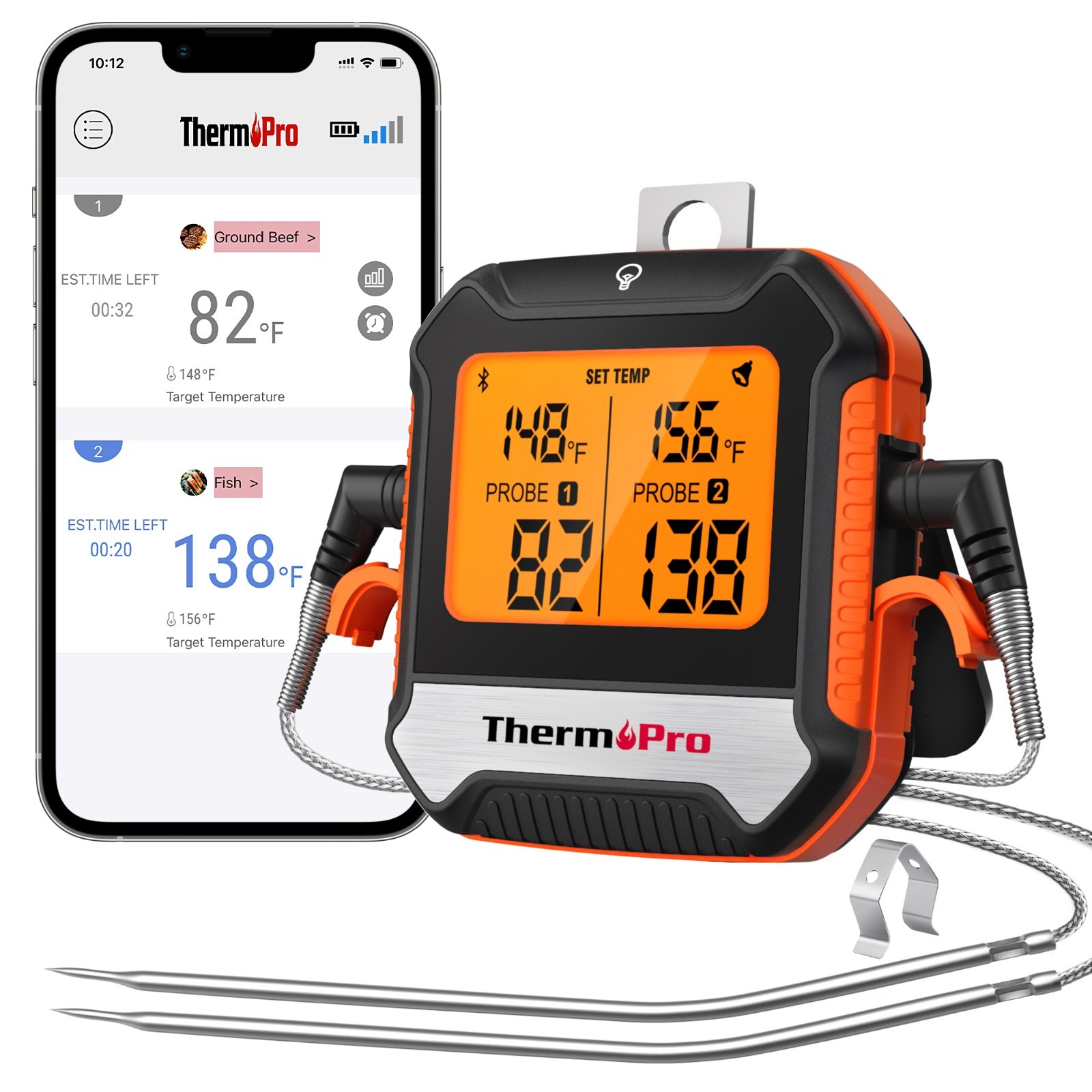
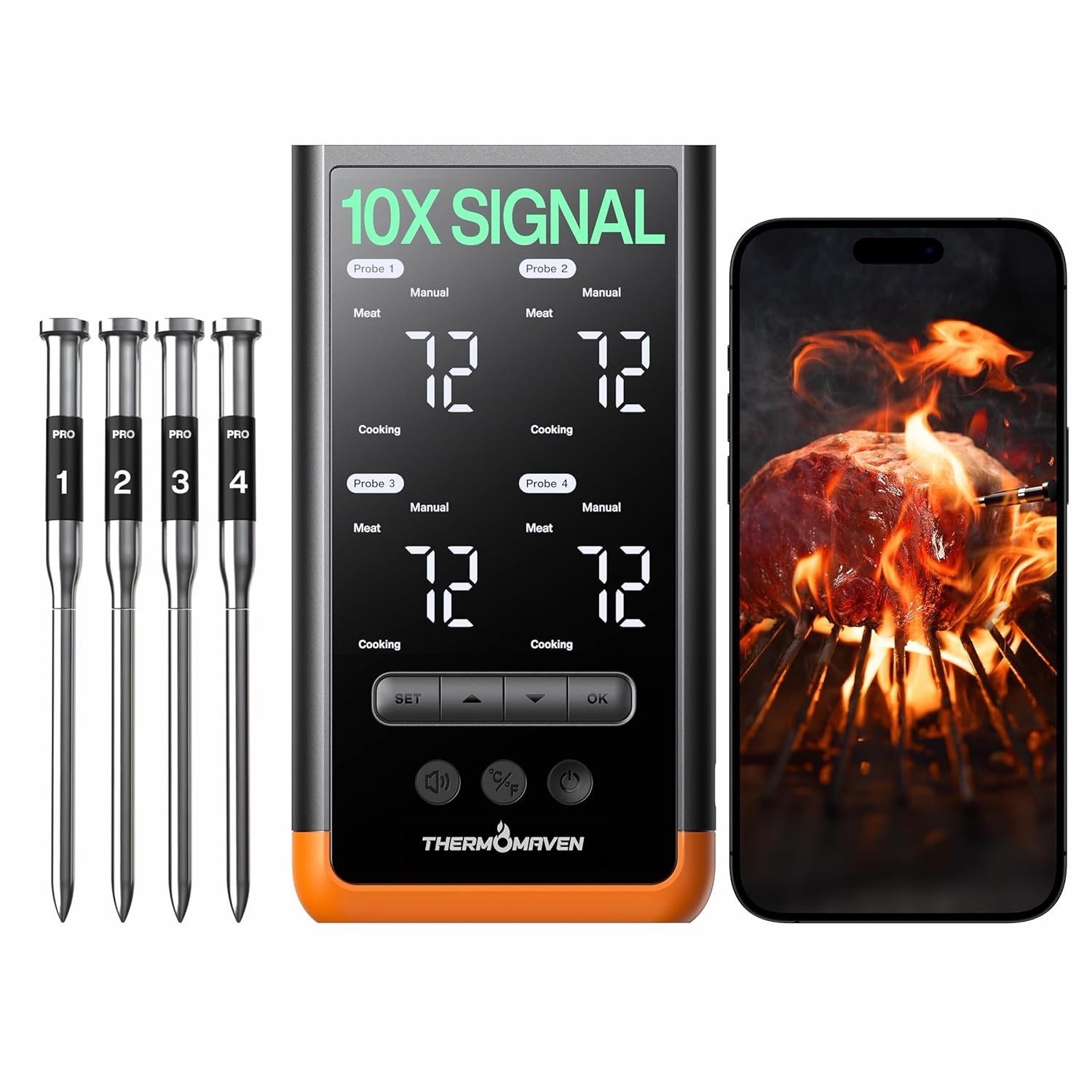
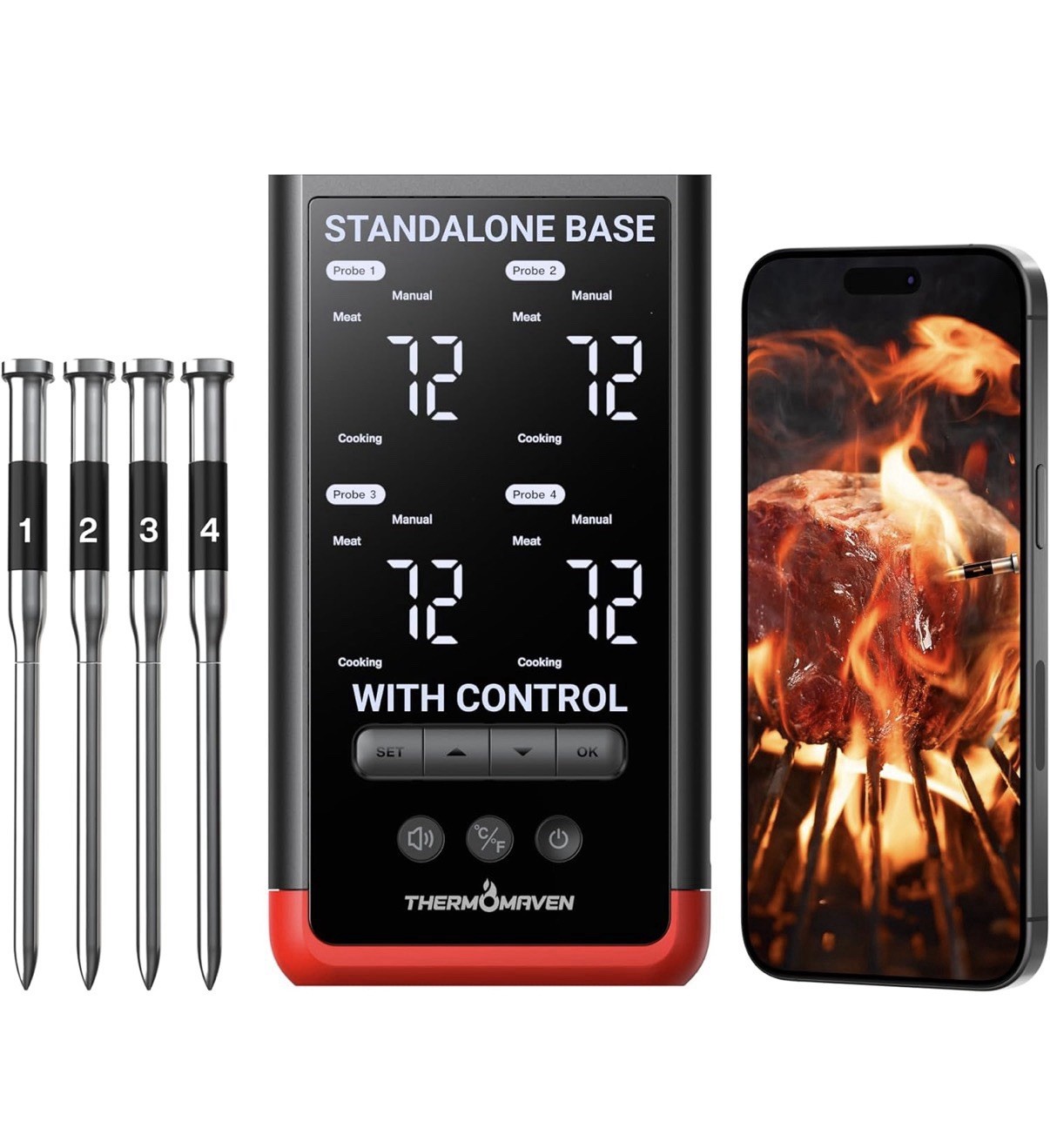
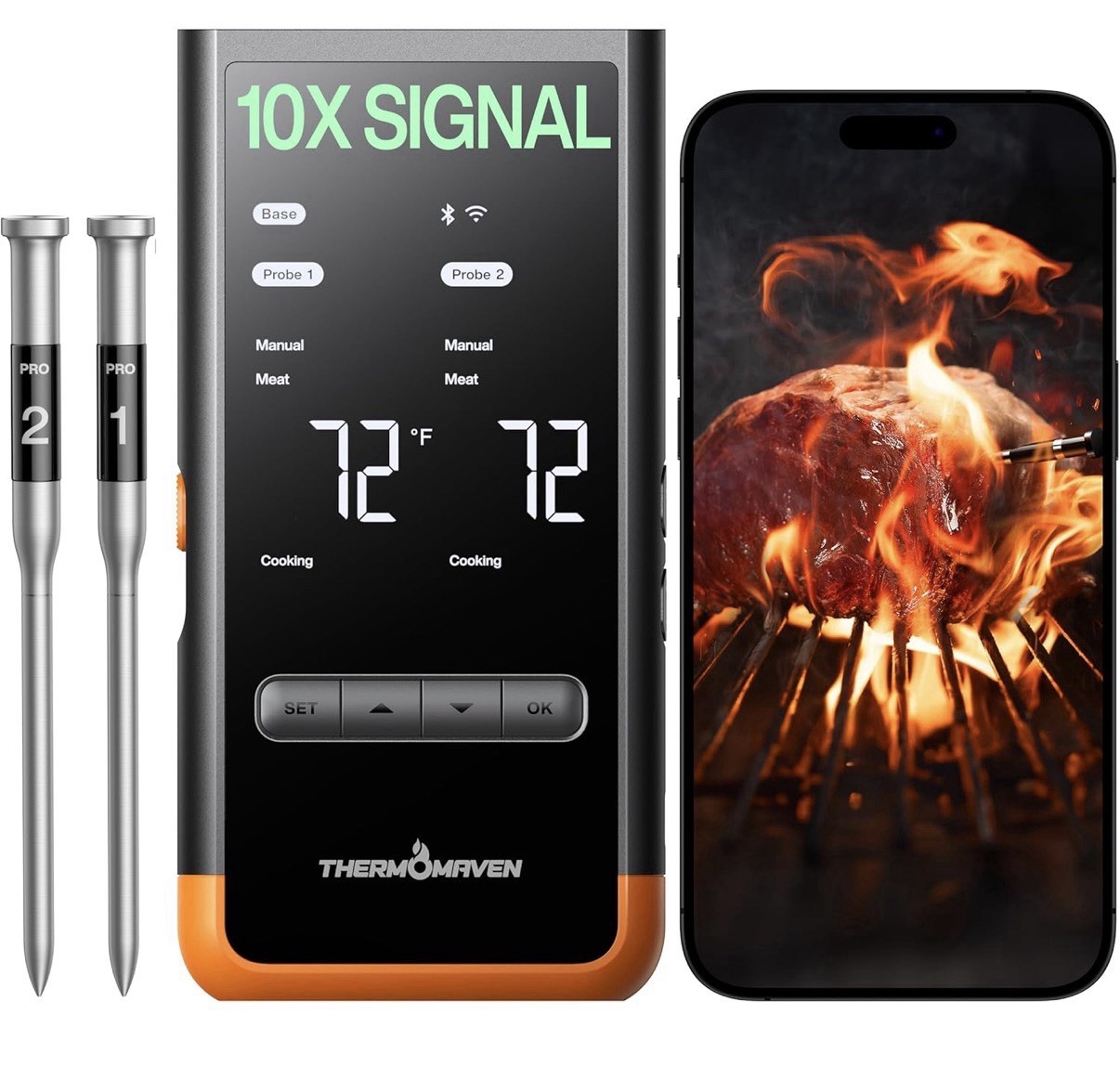
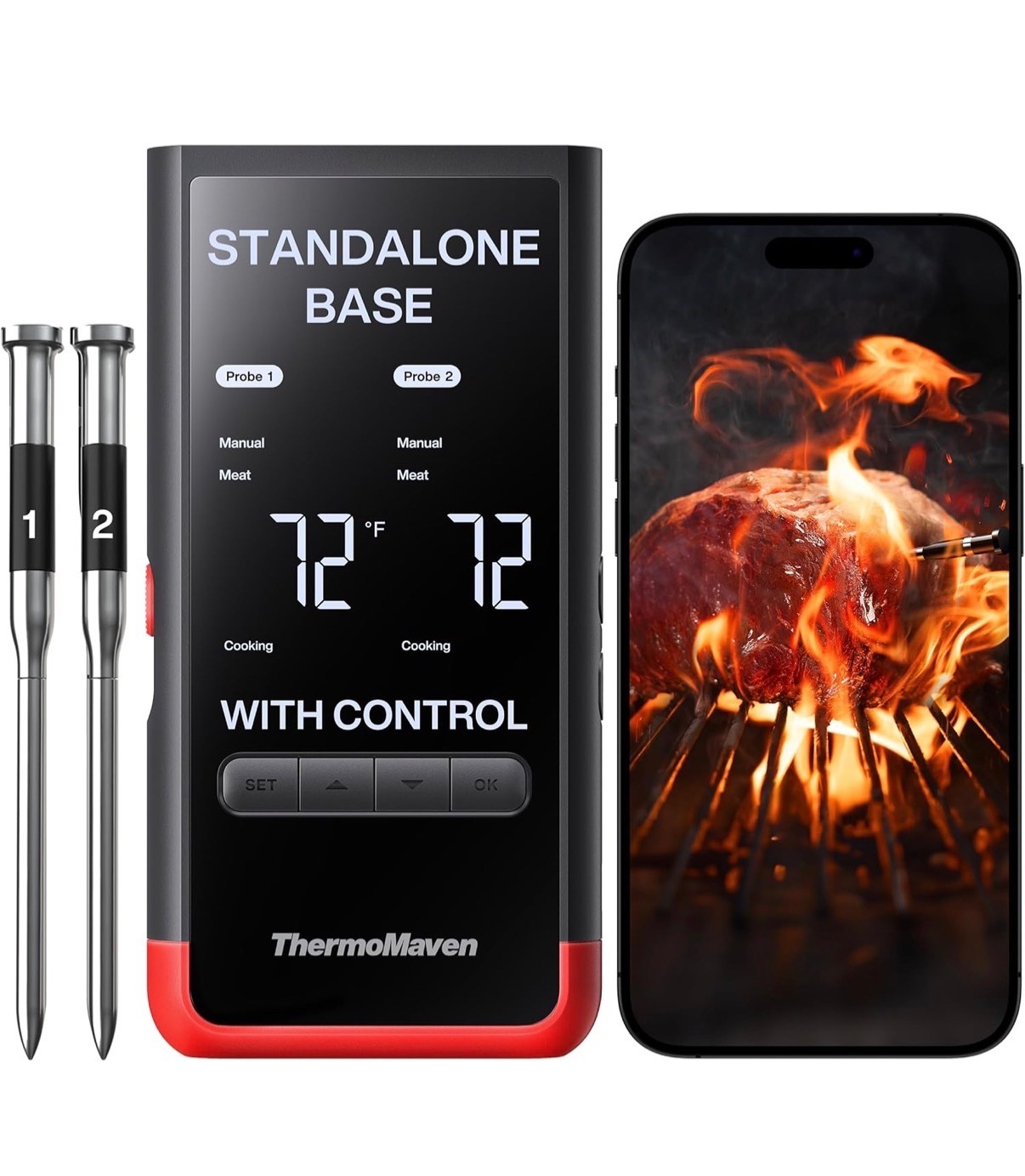
Related searches
What to check before buying
- Measure your cooker's firebox inlet or draft door diameter — the fan adapter must physically fit the opening, and many kettles need a specific adapter plate.
- Verify your grill has a controllable intake; a fan controller cannot manage a fully open or leaky firebox, so seal gaskets first.
- Check your WiFi router broadcasts 2.4 GHz and that the grill sits within usable signal range for cloud alerts.
- Confirm the kit includes a pit probe plus at least one food probe, and that your cook chamber has a probe port or grommet for cable routing.
FAQ
Data sources: eBay / Amazon listings and product attribute feeds Data updated Nov 16, 2026.
Some links on this page are affiliate links. If you buy after clicking one, we may earn a commission at no extra cost to you. This does not change which products appear here or their order. Affiliate disclosure.